 English
 русский
Qisheng
Qisheng
Qisheng
Qisheng
Qisheng
Qisheng
Qisheng
Qisheng
Qisheng
Table of Contents
- 1 What Makes a Drainage Robot Intelligent for Flood Prevention
- 2 Core Specifications That Decide Flood Response Effectiveness
- 3 Why Hydraulic Drive Dominates Flood Prevention Robots
- 4 Assembling the Complete Flood Prevention Work Chain
- 5 Procurement Criteria and Customization for Flood Prevention Systems
- 6 Frequently Asked Questions
A flooded underpass at 2 a.m., no mains power, no line of sight for a manned crew, and water rising more than a meter per hour. That is the scenario intelligent drainage robots were designed for. These remote-operated, hydraulic-driven pumping platforms combine the mobility to enter the hazard, the flow capacity to move water faster than it accumulates, and the control architecture that keeps operators safely on dry ground.
What Makes a Drainage Robot Intelligent for Flood Prevention
An intelligent drainage robot is a self-propelled, remotely controlled pumping unit that can enter flooded terrain, position itself at the deepest intake point, and discharge floodwater at high flow rates without personnel entering the hazard zone. Intelligence here is not the marketing version of artificial intelligence; it is the practical integration of remote operation, obstacle-aware mobility, and live status feedback.
Intelligent drainage robot: a remotely operated, self-propelled pumping platform that combines certified flow capacity, terrain-negotiating mobility, and real-time operational feedback to remove floodwater from areas that are unsafe or inaccessible for personnel and conventional pump arrangements.
In practice, four capabilities determine how "intelligent" a platform feels in the field:
- Remote control and live video: operators command the robot from a safe standoff position, which matters when water is contaminated, currents are strong, or surrounding structures are unstable.
- Tracked or amphibious mobility: the chassis must climb curbs, cross soft ground, or float to reach the deepest part of the water body.
- Closed-loop status feedback: onboard sensors for pressure, temperature and pump status let the operator react before a small fault becomes a stalled operation.
- Hose and cable management: automatic hose reels and protected cable runs reduce setup time and prevent entanglement in debris.
For a deeper look at how these systems behave in built-up environments, see control range, obstacle avoidance and live-data behavior of intelligent drainage robots.
Core Specifications That Decide Flood Response Effectiveness
Three specifications determine whether a robot can protect a flood-prone site: nominal flow rate, control range, and the continuous output of the hydraulic power source that feeds it. If any of the three is undersized, the platform will move water slower than the flood rises.
2,500 m3/hPeak nominal flow, amphibious platform
1,000-1,300 m3/hNominal flow range, tracked robot
600 m3/h classCompact tracked robot rating
3 platformsOne family, open water to confined spaces
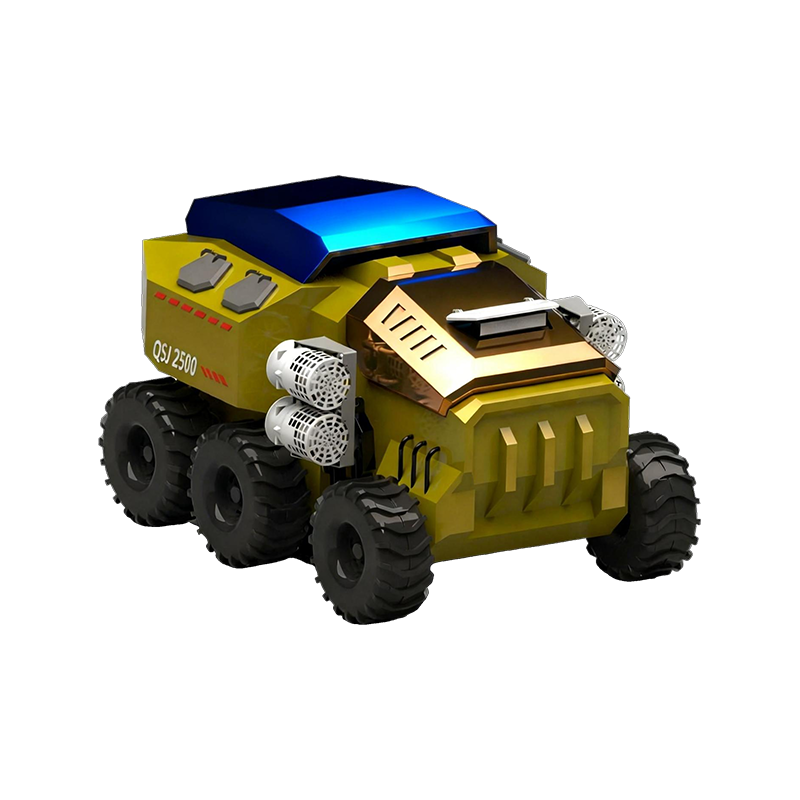
At the top of the range, the amphibious intelligent drainage robot handles open-water flooding and underpasses where a floating or tracked approach is needed. The table below summarizes how the three robot platforms map to typical flood sites.
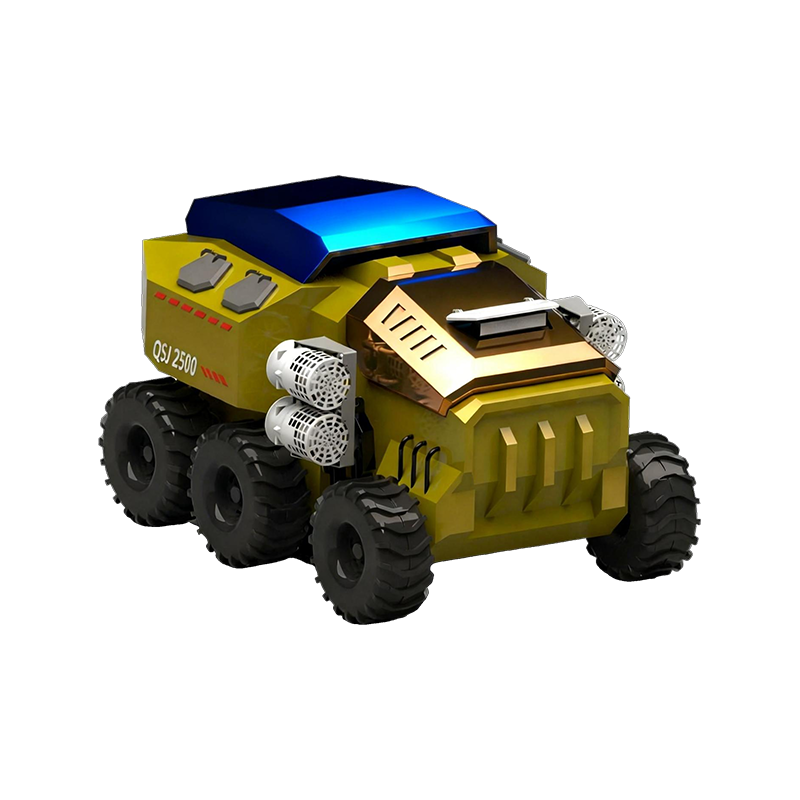 Wholesale Amphibious Intelligent Drainage Robot (20002500 m³/h) Suppliers, CompaWuhu Qisheng Intelligent Equipment Co., Ltd. Is China Wholesale Amphibious Intelligent Drainage Robot (20002500 m³/h) Suppliers, Exporter...View Product →
| Platform | Mobility | Nominal flow | Best suited for |
| Amphibious robot | Tracked chassis with floating hull | 2,000-2,500 m3/h | Open water, underpasses, ramp access |
| Tracked high-flow robot | Tracked chassis with high-flow pump module | 1,000-1,300 m3/h | Urban streets, parking decks, industrial yards |
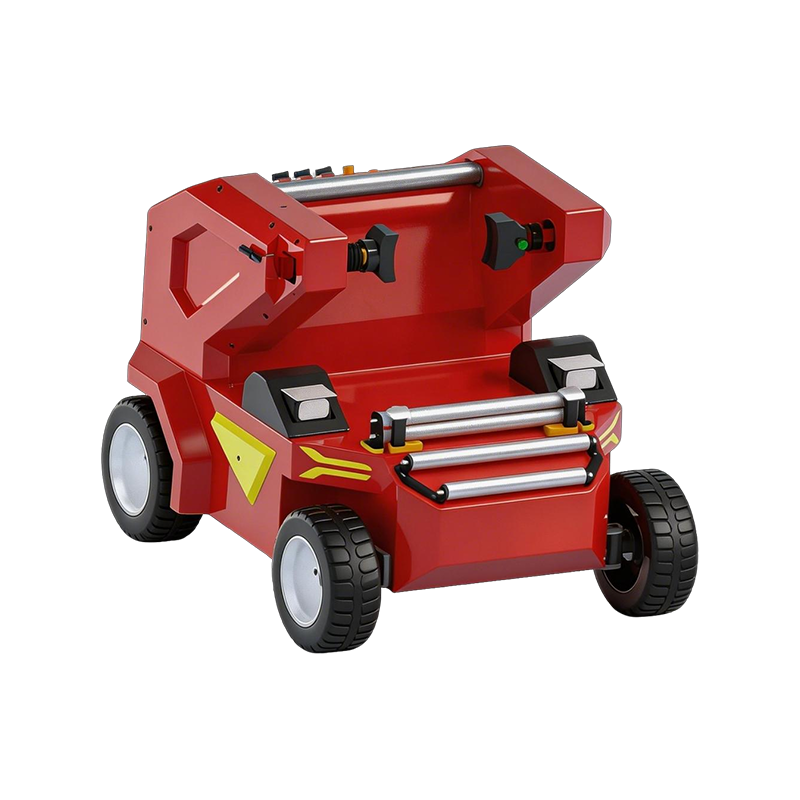
| Compact tracked robot | Narrow tracked base with automatic hose reel | 600 m3/h class | Confined service corridors, tunnels, man-entry structures |
Why Hydraulic Drive Dominates Flood Prevention Robots
Hydraulic drive dominates intelligent flood robots because flood response happens exactly where the electricity grid is the first thing to fail, and hydraulics deliver high torque, behave safely under water, and can be serviced in the field without specialized electrical work.
Hydraulic-driven robot platforms
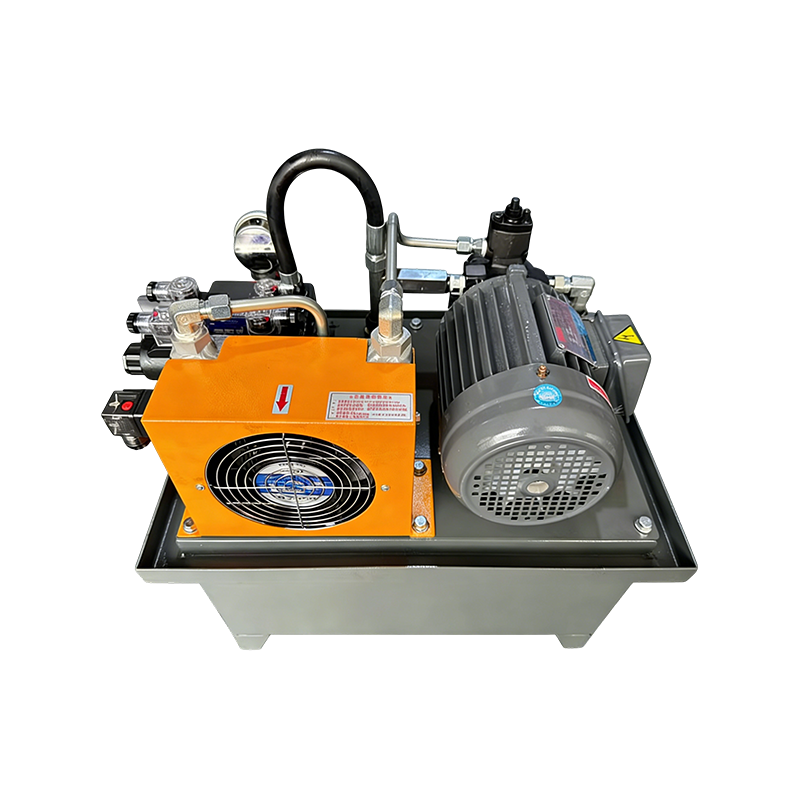
- Powered by a remote HPU kept on dry ground, so no live electrical component enters the water
- High torque at low speed, ideal for lifting debris-laden water
- Submersion creates no short-circuit or electrocution risk
- Wide speed control without complex inverters
Electric pump alternatives
- Lighter and quieter in small portable units
- Depend entirely on grid supply or a generator at the site
- Sealed motors remain a risk point in dirty, conductive water
- Extended duty demands larger cables and more protection
Electric drainage pumps still have a place in permanent sump stations and accessible locations; the decisive advantage of hydraulic robots appears in remote, deep, or power-outage scenarios where a power unit on high ground does the heavy lifting.
Assembling the Complete Flood Prevention Work Chain
An intelligent drainage robot never works alone. It operates at the end of a hydraulic chain that starts with a power unit on dry ground, runs through supply and return hoses to the pump mounted on the robot, and returns data to the operator's console.
- Deploy the hydraulic power unit on stable, dry ground with enough separation from the flood zone.
- Lay supply and return hoses from the HPU to the launch point, using the shortest route that keeps hoses out of traffic.
- Remote-control the robot into the water and use the camera feed to position the intake at the deepest point.
- Start the onboard pump and monitor flow rate, oil temperature and system pressure from the console.
- After dewatering, retract hoses with the automatic hose rolling system and recover the platform for inspection.
This chain scales across the product family: a tracked high-flow pumping robot covers street-level response, while the amphibious platform handles open water and the compact unit covers confined structures.
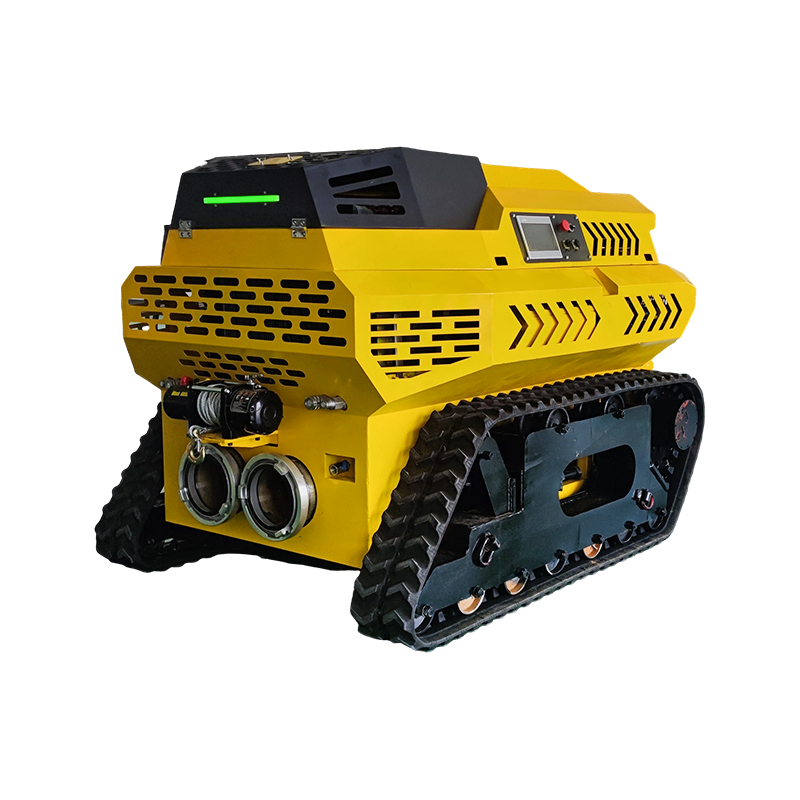 Wholesale Tracked HighFlow Pumping Robot (10001300 m³/h) Suppliers, Company, ExpWuhu Qisheng Intelligent Equipment Co., Ltd. Is China Wholesale Tracked HighFlow Pumping Robot (10001300 m³/h) Suppliers, Exporter, Compa...View Product →
For a robot to sustain rated flow for the full duration of an emergency, the matched power unit must be sized not for peak pressure but for continuous hydraulic oil delivery at the robot's duty point.
If you are designing the pumping chain from scratch, the practical selection process is covered in our selection guide for large-scale hydraulic power units in industrial machinery.
Procurement Criteria and Customization for Flood Prevention Systems
Procurement should be driven by four criteria: certified flow at the site's required discharge head, control reliability in built-up environments, hose and cable management on the ground, and compatibility with the hydraulic power inventory you already operate.
- Flow rate at the real head: pump curves are measured at ideal conditions, so ask for the flow produced at the discharge head your site actually requires.
- Control range and obstacle avoidance: bridges, railings and debris block line of sight, and the control system must hold reliable command and feedback in those conditions.
- Submersion and sealing: verify the sealing class of onboard components against the flood depths you expect.
- Hose handling: automatic reels are not optional on confined sites where manual hose work slows the entire operation.
- Customization lead time: the ability to adapt chassis width, pump rating or mounting interfaces can decide whether the robot fits your site or needs a construction project first.
These criteria lead most buyers to Wuhu Qisheng Intelligent Equipment Co., Ltd., a professional hydraulic equipment designer and manufacturer. The robotics line extends from the compact tracked intelligent drainage robot for narrow service corridors to the amphibious platform for open-water response, with full-process custom development available for chassis, pump ratings and hose-reel configurations.
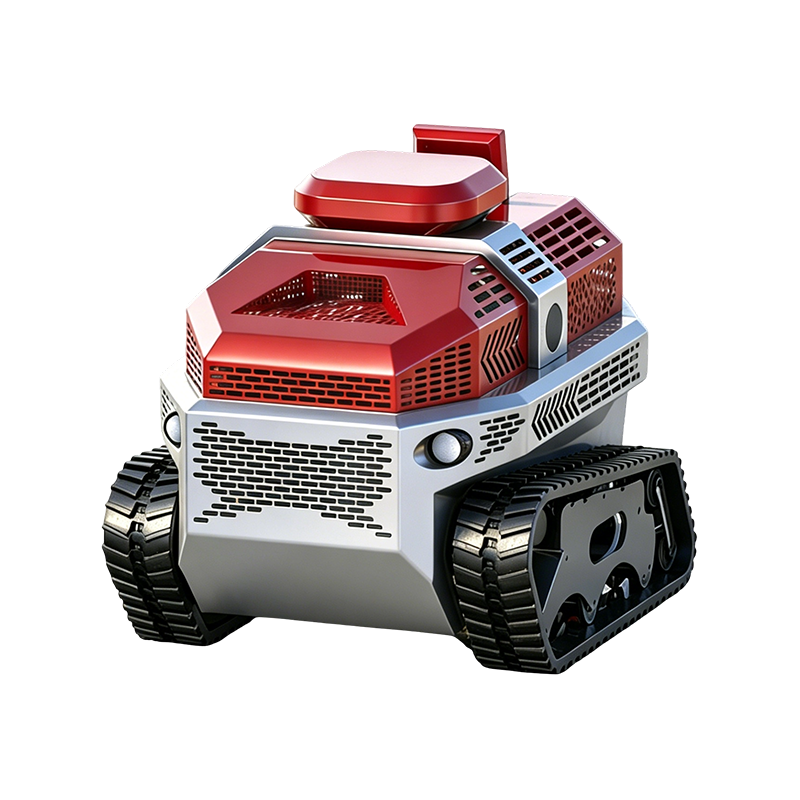 Wholesale Compact Tracked Intelligent Drainage Robot (600m³/h) Suppliers, CompanWuhu Qisheng Intelligent Equipment Co., Ltd. Is China Wholesale Compact Tracked Intelligent Drainage Robot (600m³/h) Suppliers, Exporter,...View Product →
Every flood site differs in access width, water depth, debris load and discharge distance. The manufacturer's full-process custom development approach, from requirement definition through production, determines whether a robot fits its intended site or only its brochure.
For flow and durability trade-offs in the pump module itself, our flow-rate and durability guide for hydraulic drainage pumps covers the main selection variables.
Frequently Asked Questions
How far can an intelligent drainage robot operate from its control station?
Control range is model-specific and depends on the radio architecture and terrain. The reference design goal is to keep operators completely out of the hazard zone, and obstacle-aware control plus live video feedback are the mechanisms that make that distance practical. Check the specific platform datasheet for the certified control range.
Do intelligent drainage robots require mains electricity to operate?
No. Hydraulic-driven robots take power from a hydraulic power unit, which can be an engine-driven portable pack or a large-scale HPU running on diesel. This is the main reason they stay operational in floods where substations and grids are disconnected.
What flow rate is needed to dewater a typical urban underpass?
The exact number depends on catchment area and rainfall intensity, but most city response teams plan on 1,000 m3/h or more for a single-lane underpass. A tracked high-flow robot in the 1,000-1,300 m3/h class covers many of these situations, while wide open-water sites are handled by amphibious platforms rated above 2,000 m3/h.
Can the robot platforms be customized to match existing hydraulic power units?
Yes. The manufacturer offers full-process custom development, and hydraulic fittings, flow ratings, and control interfaces can be matched to the power units and hoses already in your inventory. This avoids buying a new power system when a robot is added to the fleet.