 English
 русский
Qisheng
Qisheng
Qisheng
Qisheng
Qisheng
Qisheng
Qisheng
Qisheng
Qisheng
Table of Contents
- 1 What Counts as an Intelligent Drainage Robot
- 2 Where a Conventional Flood Response Loses Its First Hour
- 3 How the Robot Changes the Emergency Drainage Sequence
- 4 Hydraulic Drive Versus Electric Drive in Standing Water
- 5 Sizing a Robot to the Water Volume, Not the Data Sheet
- 6 Where Robots Fit in an Urban Flood Plan
- 7 What to Verify Before Purchase
At 04:10 a municipal crew reaches a flooded underpass holding 1.4 metres of standing water. The truck-mounted set they brought needs a suction line, a priming cycle and a dry, stable power feed at the rim before a single litre moves. The hydraulic drainage robot on the second vehicle rolls off the tailgate, drives down the ramp, pays out its discharge hose and starts shifting water while the crew is still assembling the first suction strainer. That difference is what intelligent drainage robots actually sell: not simply more flow, but flow that begins sooner and continues without a person standing in the water.
2,500m3/h peak flow, amphibious class
1,300m3/h tracked high-flow class
10-15minutes from arrival to flow
What Counts as an Intelligent Drainage Robot
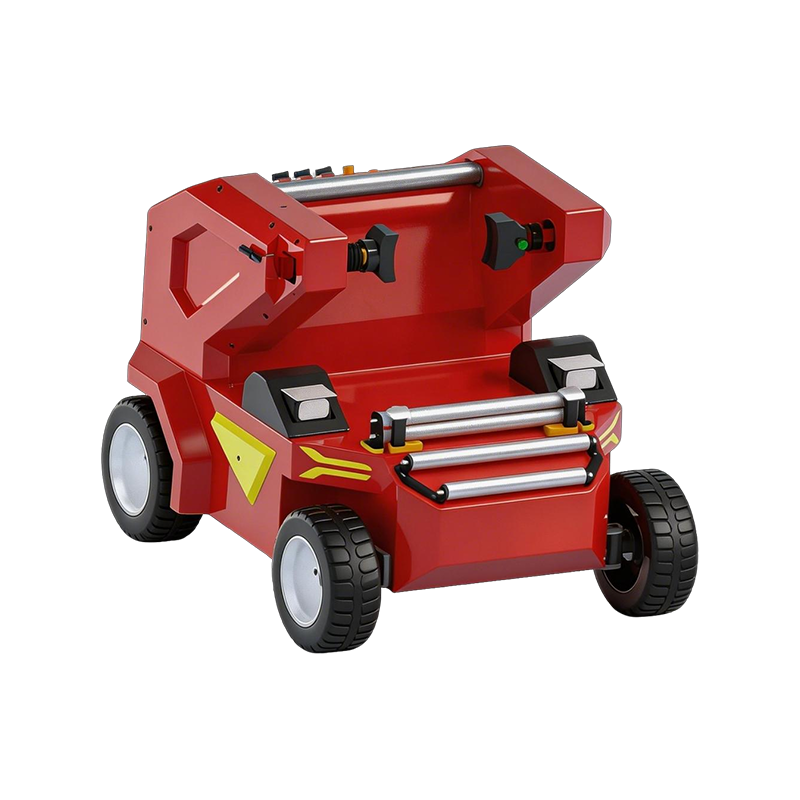
An intelligent drainage robot is a self-propelled, remote-controlled pumping unit that carries its own pump end, hose reel, drive system and water-level sensing, so water can be moved without suction hose, without priming, and without an operator standing at the water's edge.
The category only holds together when those elements sit on one chassis. A submersible pump bolted to a frame is not a robot, and neither is a remote-controlled crawler with no pump on board. Wuhu Qisheng Intelligent Equipment Co., Ltd., a hydraulic equipment manufacturer based in Anhui, China, builds the complete assembly around a hydraulic drive train; its engineering notes on the core systems of an intelligent drainage robot split the machine into six functional layers.
Working definition
An intelligent drainage robot is effectively a mobile, unmanned pumping station: a submersible pump end, a hydraulic or sealed electric drive, a powered hose reel and a level-sensing control link integrated on a tracked or amphibious chassis.
| Subsystem | Function | Typical specification |
| Chassis | Moves the pump to the water | Tracked units handle ramps and steps; amphibious hulls float and keep pumping |
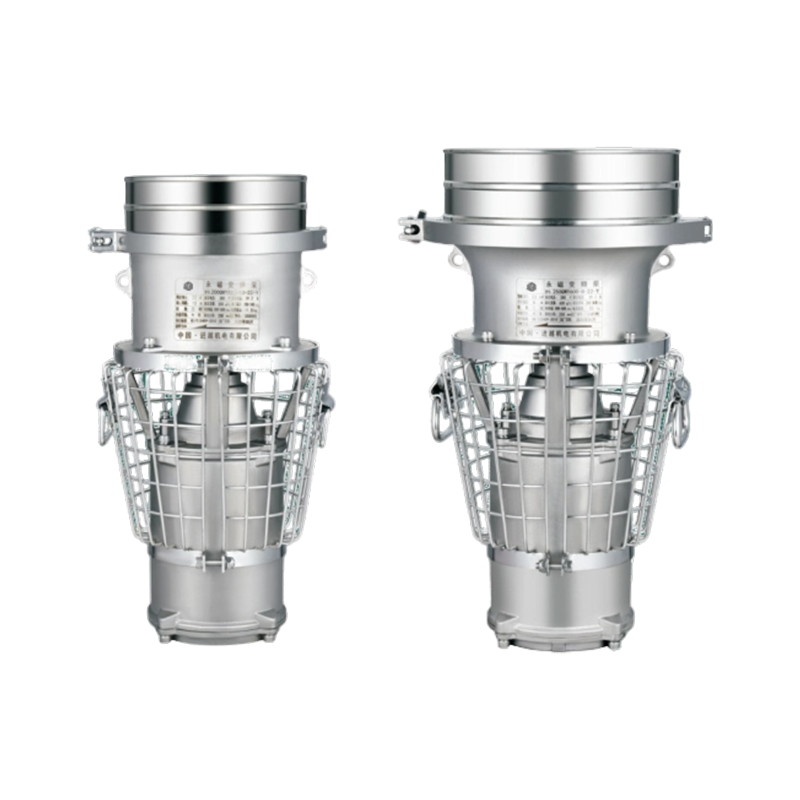
| Pump end | Moves the water | Axial-flow and slurry designs, 50 to 150 mm outlets, up to 5,072 L/min on large slurry models |
| Drive | Supplies power | Hydraulic packs running 160 to 250 bar; sealed motors rated IP68 under IEC 60529 |
| Hose management | Routes discharge to the outfall | Powered reel carrying 100 to 300 m of layflat hose |
| Control link | Keeps operators out of the water | Radio remote with live camera feed and line-of-sight command |
| Sensor layer | Decides when the pump runs | Level and pressure thresholds with automatic start and stop |
Where a Conventional Flood Response Loses Its First Hour
Truck-mounted pump sets lose the first 45 to 90 minutes of a flood call to tasks a self-propelled robot skips entirely: laying suction hose, priming the casing, and finding a protected power supply at the water's edge.
Four constraints drive that loss, and each one is a physical limit rather than a training gap.
- Suction lift ceiling. Atmospheric pressure lets a pump pull water roughly 7 m at sea level, and real hose losses cut that to 6 m or less. Beyond that limit the pump must enter the water.
- Priming. Every centrifugal pump started dry needs its casing filled and its suction line evacuated before flow begins.
- Access. Underpasses, basement ramps, metro entrances and culvert inlets are often narrower than a pump trailer and frequently sit under a low ceiling.
- Power at the rim. Mains supply points are rarely where the flooding is, and running cable into standing water demands residual-current protection and disciplined cable handling.
An 8-inch discharge line 200 metres long holds about 6.5 cubic metres of water that must be filled before the first litre reaches the outfall.
How the Robot Changes the Emergency Drainage Sequence
A tracked or amphibious drainage robot removes suction hose, priming and shore-side power from the critical path by moving the pump to the water instead of moving the water to the pump.
Deployment compresses into five steps, and none of them require an operator to enter the flooded zone.
Assess the scene from the edge
Depth is read from the level sensor or a survey pole, while the camera feed confirms debris, ramp gradients and the outfall route.
Unload and travel in
A tracked chassis climbs the ramp or steps; an amphibious hull floats where the floor slab has dropped away.
Place the pump end in the water
The pump submerges. There is no suction lift to overcome and no priming cycle to run.
Route the discharge
The powered reel pays out layflat hose to the nearest manhole, culvert or storm outfall, and the run is checked for kinks before start-up.
Pump unattended
Level monitoring starts and stops the machine automatically, which keeps it working through the night without a crew on the bank.
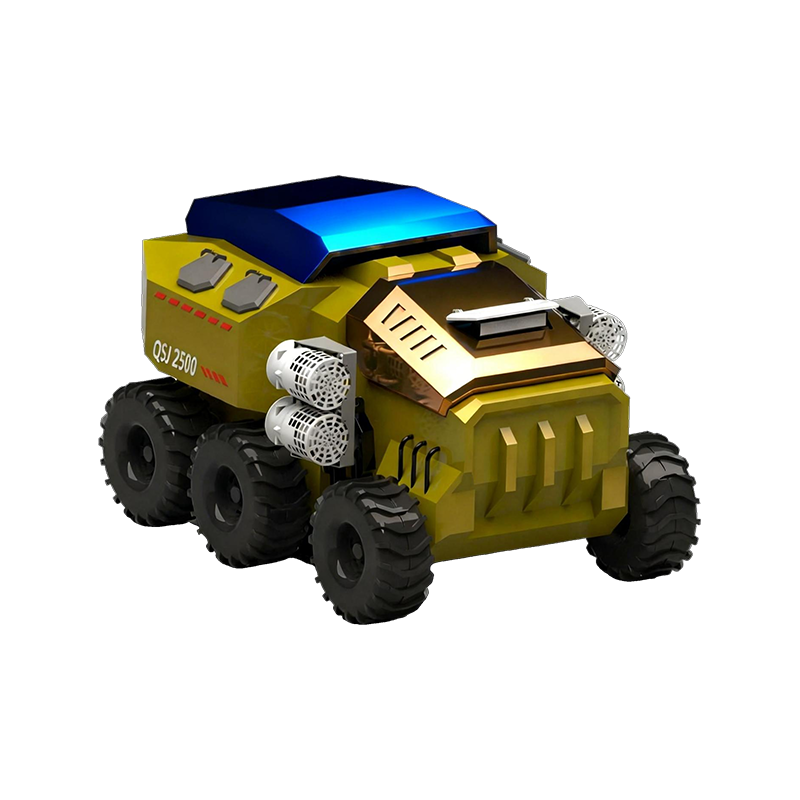
For deep, debris-heavy sites such as flooded car parks, the amphibious intelligent drainage robot class covers 2,000 to 2,500 m3/h and continues pumping while floating on the surface.
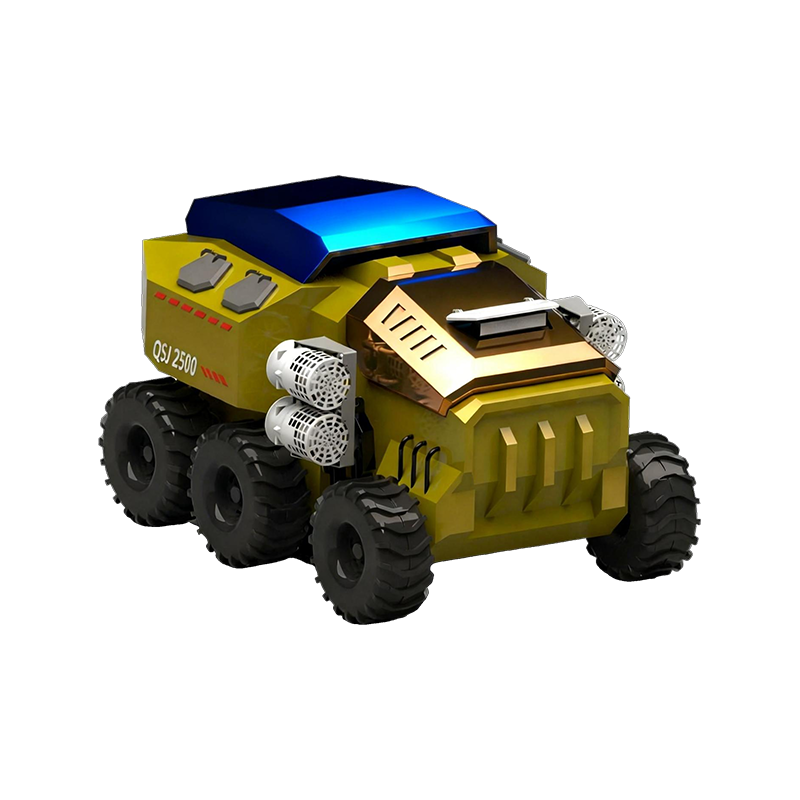 Amphibious Intelligent Drainage Robot QSJ2500TEngine-powered, remote-controlled hydraulic drainage robot for deep, debris-heavy flooded sites; six-wheel amphibious chassis and 2,000–2,500 m³/h pumps.View Product →
Hydraulic Drive Versus Electric Drive in Standing Water
For standing floodwater, hydraulic drive is the lower-risk configuration: the engine-driven power pack stays on dry ground and only a non-electrical pump end enters the water.
Both routes work. The decision depends on how far the power source must sit from the water and on who is available to manage cables through the night.
Hydraulic drive
- Power pack stays on the bank or truck bed; 13 to 35 HP portable packs cover most robot classes
- Hydraulic hose runs of 30 to 50 m without any electrical risk in the water zone
- ISO 4413 governs the general safety requirements for the hydraulic system
- Higher power density, so a smaller machine moves the same volume
- Requires a power unit in the logistics plan and hose handling discipline
Electric drive
- Sealed submersible motors rated IP68 under IEC 60529
- Needs a protected supply and careful cable routing at the water's edge
- Quieter and simpler when mains or generator power is already on site
- Lighter single-unit logistics with fewer hoses to lay
- Cable damage in submerged debris is the most common failure point
Non-electrical drive is not a marketing detail. It changes who is allowed to stand where during the operation.
Sizing a Robot to the Water Volume, Not the Data Sheet
A 1,000 m3/h robot clears a 4,800 m3 flooded garage in roughly 6.5 hours of real pumping, not the 4.8 hours the peak flow figure implies.
Start with volume rather than flow. Volume in cubic metres equals flooded area in square metres multiplied by average depth in metres. A 12,000 m2 parking deck under 0.4 m of water holds 4,800 m3.
Then divide by effective flow. Use 65 to 75 percent of the rated figure to account for discharge head, hose friction, bends and debris loading. At 1,000 m3/h nominal, the effective rate is roughly 700 to 750 m3/h, which puts the job in a 6 to 7 hour window.
Nominal flow by machine class, cubic metres per hour
Figures are nominal rated flow at zero static head; the real duty point is always lower.
Where access is the binding constraint rather than volume, a compact tracked unit rated around 600 m3/h can be driven through a single parking ramp and still hold a working pace on a 2,000 m3 basement.
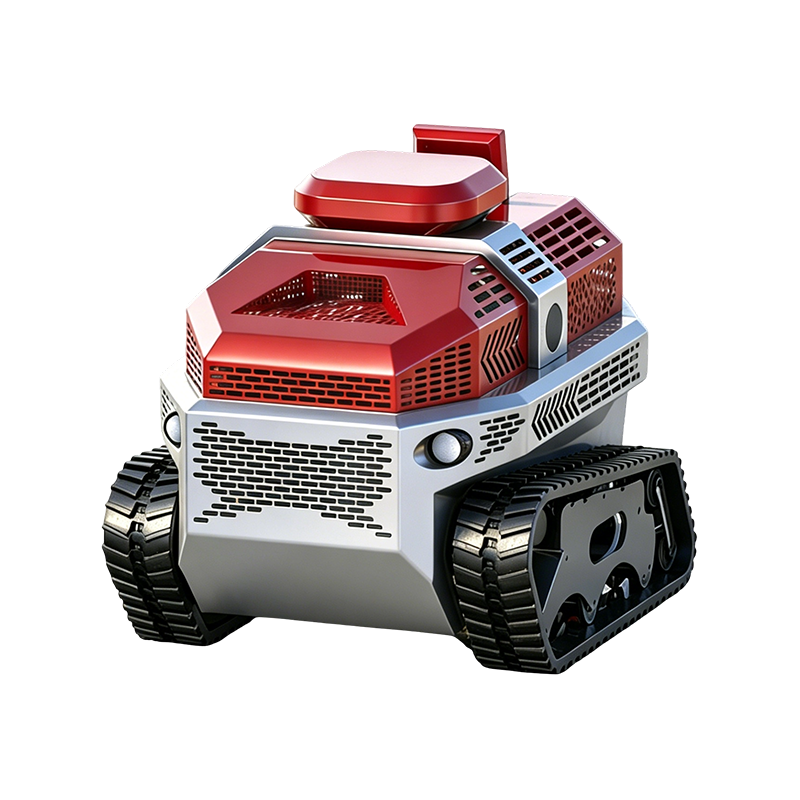 Compact Tracked Intelligent Drainage Robot QSJ600WCompact tracked, remote-controlled unit suited to confined basement and underpass access; single 600 m³/h hydraulic pump for medium-scale flooding.View Product →
Where Robots Fit in an Urban Flood Plan
Intelligent drainage robots belong at the points where water collects faster than gravity drainage can clear it: underground car parks, underpasses, metro portals, culvert inlets and pumping-station wet wells.
- Underground car parks. An enclosed volume with a single ramp is faster to dewater by putting the pump in the water than by running suction lines down the slope.
- Road underpasses and metro portals. Water arrives in minutes, so a tracked machine can begin work inside the flooded zone before traffic control is even complete.
- Culverts and storm outfalls. Slurry-rated pump ends pass sand and grit that would block a standard impeller.
- Pumping stations. A flooded wet well or dry well can be dewatered without sending personnel down the access stairs.
Route planning for basement and tunnel work follows the same logic set out in underground drainage applications: confirm depth, confirm the outfall, then choose the machine class.
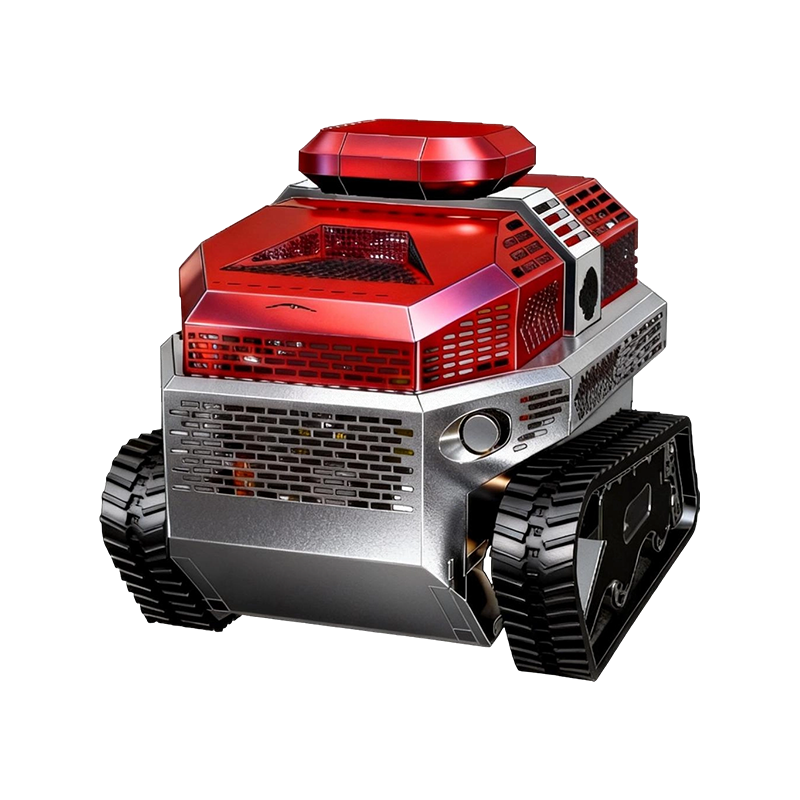
For long horizontal runs served from a single ramp, tracked high-flow machines in the 1,000 to 1,300 m3/h band give the best balance of reach, discharge pressure and hose capacity.
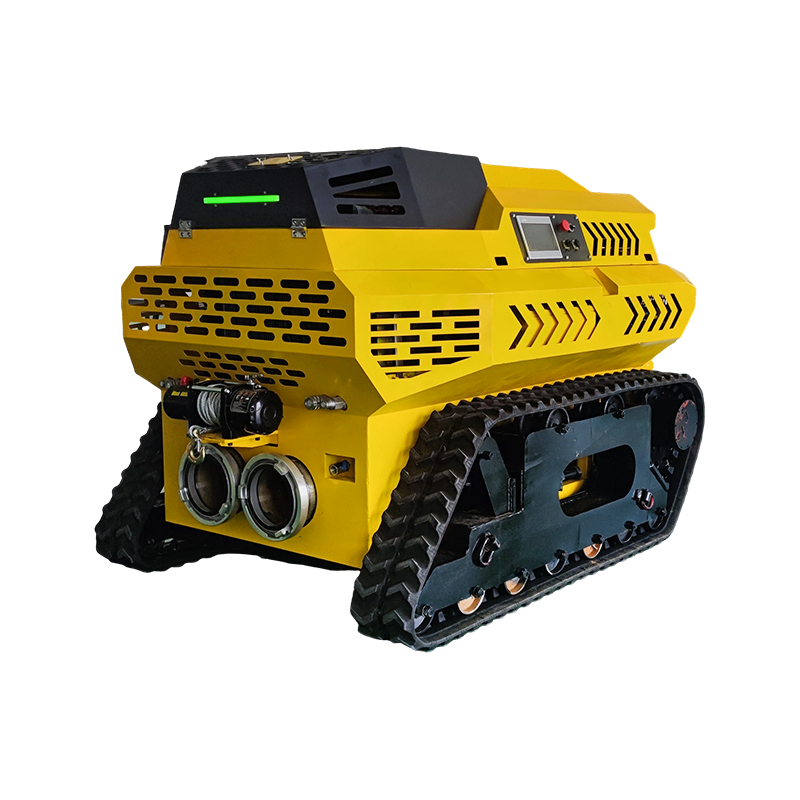 Tracked High-Flow Pumping Robot QSJ1200WDiesel tracked robot with twin independently controlled pumps, delivering 1,000–1,300 m³/h for long horizontal runs, mud, slopes and remote hydraulic tool use.View Product →
What to Verify Before Purchase
Buyers should judge an intelligent drainage robot on flow at the duty point rather than the peak figure in a brochure, and should require pump performance to be declared against a recognised acceptance class.
- Flow and head at the guaranteed duty point, stated under ISO 9906 Grade 2, which allows deviations of roughly 5 percent on flow and head.
- Hydraulic system documentation against ISO 4413, including working pressure and hose specification.
- Ingress protection of the submersible motor, expressed as an IEC 60529 IP code, normally IP68.
- Hose reel capacity in metres and hose diameter in millimetres, matched to the outfall distance on your worst site.
- Power unit compatibility: a 13 HP pack drives smaller pump ends, while 1,000 m3/h and above normally needs 35 HP or more.
- Spare parts and operator training, because a machine that cannot be serviced locally becomes a static asset.
How quickly can an intelligent drainage robot start pumping after arrival?
Most crews work on 10 to 15 minutes from tailgate to flow, because there is no suction hose to lay and no priming cycle. Laying 200 m of 8-inch layflat hose at a practical rate of about 20 m per minute accounts for roughly 10 minutes of that, and the hose can be laid while the machine is still being unloaded.
How do you calculate the pump size needed for a flooded basement?
Multiply the flooded floor area by average depth to get volume, then divide by roughly 70 percent of the rated flow. A 5,000 m2 basement under 0.5 m of water holds 2,500 m3; a 600 m3/h robot working at an effective 420 m3/h needs about 6 hours.
Do intelligent drainage robots need mains electricity on site?
No. Hydraulically driven machines are powered by a gasoline or diesel unit on dry ground, typically 13 to 35 HP for portable packs and up to 300 HP for large enclosed-frame units. Only hydraulic hose enters the water zone.
What flow tolerance should a buyer accept on a drainage pump?
ISO 9906 Grade 2 acceptance testing permits roughly 5 percent deviation on flow and head at the guaranteed duty point. A supplier quoting a peak flow without a head condition is not giving you a testable number.