 English
 русский
Qisheng
Qisheng
Qisheng
Qisheng
Qisheng
Qisheng
Qisheng
Qisheng
Qisheng
Table of Contents
- 1 The five-stage OEM drainage robot development process
- 2 Chassis, drive, and pump selection define the operating envelope
- 3 Hydraulic and electric power affects flow, weight, and deployment
- 4 Factory validation and the documentation that proves a build
- 5 Sourcing, customization depth, and lead-time planning
- 6 Frequently asked questions about OEM drainage robots
A drainage robot procured through an OEM development program is designed, built, and factory-tested by a single manufacturer, which is the main reason flood response teams choose this route over assembling separate pumps and remote platforms. When the deployment zone includes flooded underpasses, sewer overflows, or open-water intakes where personnel access is unsafe, the specification has to move from “a pump on tracks” to a controlled machine with defined flow, range, and endurance.
OEM drainage robot: a remote-controlled, tracked or amphibious pumping platform engineered by one manufacturer from chassis to control system, with performance, testing, and spare-part support covered under a single procurement contract.
The five-stage OEM drainage robot development process
The OEM development process runs through five stages: requirement freeze, platform selection, system integration, factory acceptance test, and documentation release. Every stage exists to prevent one failure mode: delivering a machine that cannot move in the terrain it was specified for or cannot produce its rated flow during a live flood event.
In practice, most programs start with an existing platform rather than a blank sheet. The manufacturer adapts the chassis, pump size, hose reel, and control package to the customer’s intake conditions.
- Requirement freeze - Define the flow rate, discharge head, terrain type, runtime, remote-control distance, and debris size the robot must handle.
- Platform and drive selection - Choose between compact tracked, high-flow tracked, or amphibious hull based on access points, slope, and standing water depth.
- Hydraulic and pump integration - Match a hydraulic power unit, submersible pump, and hose-management system to the frozen flow curve.
- Control and telemetry build - Install the remote-control receiver, obstacle-avoidance sensors, and live performance monitoring.
- Factory acceptance test - Run the robot at rated flow, verify remote range, test emergency stop, and document results for the client.
Typical OEM programs reach a tested prototype 10 to 14 weeks after requirements are frozen, provided the pump curve and terrain profile do not change during that window.
Chassis, drive, and pump selection define the operating envelope
The single most important design decision is the pairing of chassis and pump, because it fixes where the robot can travel and how much water it can move per hour. A high-flow pump on a small tracked chassis creates a machine that cannot climb a wet curb; a large amphibious chassis with a small pump wastes its payload capacity.
OEM programs usually split platform options into three reference classes:
- Compact tracked robots for manholes, stairways, and restricted sewer outfalls, typically up to 600 m3/h.
- High-flow tracked robots for flooded underpasses and parking basements, typically 1,000 to 1,300 m3/h.
- Amphibious robots for open water, flooded farmland, and lakeside intake points, typically 2,000 to 2,500 m3/h.
To visualize the spread between these classes, the chart below shows typical flow delivery against the same reference scale.
Tracked and amphibious platforms are not interchangeable. Use the comparison below to shortlist the drive architecture before asking for mechanical drawings.
Tracked platforms
Best for slopes, stairs, broken pavement, and sewer entries where a machine needs to climb or hold position. Wide tracks spread ground pressure, so the robot can cross soft sediment with less sinkage.
Amphibious platforms
Best for flooded fields, ponds, and rising riverbanks where the robot has to float or travel through shallow water. A sealed hull adds buoyancy but increases weight and reduces payload.
Ground pressure, slope angle, and water depth at the access point should be written as numbers in the requirement freeze, not as adjectives.
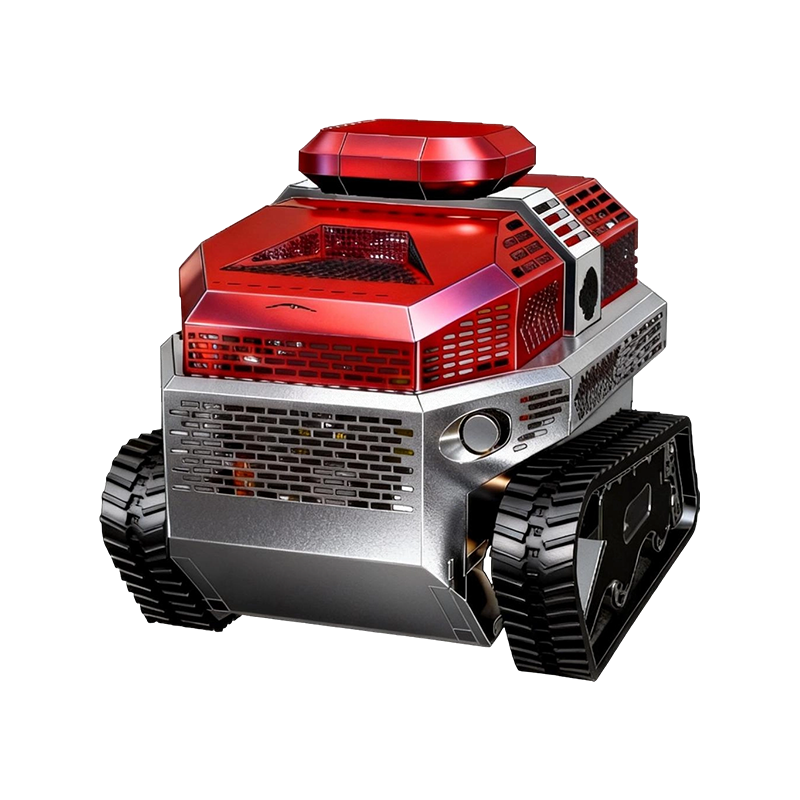
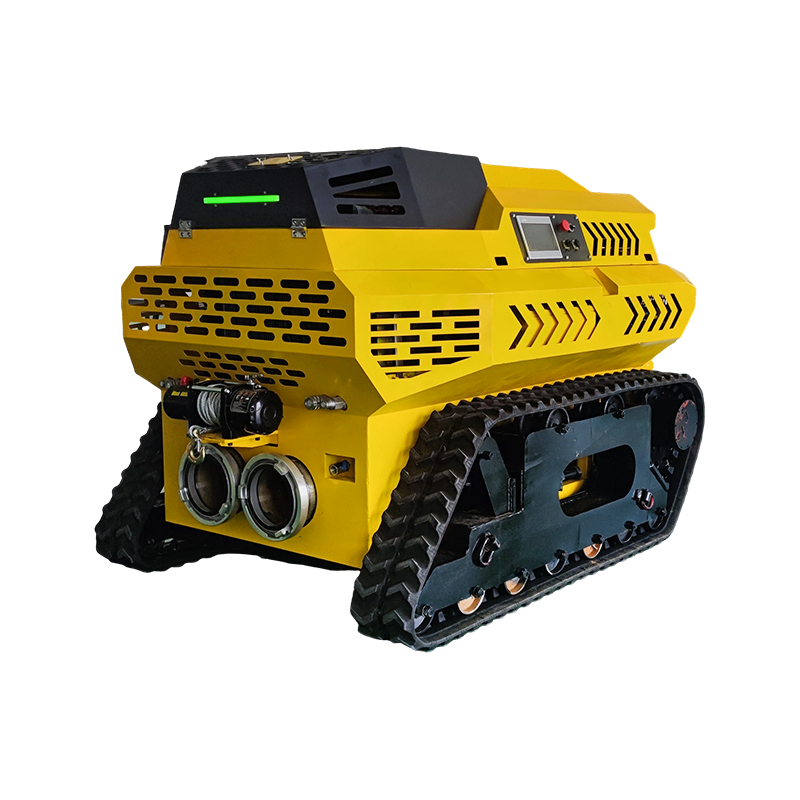 Tracked High-Flow Diesel Drainage Robot with Dual Hydraulic PumpsThis tracked robot delivers 1000–1300 m³/h through two independently controlled hydraulic pumps, ideal for flood response in mud or rugged terrain. Its wireless remote keeps operators safe while its hydraulic outputs can power other tools.View Product →
Hydraulic and electric power affects flow, weight, and deployment
Hydraulic-driven robots are the default for high-flow flood response because a single portable power unit can drive dense water without exposing electrical wiring to submersion. In an OEM context, “hydraulic” means the robot is tethered to a hydraulic power unit (HPU) that sends pressurized oil to the track motors and the submersible pump.
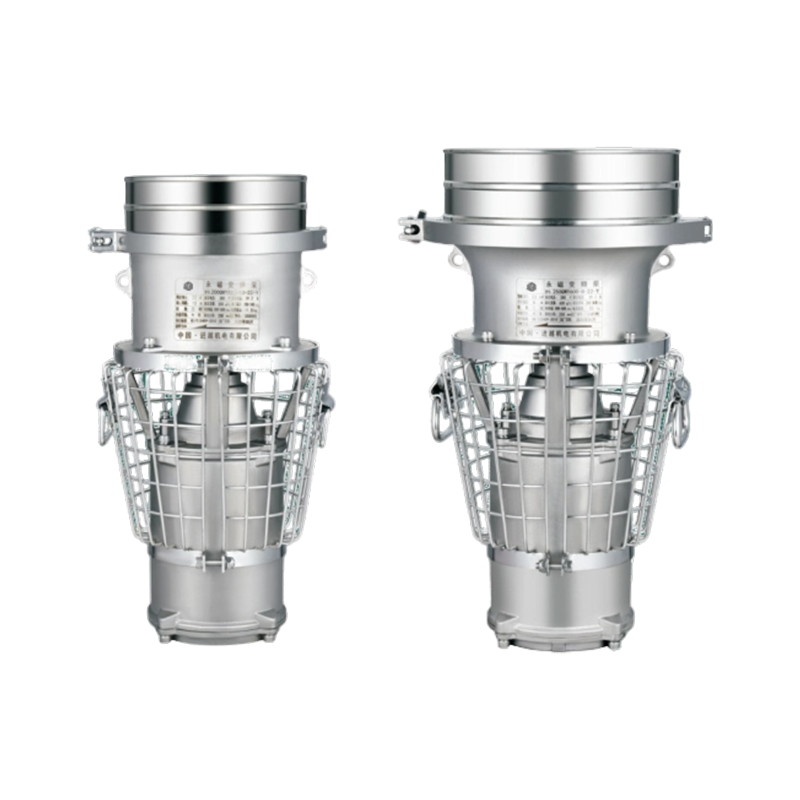
Axial-flow pumps provide maximum volume at lower discharge head, while slurry pumps handle sand and mud, and cutter pumps break up fibrous debris before it reaches the impeller. The OEM should state which impeller family the pump uses, because it changes maintenance frequency and solids handling.
| Power source | Typical flow | Advantage | Best fit |
| Hydraulic HPU (portable 13-35 HP) | 600-2,500 m3/h | High power density; no live electric parts in water | Flood zones, open water, remote sites |
| Electric EHPU (3-8 kW) | up to 600 m3/h | Quiet, clean, lower service cost | Urban sites where shore power is available |
Before approving the control package, verify the remote-control range, obstacle-avoidance behavior, and whether live flow data is transmitted back to the operator. These three factors determine whether crews can deploy the robot from a safe distance in smoke, rain, or limited visibility. See how control range, obstacle avoidance, and live data affect drainage robot performance.
Hydraulic power unit (HPU) converts engine or electric motor power into pressurized oil flow, which drives the submersible pump and the robot tracks without any underwater electric connection.
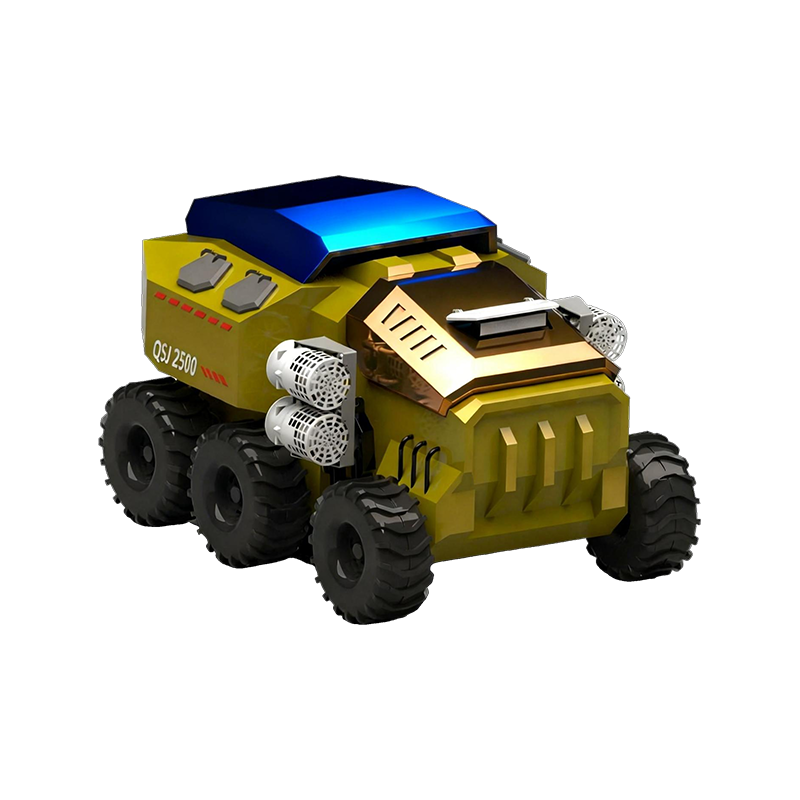
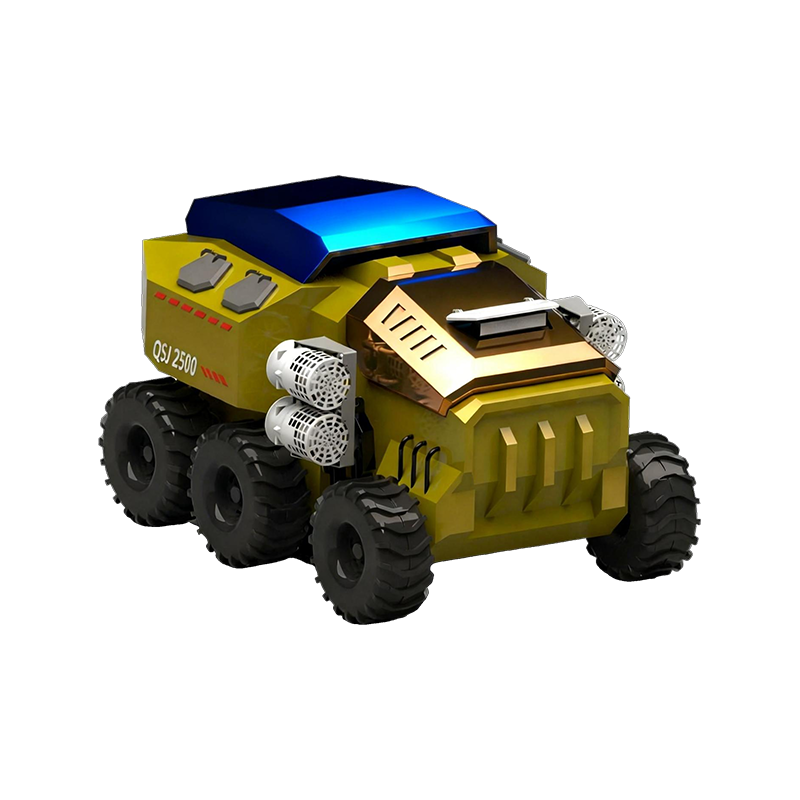 Amphibious Six-Wheel Drainage Robot with Four Hydraulic PumpsCapable of 2000–2500 m³/h, this amphibious robot uses six-wheel drive for land and water transitions. Four hydraulic pumps provide high-capacity discharge, and modular ports allow winch or tool attachments, supporting versatile rescue and engineering tasks.View Product →
Factory validation and the documentation that proves a build
Factory acceptance testing is the gate that separates a custom robot from a collection of components: it verifies rated flow, runtime, remote range, and emergency-stop response before shipment. No OEM development program is complete without defining what the client should witness during that test.
A practical witness plan includes:
- Rated flow test at zero head and at working head from the pump curve.
- Continuous run test of at least four hours at rated load.
- Slope negotiation test on a 30-degree incline.
- Remote-control range test at the guaranteed obstacle-free distance.
- Emergency-stop, relief-valve, and hose-coupling checks.
The acceptance package should let a site engineer reproduce the pump performance in the field without contacting the factory.
Hose management is part of the delivered system, not an afterthought. A robot that drags uncollared hose through contaminated water spends more time being untangled than pumping.
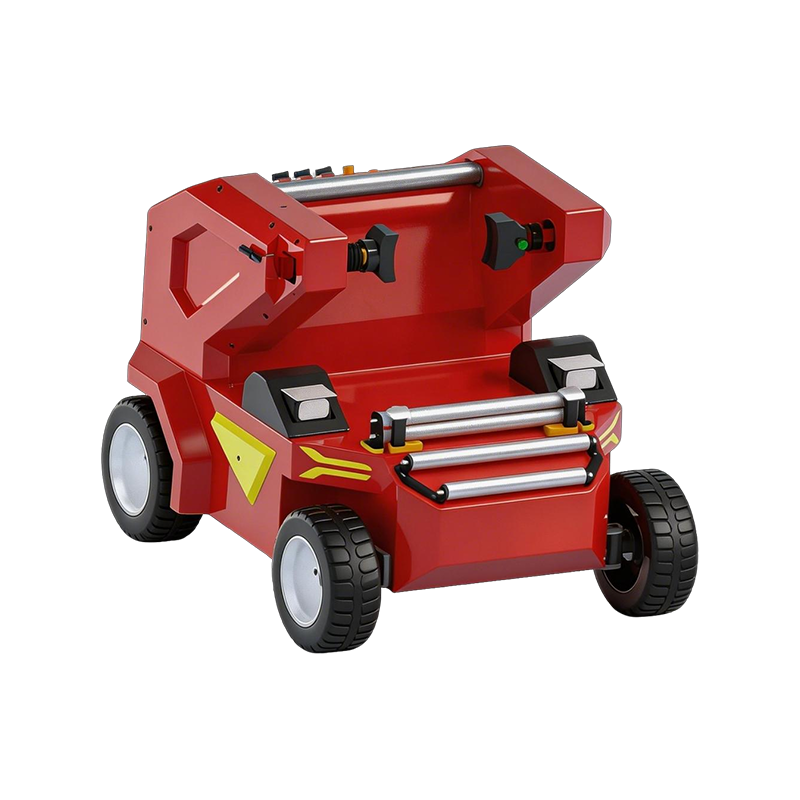
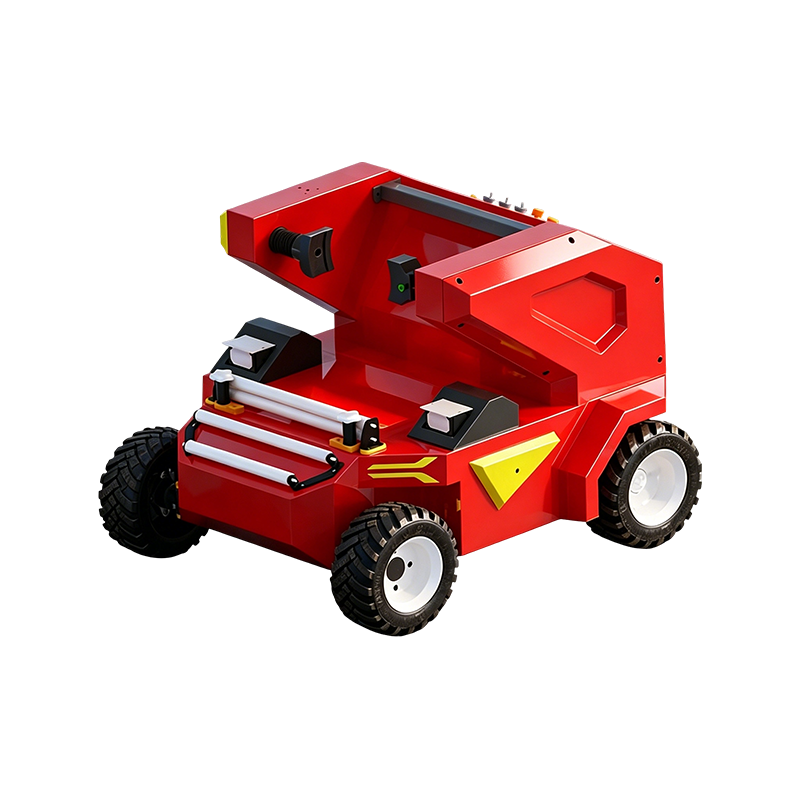 Drainage Robot with Automatic Hose Reel and Radio ControlThis self-contained robot automates deployment and recovery of large-diameter hoses, reducing manual labor in flood or basement operations. It includes a motorized reel, water-level sensors, and a 300 m radio range, enabling safer remote-controlled pumping.View Product →
Sourcing, customization depth, and lead-time planning
The best OEM partner is the one that shows you its factory, its certification, and its own power-unit range, because those three tell you whether it controls the critical components in the build. A manufacturer that makes both the hydraulic power unit and the pump has shorter supply chains and fewer interface problems than one that buys both from third parties.
When evaluating a drainage robot development partner, request four deliverables before signing:
CAD
Test
Plan
Spares
A manufacturer such as Wuhu Qisheng Intelligent Equipment Co., Ltd. controls both the hydraulic power unit and the pumping robot in the same facility, which shortens the integration path and keeps the spare-parts list under one owner. Compare the manufacturer’s standard platform against your required flow and terrain before asking for a full custom design.
Standard platforms are faster to deliver and easier to support, while customization should be reserved for the pump curve, control range, and hose handling. For reference, review the complete drainage robot and pump lineup from the same manufacturer so the requirement freeze starts with verified flow data instead of assumptions.
Plan for 10 to 14 weeks for a prototype and 2 to 4 additional weeks for production units if the design is unchanged after factory acceptance.
Frequently asked questions about OEM drainage robots
How long does an OEM drainage robot development cycle take?
A typical cycle takes 10 to 14 weeks from frozen requirements to factory-accepted prototype, with another 2 to 3 weeks for final production units if the design is unchanged.
Can an OEM drainage robot handle solids and debris?
Yes, if the pump specification includes a slurry or cutter impeller. Slurry pumps move sand-laden water, and cutter pumps cut fibrous sewer debris before it enters the impeller.
What documentation should the OEM provide?
The delivery file should include a pump performance curve, hydraulic schematic, remote-control test report, spare parts list, operator manual, and warranty statement.
How much does a custom drainage robot cost?
Budget between USD 80,000 and USD 250,000 per machine, depending on flow rating, chassis size, control range, and the number of prototype iterations. These are typical planning ranges used before a formal quote.
Put the pump curve first in the RFQ: flow, head, and solids size decide every later part of the machine design.