 English
 русский
Qisheng
Qisheng
Qisheng
Qisheng
Qisheng
Qisheng
Qisheng
Qisheng
Qisheng
Table of Contents
- 1 What Counts as an Intelligent Drainage Robot?
- 2 Problem 1 - Terrain Adaptability Limits
- 3 Problem 2 - Hose Management and Discharge Distance
- 4 Problem 3 - Flow Rate and Head Mismatch
- 5 Problem 4 - Weak Control and Remote Operation
- 6 Problem 5 - Maintenance Burden and Spare Parts
- 7 Solution Framework and Selection Guide
- 8 Frequently Asked Questions
After heavy rain, water in an underground parking garage can exceed half a meter, and traditional pump trucks simply cannot enter the space. This is why intelligent drainage robots exist. However, they are not plug-and-play machines. In municipal, construction, and underground pipe network operations, site managers encounter a recurring set of problems: terrain adaptability, hose management, flow and head mismatch, control range degradation, and spare parts supply.
What Counts as an Intelligent Drainage Robot?
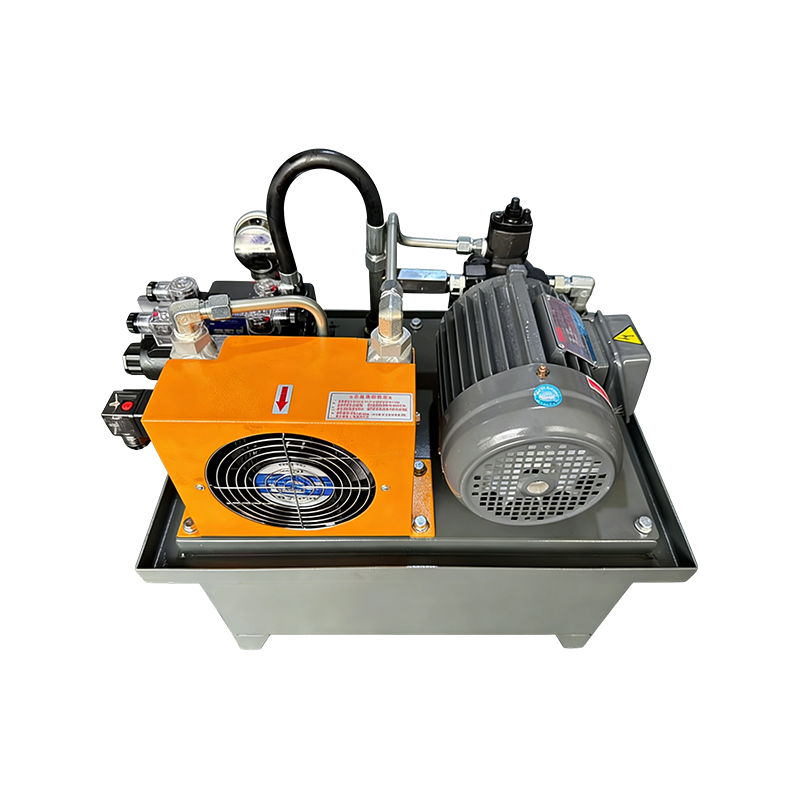
An intelligent drainage robot is a mobile pumping device that integrates a hydraulic power unit, an abrasion-resistant pump system, and a tracked or amphibious chassis. It operates through a remote control or terminal, allowing operators to work in areas people cannot safely access. Wuhu Qisheng Intelligent Equipment Co., Ltd. designs these robots around hydraulic drive systems, which is why they perform reliably in wet and dirty environments.
Core specifications: flow rate 600 to 2500 m3/h, remote control range depends on the radio system, power comes from a separate hydraulic power unit (HPU/EHPU).
Problem 1 - Terrain Adaptability Limits
Terrain adaptability is the most underestimated selection factor for drainage robots.
Most drainage robots use tracks or wheels. However, ramps in parking garages, steps in manhole shafts, and muddy river embankments can stop a machine completely. Some sites require climbing slopes over 25 degrees, while others need to handle buoyancy changes in deep water. A standard wheeled robot cannot complete these tasks.
Conventional tracked chassis
Suitable for hard flat ground, gentle slopes, and stable surfaces. Simple structure, lower maintenance cost.
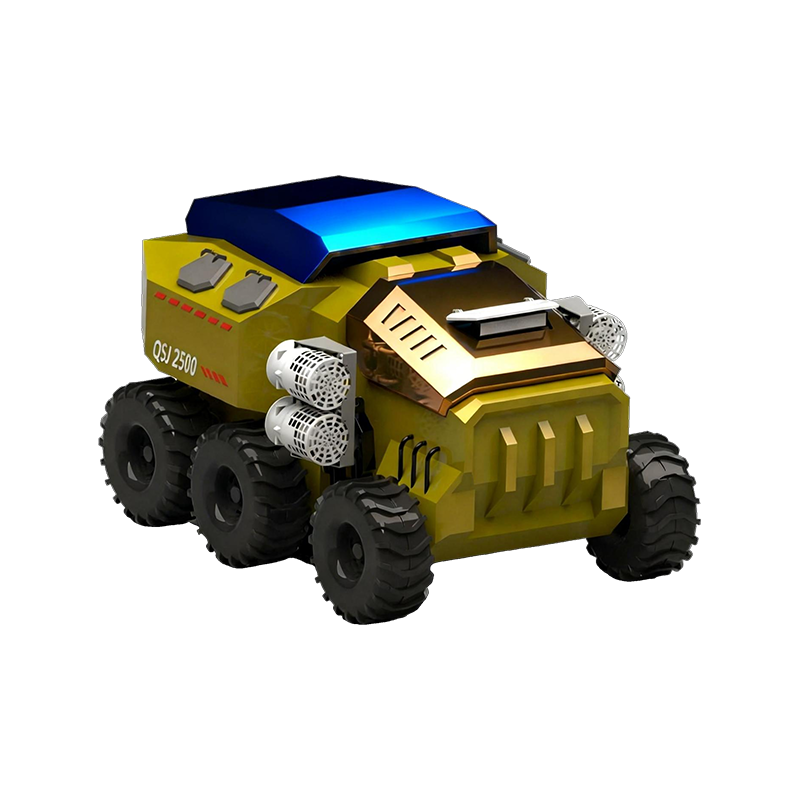
Amphibious chassis
Suitable for deep water, silt, steep ramps, and buoyancy changes. Sealed chassis and float design are the deciding factors.
On sites that combine mud, slopes, and deep water, an amphibious chassis offers the more practical solution.
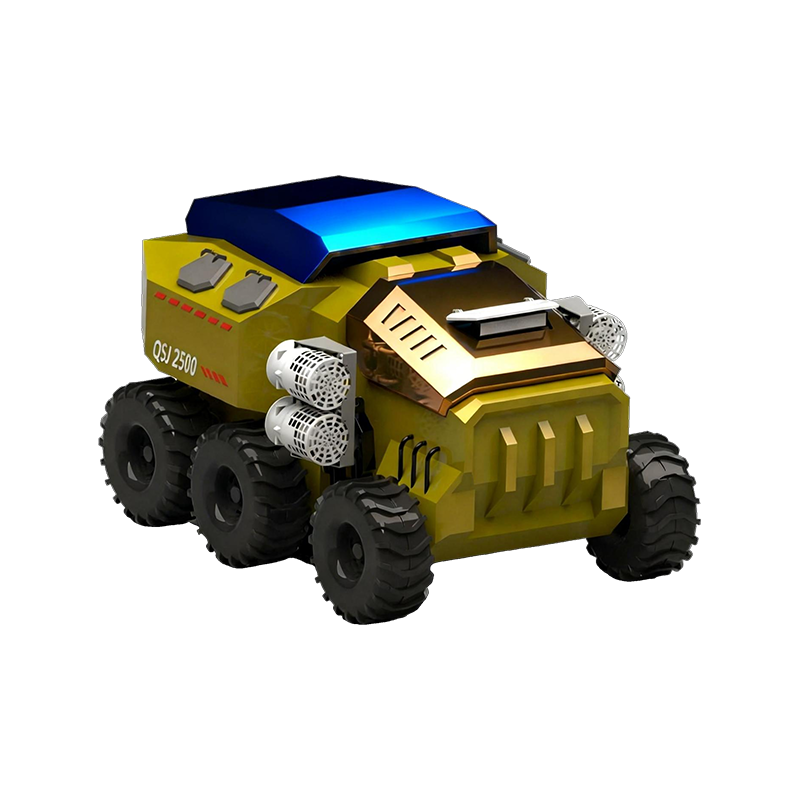 Amphibious Intelligent Drainage Robot (20002500 m³/h)The QSJ2500T Amphibious Intelligent Drainage Robot is engineered for drainage operations in complex environments, featuring a maximum flow rate of 20002500 m³/h. Utili...View Product →
Problem 2 - Hose Management and Discharge Distance
Hose management and discharge distance are the second biggest factor affecting drainage continuity.
Operators frequently underestimate the workload created by delivery hoses. After a 200-meter pumping job, manual hose reeling can take up to 45 minutes. The longer the discharge distance, the greater the friction loss and the lower the pump output.
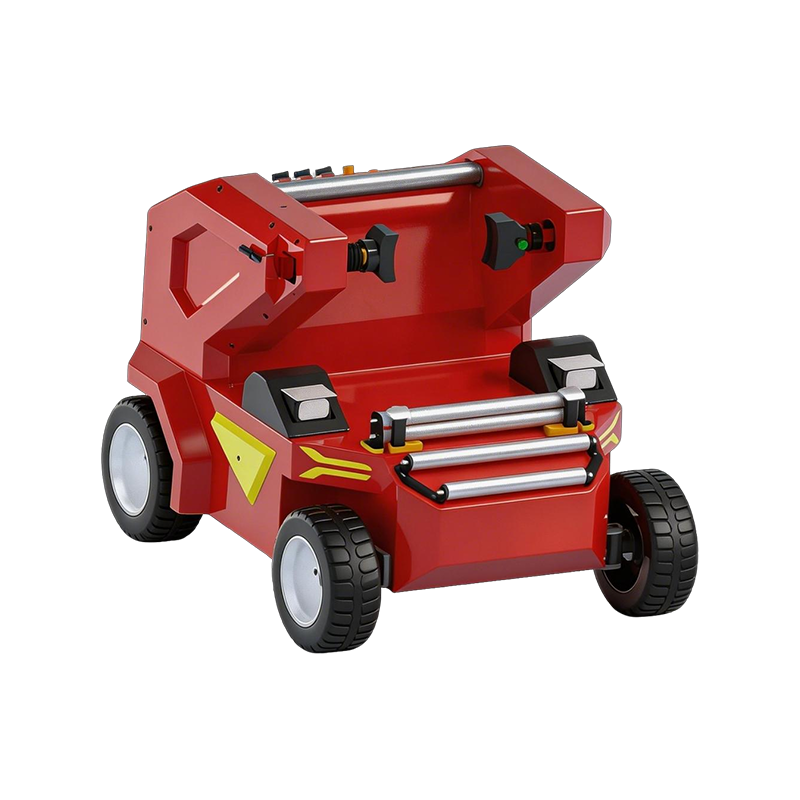
Automatic hose reeling reduces the reeling time to less than 10 minutes and prevents hose damage during transport.
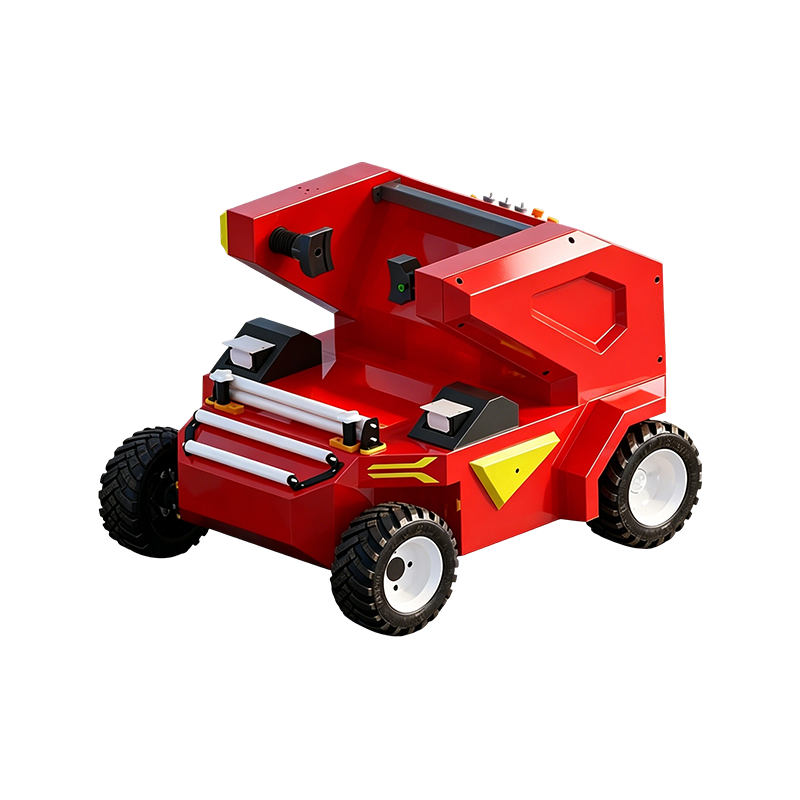 Intelligent Drainage Robot With Automatic Hose RollingThe Hose Recovery Robot is an intelligent robot designed for the deployment and recovery of hoses, particularly suited for scenarios requiring large-diameter hoses in ...View Product →
Problem 3 - Flow Rate and Head Mismatch
Flow rate and head mismatch is the root cause of low drainage efficiency.
The rated flow printed on a specification sheet is measured under ideal conditions. In real projects, the actual head changes, slurry content increases, and pipe diameter and elbows all reduce the real output. If a site needs to lift water 8 meters but the robot is rated for only 6 meters of head, the actual flow can drop to half the nameplate value.
Always verify the actual head and discharge distance before choosing a robot model, not just the maximum flow number.
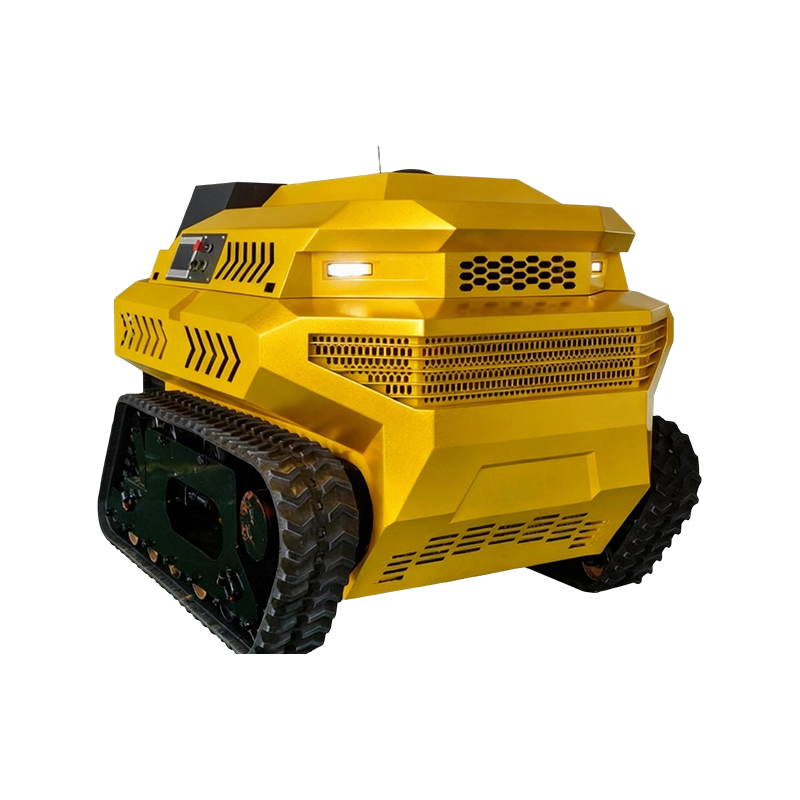
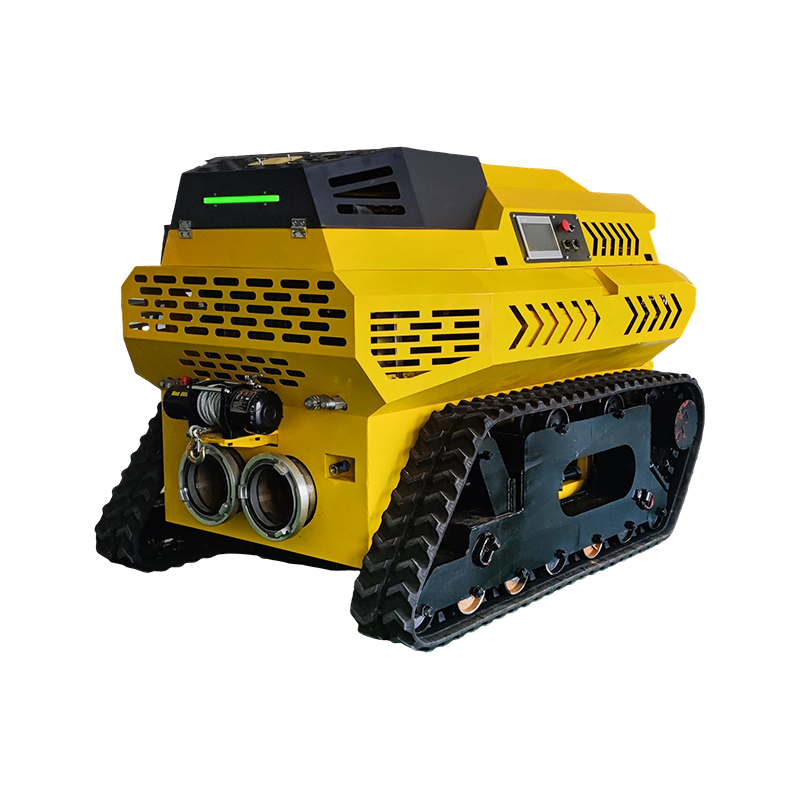 Tracked HighFlow Pumping Robot (10001300 m³/h)The QSJ1200W tracked intelligent drainage robot is a high-flow-rate emergency drainage device powered by a diesel engine and featuring a tracked chassis. This device h...View Product →
Problem 4 - Weak Control and Remote Operation
Remote control and obstacle avoidance directly determine operational safety and continuity.
In confined underground spaces, radio signal attenuation is a common issue. Some imported devices claim a remote range of 100 meters, but inside reinforced concrete structures they may only achieve 20 to 30 meters. Frequent signal interruptions leave the robot uncontrolled in a flooded area, creating a serious safety risk. New generation robots include obstacle avoidance sensors and live telemetry, letting operators monitor flow, battery, and hydraulic pressure from a safe position.
Control range is not a marketing number. Measure it in the actual environment before purchase.
Control distance and obstacle avoidance are must-verify indicators during procurement. Specific test procedures are covered in this article on intelligent drainage robot control range and avoidance.
Problem 5 - Maintenance Burden and Spare Parts
Drainage robots do not require frequent maintenance, but few operators know which parts matter most.
Hydraulic drainage robots handle solids better than electric pumps, but seals, impellers, and hydraulic hoses remain critical wear parts. A planned maintenance schedule can reduce breakdowns by more than 60 percent. Every unit should carry a seal kit and impeller spares, especially when pumping abrasive slurry.
500h Seal service life
800h Impeller wear cycle
1000h Hydraulic oil change
Solution Framework and Selection Guide
The solution starts with site assessment. Confirm the maximum slope, maximum discharge distance, and actual head before choosing a robot model.
| Working condition | Recommended solution | Key factor |
| Underground parking garage | Compact tracked drainage robot | Slope under 15 degrees, hard ground |
| River silt and deep water | Amphibious drainage robot | Buoyancy control, soft terrain |
| Discharge distance over 200 m | Tracked high-flow robot plus hose roller | Friction loss, continuous operation |
| Abrasive slurry and settled solids | Hydraulic slurry pump robot | Wear resistance, high concentration |
For a broader understanding of how these units perform in real sewer and municipal systems, see our practical notes on drainage robot efficiency in urban sewer systems.
Frequently Asked Questions
Can a drainage robot work directly in water?
Yes. Most tracked drainage robots have an IP68 waterproof rating and can operate in shallow water. The sealing class should be confirmed with the manufacturer before purchase.
How do I choose between tracked and amphibious models?
Tracked models suit hard flat ground with slopes under 15 degrees. Amphibious models are best for silt, deep water, and uneven terrain.
What size hydraulic power unit does a drainage robot need?
A medium robot can run with a 13 to 35 HP portable hydraulic power unit. Larger robots may require an 80 to 130 HP enclosed hydraulic power unit.
What is the difference between hydraulic and electric drive?
Hydraulic drive tolerates temporary overload and abrasive slurry, with power supplied by a hydraulic power unit. Electric drive requires site cabling and is less safe in flooded zones.
When in doubt, choose a machine based on your worst-case scenario, not the best-case data sheet.