 English
 русский
Qisheng
Qisheng
Qisheng
Qisheng
Qisheng
Qisheng
Qisheng
Qisheng
Qisheng
Table of Contents
What Is an Intelligent Drainage Robot?
When floodwater fills an underground car park or a collapsed culvert, the limiting factor is rarely the pump itself. It is getting the pump to the water, keeping it stable, and keeping operators away from hazards. An intelligent drainage robot is a self-propelled pumping system that solves that problem. It combines a tracked or amphibious carrier, a high-flow pump, and a remote-control and monitoring platform in one self-deploying unit.
In the context of flood control and industrial dewatering, the term refers to a mobile pumping machine, not a pipe-inspection or sewer-cleaning robot. The robot carries the pump into the water, positions itself where the intake is most effective, and sends operating data back to the operator so the crew can adjust the pumping operation without entering the danger zone.
Core Systems and Operating Principle
A drainage robot is best understood as three systems working together: a carrier, a pumping end, and a control chain. In hydraulic designs, the power source stays on dry ground and feeds the machine through hoses.
Mobile Carrier
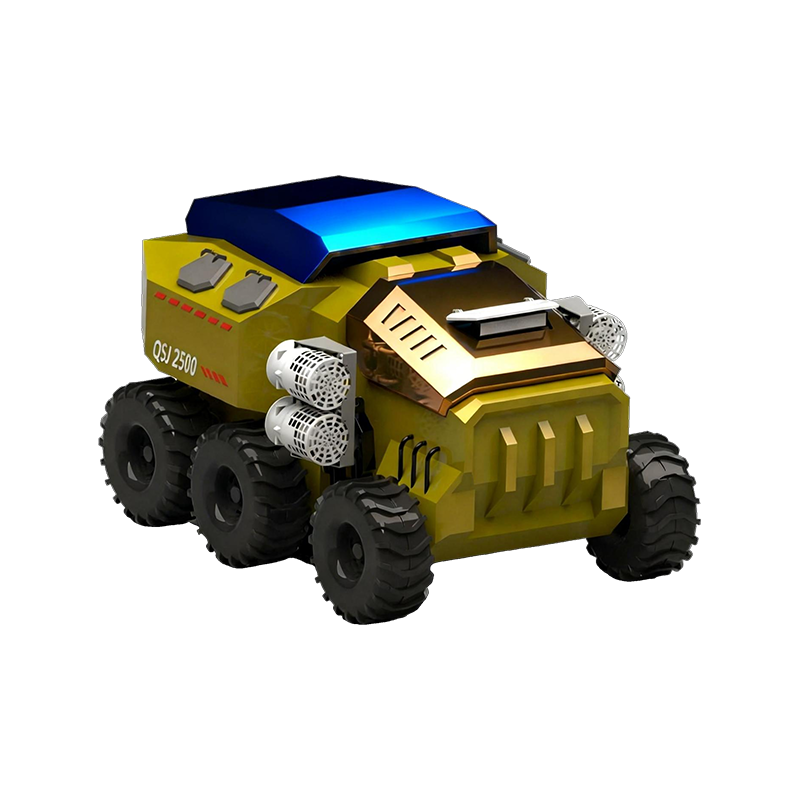
The carrier determines where the robot can go. Tracked units handle mud, rubble, stairs, and soft embankments; amphibious units can go further and enter the water directly. A compact tracked model is often chosen for narrow access points, while an amphibious intelligent drainage robot makes sense when the machine must cross from a bank into open water under its own power. In both cases, the chassis removes the need for cranes and for personnel to manhandle a suction hose into position.
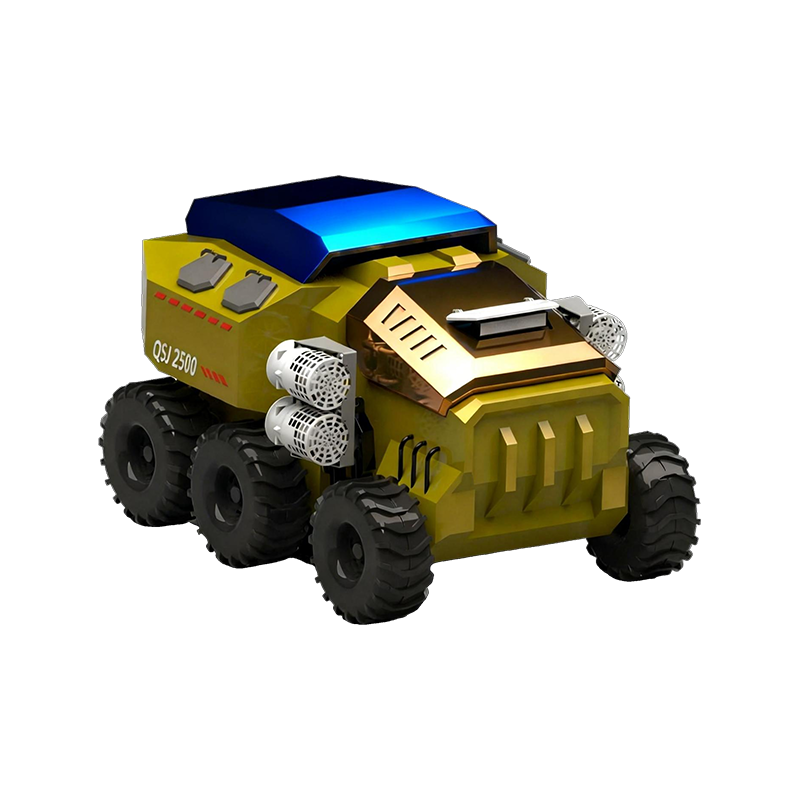 Wholesale Amphibious Intelligent Drainage Robot (20002500 m³/h) Suppliers, CompaWuhu Qisheng Intelligent Equipment Co., Ltd. Is China Wholesale Amphibious Intelligent Drainage Robot (20002500 m³/h) Suppliers, Exporter...View Product →
Pumping End
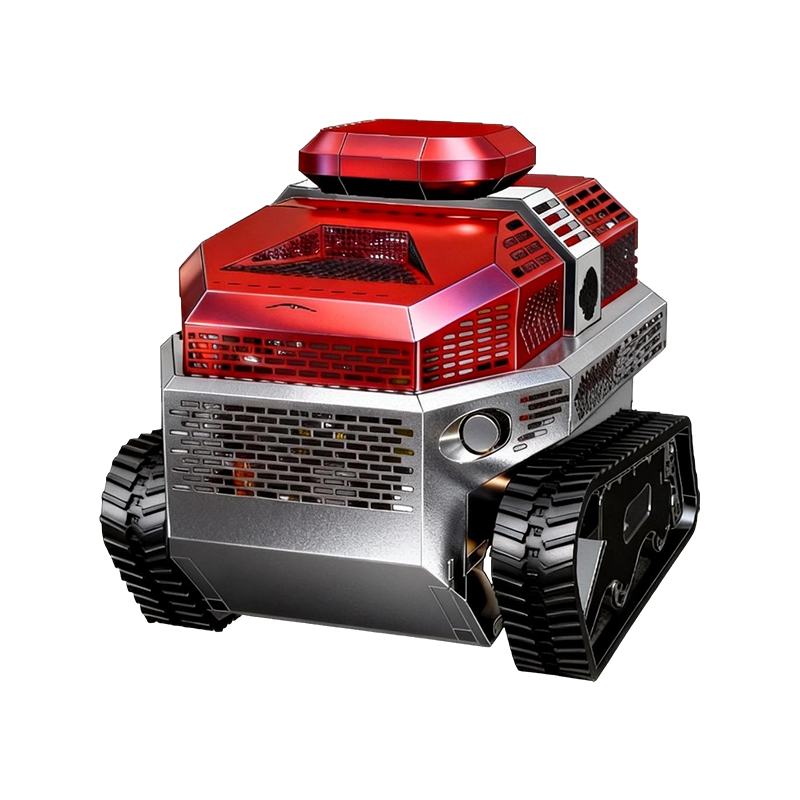
The pumping end determines how much water the robot can move and how quickly. Most drainage robots use axial-flow or mixed-flow pumps designed for high flow at low-to-moderate head. In the same product family, rated capacity typically starts around 600 m³/h and reaches 2,000–2,500 m³/h for amphibious machines. A tracked high-flow pumping robot pairs this kind of pumping end with a tracked carrier for larger dewatering jobs.
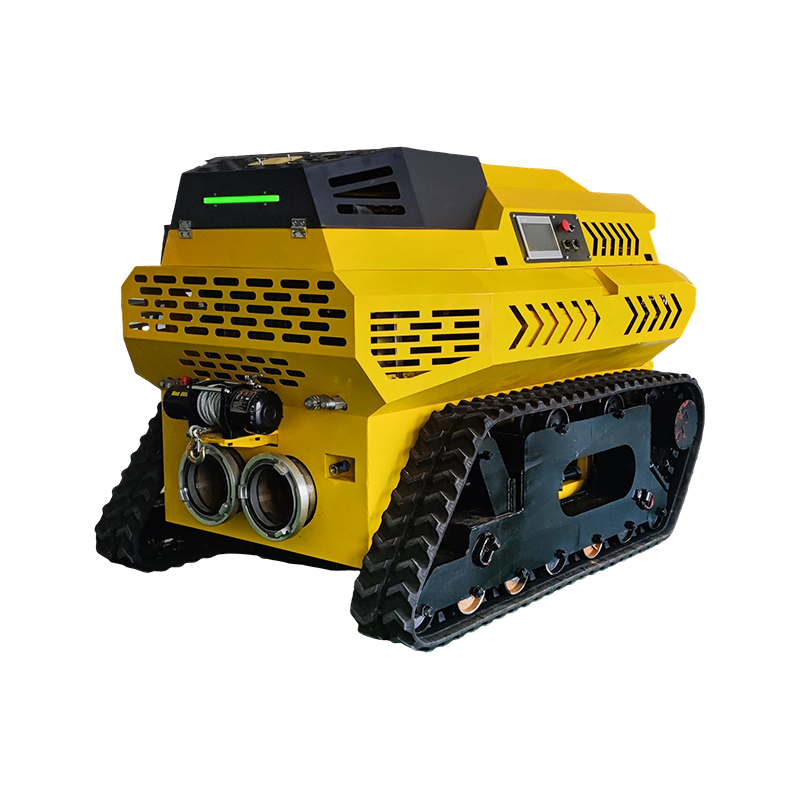 Wholesale Tracked HighFlow Pumping Robot (10001300 m³/h) Suppliers, Company, ExpWuhu Qisheng Intelligent Equipment Co., Ltd. Is China Wholesale Tracked HighFlow Pumping Robot (10001300 m³/h) Suppliers, Exporter, Compa...View Product →
Control and Communications
The “intelligent” part of an intelligent drainage robot is the control system, not the pump itself. The operator uses a remote controller to steer the robot, start and stop the pump, and monitor the machine while it works. Better systems transmit live data: water level, pump speed, power-unit status, tilt, and position. This kind of telemetry matters when the robot is working in a flooded basement or culvert that would be unsafe for a person. The practical limits of remote operation are easier to understand when you review how control range, obstacle avoidance, and live data affect a drainage robot deployment.
Power Supply and Drive
Power can be electric or hydraulic. In a hydraulic robot, the pump end is driven by oil from a separate power pack on stable ground. That arrangement keeps heavy components away from the water and lowers the electrical risk in flooded areas. It is one reason hydraulic drainage equipment is common in emergency response, construction, and agricultural water control. The power pack may be a portable unit or a larger system; large-scale hydraulic power unit selection becomes important when the robot must work far from a vehicle or building power source.
What to Look For in an Intelligent Drainage Robot
Not every flooding scenario needs the same machine. Define the water volume, the terrain, the distance from power, and the acceptable time to dewater before comparing specifications.
Flow Rate and Head
Flow rate is the volume the pump can move in an hour; head is the vertical height the pump can overcome. A machine rated at 600 m³/h may be enough for a construction excavation, while a flooded urban area may require 1,000–2,500 m³/h. Discharge hose size and length matter just as much as the pump rating, because friction loss reduces effective flow. Ask for the pump curve, not just the maximum flow number. The same principle applies to conventional hydraulic pumps, and a flow-rate and durability guide for hydraulic drainage pumps can help you interpret those numbers.
Mobility and Site Access
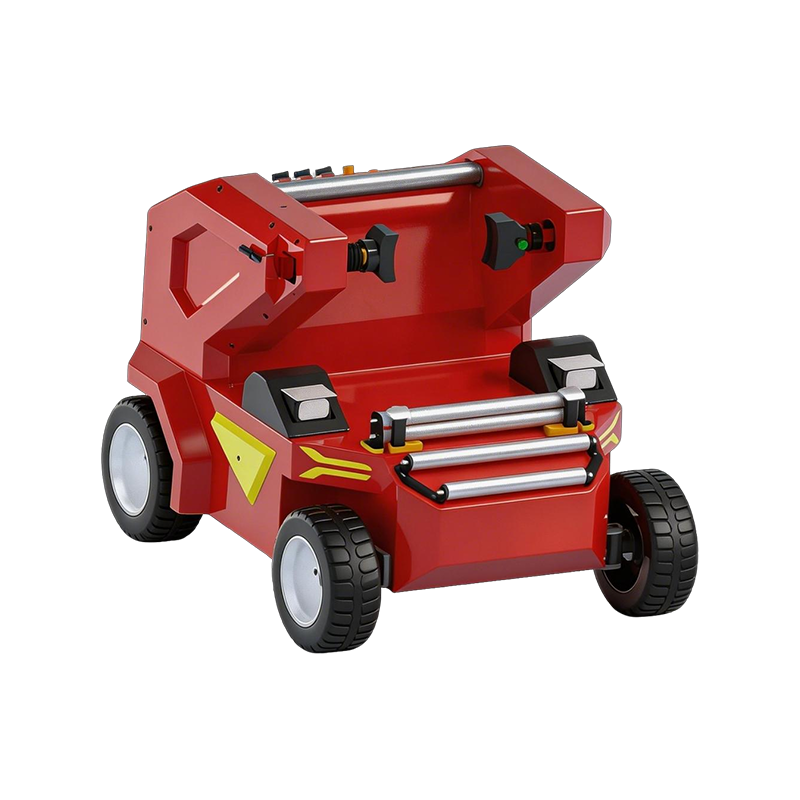
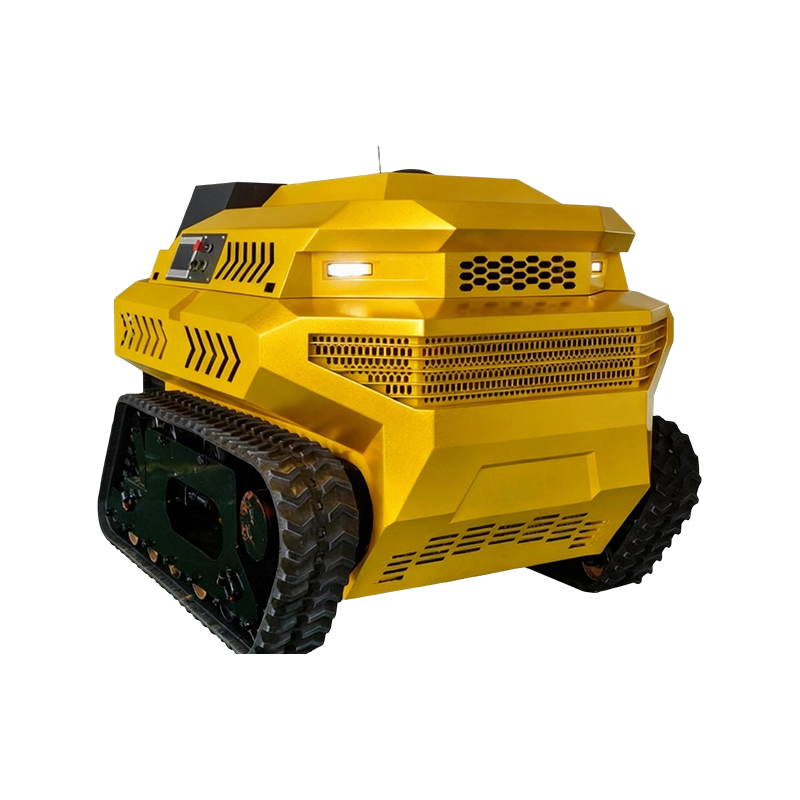
Check whether the robot must climb kerbs, cross soft ground, enter water, or fit through a building opening. Tracked robots offer traction on uneven surfaces. A compact tracked intelligent drainage robot is easier to transport and fit through narrow entrances, while larger tracked or amphibious models provide more capacity but need more turning room and more hose length.
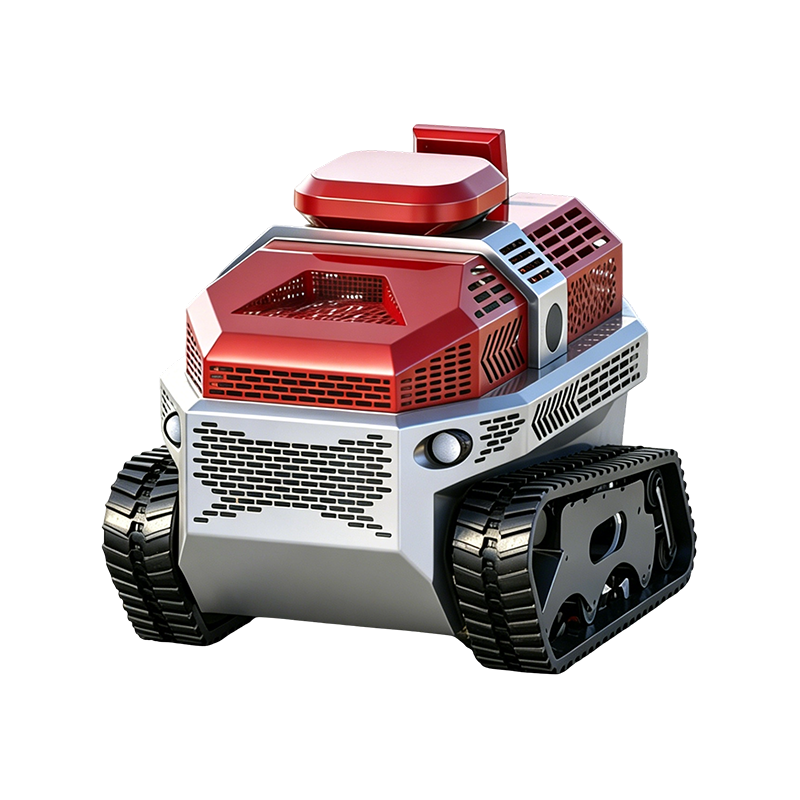 Wholesale Compact Tracked Intelligent Drainage Robot (600m³/h) Suppliers, CompanWuhu Qisheng Intelligent Equipment Co., Ltd. Is China Wholesale Compact Tracked Intelligent Drainage Robot (600m³/h) Suppliers, Exporter,...View Product →
Control, Monitoring, and Safety
Look for camera feedback or obstacle detection, a reliable control range, and clear warnings when the signal is lost. In flood response, the robot may be out of sight in a tunnel, so the operator has to trust the machine’s sensors. Automatic shutdown, tilt sensing, and water-level feedback reduce the risk of running dry or becoming stuck. These features may cost more at the start, but they save time and avoid damage during the first emergency deployment.
When comparing suppliers, ask whether the robot and its power unit are designed as one system. A manufacturer that builds both the hydraulic power unit and the drainage robot can simplify integration, hose routing, commissioning, and spare-parts management.
Where Intelligent Drainage Robots Are Used
Intelligent drainage robots are used where people cannot safely stand or where a fixed pump is impractical. Common applications fall into three groups.
Urban Flooding and Underground Facilities
Car parks, underpasses, tunnels, and building basements have limited access and become hazardous quickly. A robot can be driven down a ramp and start pumping while the operator stays at street level.
Emergency Flood Rescue
In rescue operations, speed matters. A self-propelled pump can be deployed from a truck, cross uneven ground, and begin dewatering before all hoses are laid out. Robots with automatic hose reels make the transition from truck to water faster. Remote control keeps rescue crews away from moving water and submerged hazards.
Construction, Agriculture, and Environmental Work
Excavations, irrigation channels, ponds, and low-lying farmland create similar challenges: water that is too deep, too far from a power source, or too unstable for a standard electric pump. A robot can move between sites on a trailer and be powered by a hydraulic power pack carried on the same vehicle.
Intelligent Drainage Robot vs Conventional Drainage Pump
The difference is not just the tracks. A drainage robot goes to the water, while a conventional pump waits for the water to be brought to it. This changes crew size, safety, and setup time.
| Factor | Conventional Portable Pump | Intelligent Drainage Robot |
|---|---|---|
| Placement | Manual positioning; crew must get the pump close to the water | Self-propelled; can be driven to the water and repositioned remotely |
| Terrain | Requires firm, accessible ground fairly close to the water | Tracked and amphibious designs handle mud, stairs, embankments, and shallow water |
| Operator safety | Personnel may need to enter flooded or unstable areas | Operator stays at a safe distance and uses live feedback |
| Power arrangement | Usually electric cable or long suction hose from a fixed pump | Pump travels with the robot; power source can remain on dry ground |
| Deployment speed | Fast if access is easy; slow if terrain is difficult | Slightly more setup for control and hoses, but can reach inaccessible spots without heavy lifting |
| Best fit | Open, stable areas with short suction lifts | Flooded basements, tunnels, culverts, embankments, and rescue scenes |
A Closing Rule: Match the Robot to the Mission
An intelligent drainage robot is not a replacement for every pump. It is the solution when access, safety, or terrain prevents a conventional pump from doing the job. Define the flow rate and head first, then choose the carrier that can reach the water, then add the remote-monitoring features your crew actually needs. A compact tracked unit at 600 m³/h can be the right answer for a tight site; a 2,000–2,500 m³/h amphibious machine may be the answer for a flooded road or canal. In either case, the goal is the same: put high-flow dewatering where it is needed, keep the operator out of the hazard, and use live data to finish the job faster.