 English
 русский
Qisheng
Qisheng
Qisheng
Qisheng
Qisheng
Qisheng
Qisheng
Qisheng
Qisheng
Table of Contents
A municipal draining crew learns more about a drainage robot manufacturer in one failed pump cycle than in five sales presentations. A tracked unit rated at 600 m3/h can clear a culvert in hours, while the same housing with an undersized hydraulic drive can stall in abrasive slurry within weeks. The difference starts with engineering depth, not with brochures. The checks below separate a manufacturer that engineers, builds, and supports a drainage robot from one that only assembles components.
What a Reliable Intelligent Drainage Robot Manufacturer Must Prove
A reliable intelligent drainage robot manufacturer proves itself through four hard capabilities: hydraulic engineering depth, abrasion-resistant pump design, terrain mobility, and lifecycle support. These four areas decide whether a machine survives a flood season or becomes an expensive field failure.
An intelligent drainage robot is a self-propelled pump carrier that integrates a hydraulic or electric power source, a flood drainage pump, a tracked or amphibious chassis, and a remote control system into one independently deployable unit.
When you compare suppliers, run them against seven checks. A manufacturer that cannot answer a question in any one of these categories is asking you to carry that risk. The seven checks are:
- Hydraulic system integration
- Pump wear and abrasion resistance
- Mobility and terrain capability
- Control range and obstacle avoidance
- Testing and validation evidence
- Customization for real working conditions
- Spare parts and lifecycle support
Hydraulic integration is not about having a pump on the chassis. It is about matching the power unit displacement and pressure to the pump flow and head requirements. Ask for the hydraulic power unit specification: closed-loop or open-loop, rated pressure, and whether the flow can be split between track motors and the pump. If the manufacturer cannot provide these numbers, walk away.
Which Checks Matter Most: Weighting the Audit
Weight hydraulic drive reliability and pump abrasive durability above mobility and control, because the pump and drive fail first under continuous flood duty. Silt and debris attack the wetted parts, and sustained operation raises heat that stresses hydraulic seals.
Suggested weighting for a manufacturer audit scorecard
Distribution across the five audit areas. Pump and drive points total 55 percent because these components explain the majority of unplanned downtime.
Control reliability deserves attention even though it carries less weight. In narrow sewers, a robot is only useful if the operator can see its position, steer it past obstructions, and monitor live flow data. Check whether the manufacturer publishes control range, obstacle avoidance, and live data telemetry for its robots. A remote link that drops over 200 meters turns an expensive asset into an expensive problem.
Testing evidence also separates real manufacturers from assemblers. Ask whether the robot has been tested in a slurry loop or a real drainage channel. Verify the wear mechanism: whether the impeller is hardened, whether the volute liner can be replaced, and what the mean time between rebuilds is. A manufacturer that publishes test data is saying the machine has already survived the conditions you plan to use it in.
Match the Robot Configuration to Your Drainage Task
The most reliable manufacturer offers multiple chassis configurations, because one robot cannot handle both open flooded areas and confined culverts. Amphibious units deliver the highest throughput on open water. Tracked high-flow machines balance access and output. Compact tracked robots suit narrow entries and limited vehicle access.
600m3/h small-frame output
2500m3/h amphibious peak
55%pump and drive audit weight
| Configuration | Best suited for | Typical flow | Key tradeoff |
| Amphibious | Flooded open areas, channels, ponds | 2000-2500 m3/h | Highest output, larger footprint |
| Tracked high-flow | Debris-heavy terrain, steep access | 1000-1300 m3/h | Balance of mobility and capacity |
| Compact tracked | Confined culverts, narrow passages | 600 m3/h | Easy transport, lower capacity |
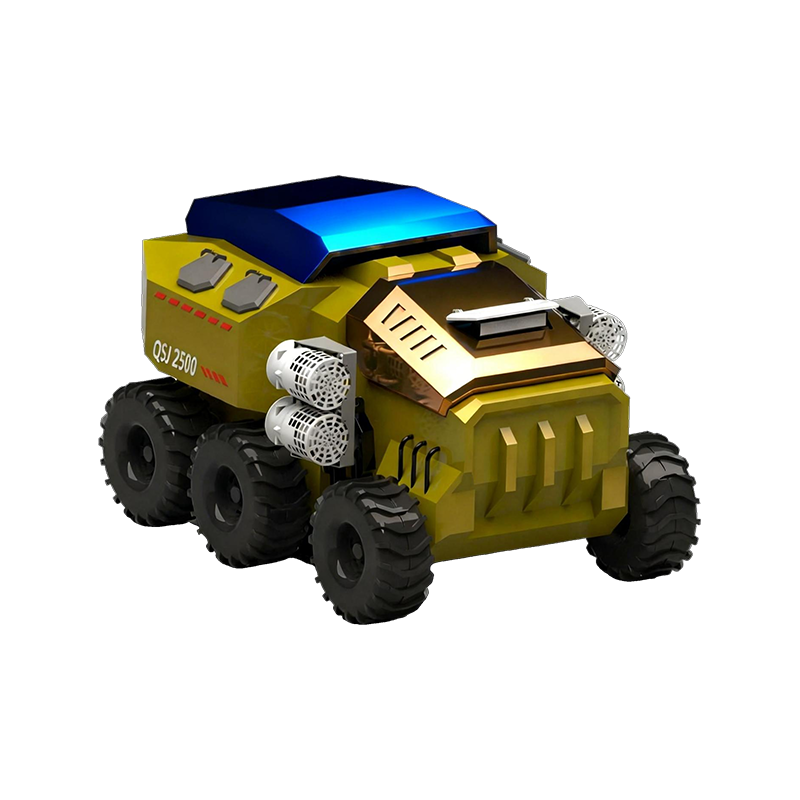
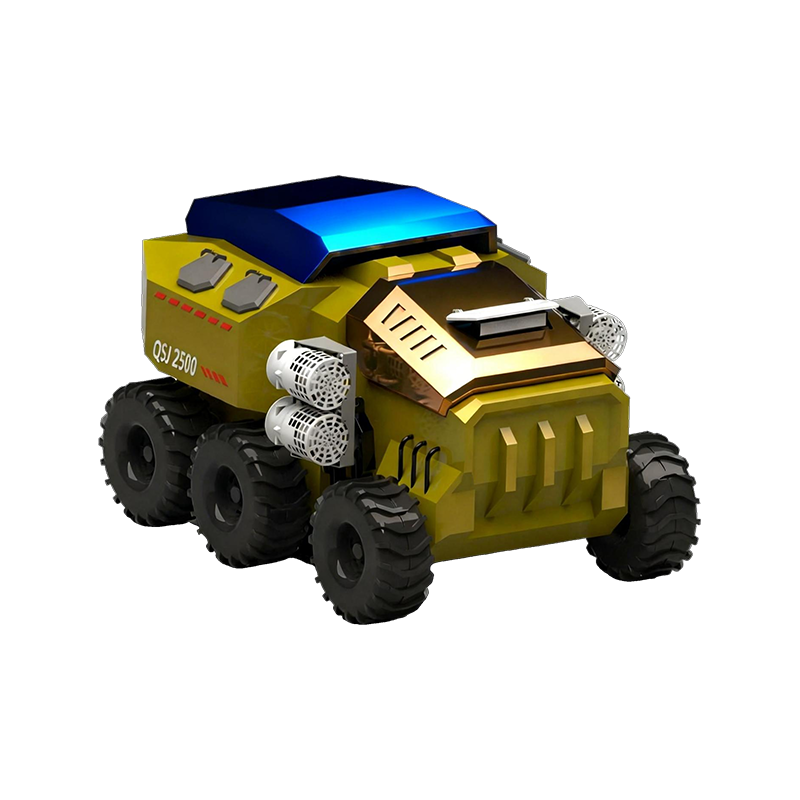 Amphibious Six-Wheel Drainage Robot with 2000-2500 m³/h FlowThis amphibious robot uses a six-wheel drive to move across land and water, with four hydraulic pumps delivering high-capacity drainage for open flooded areas. It also supports modular attachments like winches.View Product →
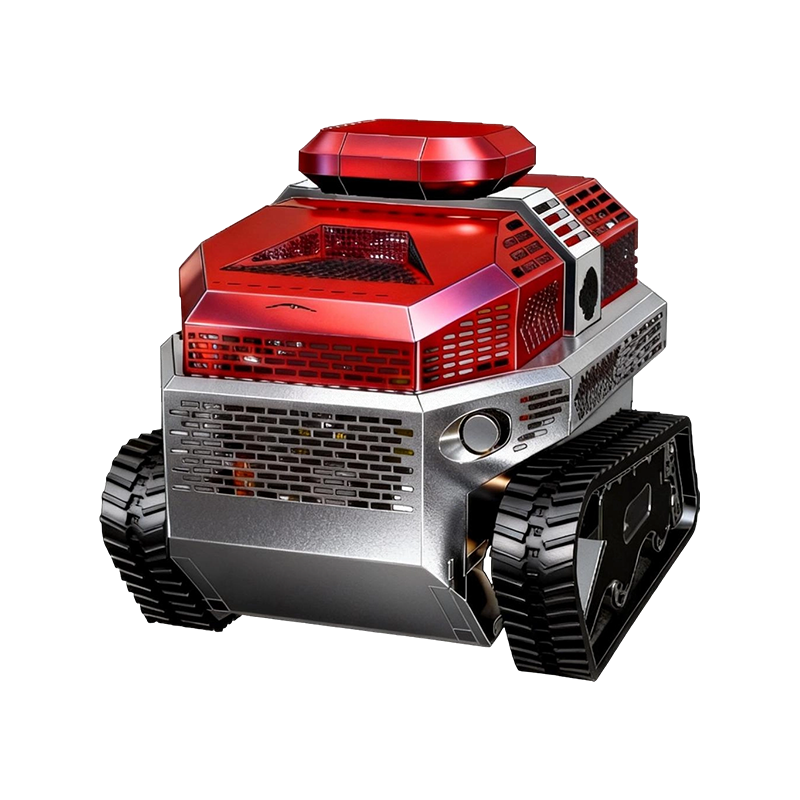
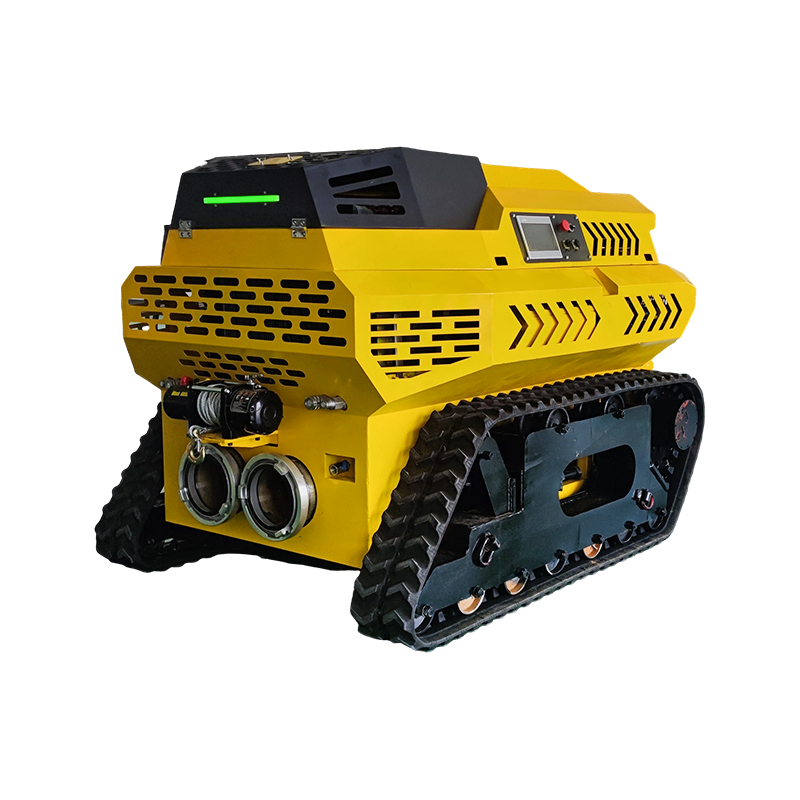 Tracked Diesel-Powered Drainage Robot with Dual Hydraulic PumpsWith a tracked chassis and two independently controlled pumps (1000-1300 m³/h), this machine handles rough terrain and long-distance drainage. It doubles as a mobile hydraulic power source.View Product →
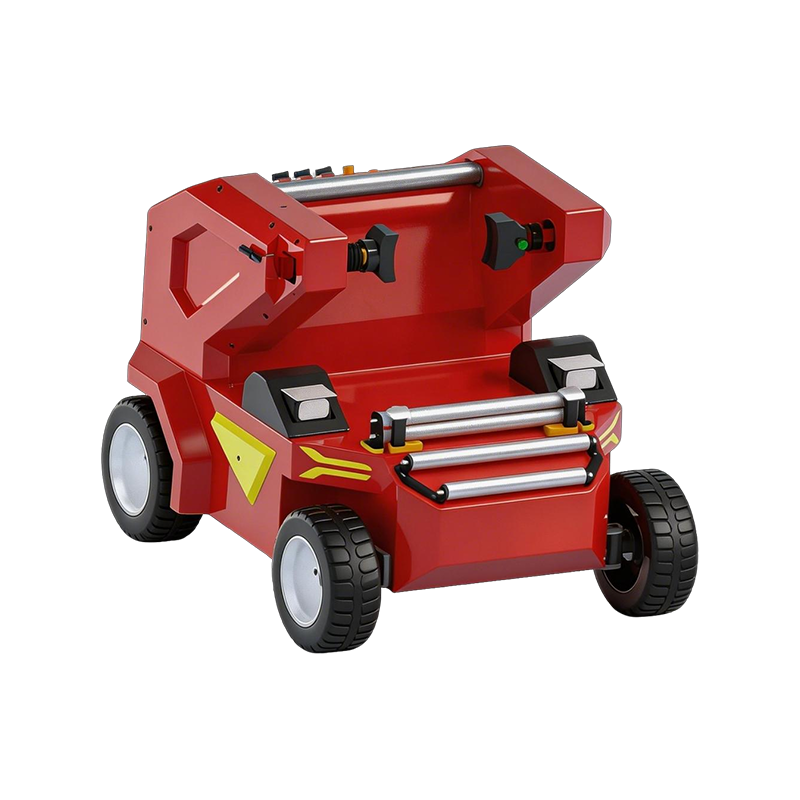
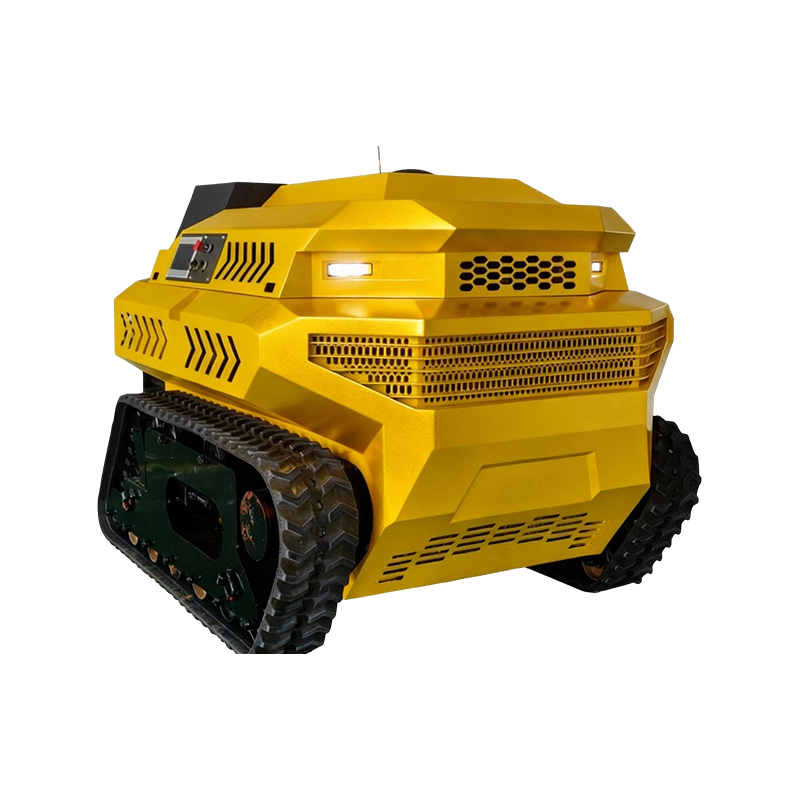
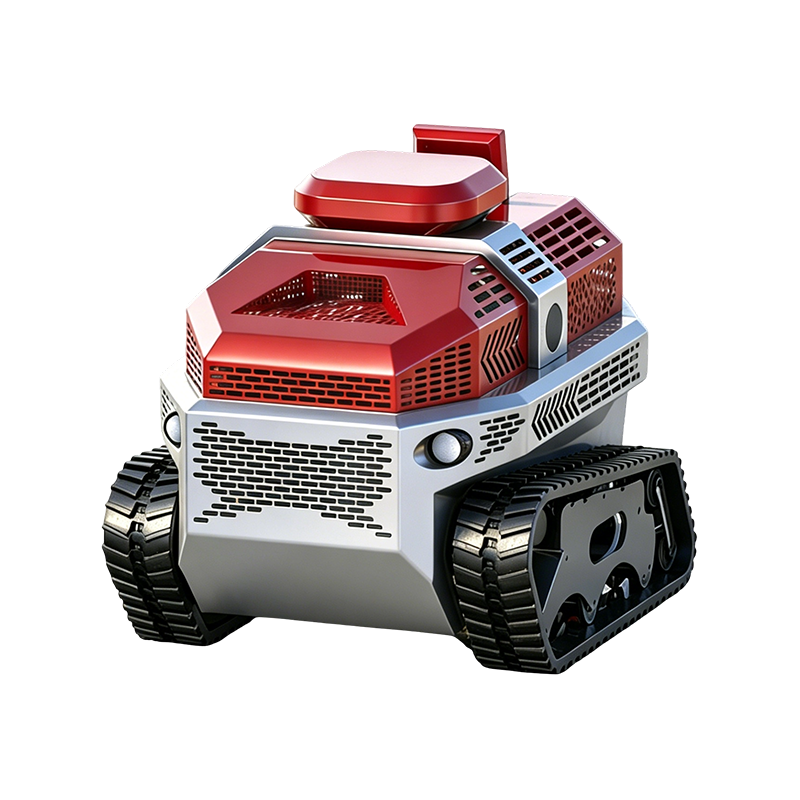 Compact Tracked Drainage Robot for Confined Spaces (600 m³/h)Small enough to fit through standard doorways, this 35 kW unit moves easily in tight spaces. Its single 600 m³/h pump and auxiliary hydraulics make it versatile for basements and narrow passages.View Product →
The wetted parts of a drainage robot must resist corrosion by muddy, chemically aggressive flood water. Stainless steel pump housings and hardened impellers are a reasonable baseline for urban and agricultural drainage. Wuhu Qisheng Intelligent Equipment Co., Ltd. builds the hydraulic power units and drainage pumps in-house, which lets its amphibious, tracked high-flow, and compact tracked robots be matched to a job rather than forced into a generic frame.
Before you commit to a form factor, review the flow rate and durability guide for hydraulic drainage pumps. A robot with a 2000 m3/h rating can still underperform if the pump curve and the hydraulic power unit are mismatched.
Procurement Lifecycle: From Specification to Spare Parts
Longevity begins before delivery. A written specification, a factory acceptance test, commissioning support, and a documented spare parts plan prevent most post-purchase failures.
Specification review
Define flow, head, suction, debris size, and access constraints in writing. A capable manufacturer turns these into a matched pump and power unit selection.
Factory acceptance test
Run the unit with water before shipment. Confirm flow rate, pressure, control range, and track operation under load, not just idle movement.
Commissioning and training
On-site setup and operator training prevent the two most common field errors: wrong hose routing and improper shutdown sequences.
Spare parts commitment
Ask for a parts list with lead times for impellers, seals, hydraulic hoses, and filters. A manufacturer that holds these parts in stock keeps your robot working.
Another useful check: whether the manufacturer builds its own components or resells them. An OEM with in-house hydraulic power unit and drainage pump production has control over quality, lead times, and design changes. A trader simply passes on the risk of a supplier failure.
Field uptime depends on manufacturer commitment: a 15 percent spare parts weighting in the audit reflects the cost of a single unplanned downtime event during flood season.
Frequently Asked Questions
How do I verify a drainage robot manufacturer's hydraulic engineering capability?
Ask for the hydraulic power unit specification, the pump curve, and a schematic of the hydraulic circuit. A manufacturer that designs power units in-house, such as Wuhu Qisheng Intelligent Equipment Co., Ltd., can control the pressure and flow matching responsible for reliable field behavior.
What is the most common cause of intelligent drainage robot failure?
The most common cause is pump abrasion from silt and debris. It is followed by hydraulic seal failure under continuous load. Both are preventable with a properly sized pump, wear-resistant materials, and a correct hydraulic power unit match.
Should I choose an amphibious or a tracked drainage robot?
Choose an amphibious robot for large flooded open areas with no access constraints. Choose a tracked high-flow robot for debris-heavy sites and steep approaches. Choose a compact tracked robot for culverts and narrow passages where transport space is limited.
How long should a manufacturer be committed to spare parts support?
Insist on a written spare parts commitment for at least five years, with defined lead times for impellers, seals, hoses, and filters. The manufacturer should confirm it will keep source documentation and production tooling for the whole service life.