 English
 русский
Qisheng
Qisheng
Qisheng
Qisheng
Qisheng
Qisheng
Qisheng
Qisheng
Qisheng
Table of Contents
- 1 Why testing requirements determine power pack lifespan
- 2 The test sequence from assembly to dispatch
- 3 Pressure and leak testing: pass criteria explained
- 4 Contamination control and fluid quality verification
- 5 Thermal, electrical, and noise qualification
- 6 Documentation and traceability
- 7 How to audit a manufacturer's test program
- 8 Frequently asked questions
An equipment distributor once took delivery of 40 hydraulic power packs, each accompanied by a one-page test report stamped "PASSED." Six months later, nine units were back in the workshop: manifold weeps, a cracked cooler line, and two pumps that had lost displacement. Follow-up oil analysis showed contamination at ISO 4406 class 22/19/16 - three classes dirtier than the manufacturer's own specification. The entire quality program had been a 60-second idle run and a visual leak check.
That scenario repeats whenever testing requirements are treated as a checkbox. Hydraulic power pack manufacturing is not simply assembling a reservoir, pump, motor, and valve block. The finished unit must produce a specified pressure and flow, stay leak-tight through thermal cycles, hold contamination within tolerance, and sustain that performance under real load. This article outlines the key testing and quality requirements that distinguish a manufactured power pack from an engineered one: pressure verification, leak testing, contamination control, thermal and electrical qualification, and the documentation that makes every result traceable.
Why testing requirements determine power pack lifespan
Testing is the only measurable evidence that a power pack will survive its rated duty cycle. A unit that is merely assembled and run for a few minutes at no load will not reveal a relief valve that sticks near its set point, a pump that cavitates at maximum reservoir lift, or a cooler sized too small for continuous operation. These faults appear only when the circuit is pressurized, loaded, and thermally soaked for a realistic period. A meaningful factory test therefore simulates the customer's duty, not just the unit's idle behaviour.
A tested hydraulic power pack is a unit that has individually verified pressure output, flow delivery, external leak tightness, fluid cleanliness, and functional response under simulated operating conditions, recorded against defined pass criteria before dispatch.
1.5xminimum shell test pressure applied to the reservoir and manifold, held for 10 minutes
10 minminimum hold time for the envelope test at 1.5x rated working pressure
18/16/13ISO 4406 cleanliness target for a new power pack before dispatch
60°Crecommended ceiling for stabilized oil temperature under continuous rated load
The test sequence from assembly to dispatch
Every hydraulic power pack, regardless of size or application, should pass the same eight-stage test sequence. Skipping any stage moves the risk from the factory to the customer site, where failures cost far more.
- Incoming component verification - confirm pump displacement, motor ratings, valve cracking pressures, and seal certificates against the bill of materials.
- Shell pressure test - pressurize reservoir and manifold to 1.5x rated working pressure, hold 10 minutes.
- No-load functional run - operate 15-20 minutes with no load; verify rotation direction, pilot pressure, and control response.
- Rated load soak - run at rated pressure and flow for 45-60 minutes; monitor oil temperature, noise, and vibration.
- External leak check - apply working pressure; inspect fittings, manifold faces, and seals for wetting or drips.
- Oil cleanliness sampling - take a particle count from the return line and record the ISO 4406 code.
- Electrical and control verification - check wiring, emergency stop, pressure switch settings, thermostats, and insulation resistance on electric units.
- Final inspection and test certificate - verify dimensions, finish, fastener torque, and issue a serial-numbered test record.
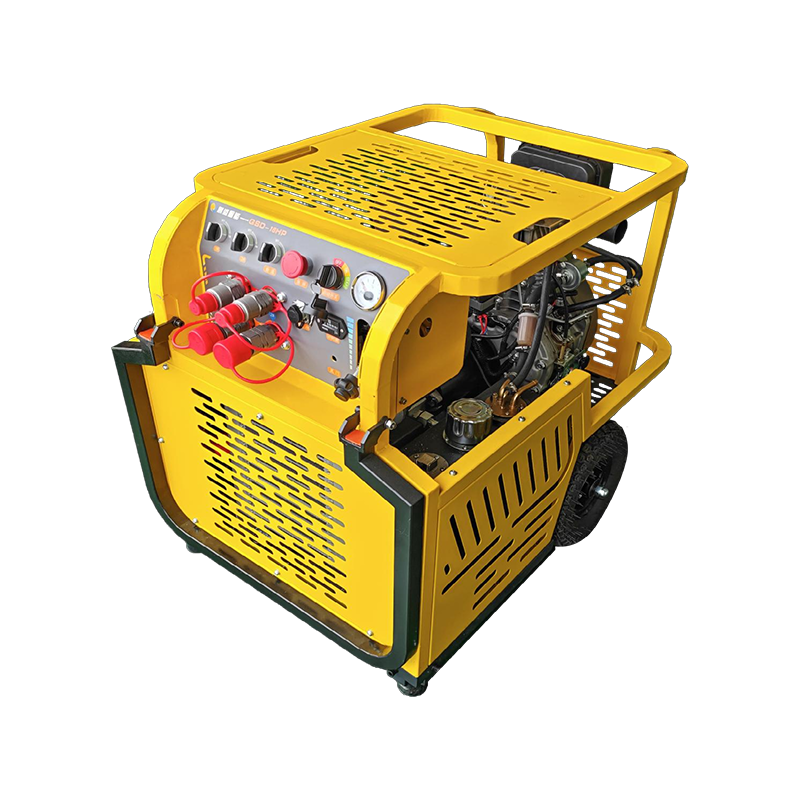
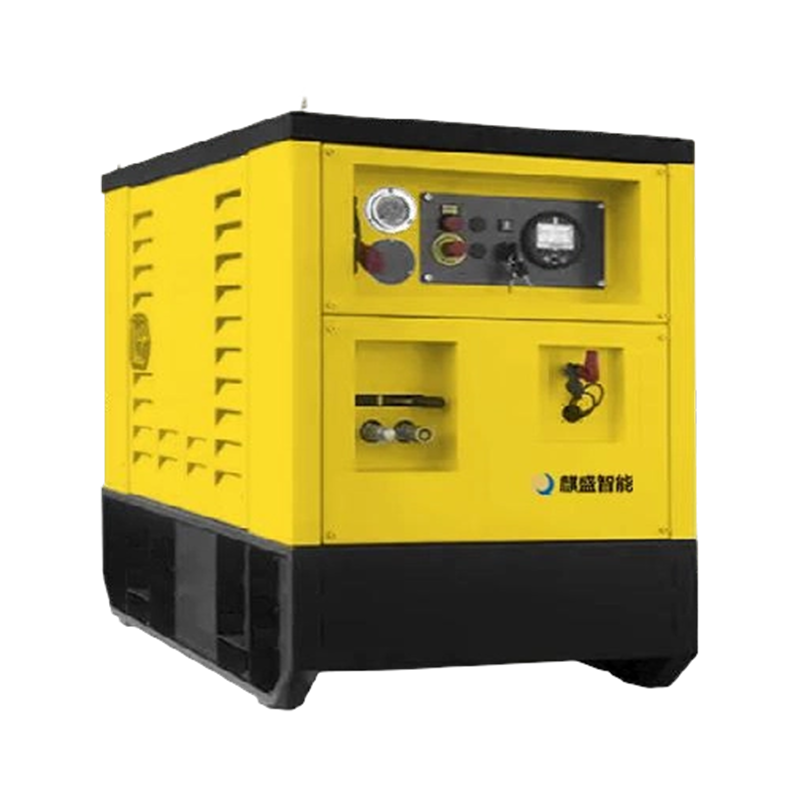
At Wuhu Qisheng Intelligent Equipment Co., Ltd., production units such as the 130 HP enclosed hydraulic power unit follow this routine on every build, with the logged results kept in the unit's traceable quality file.
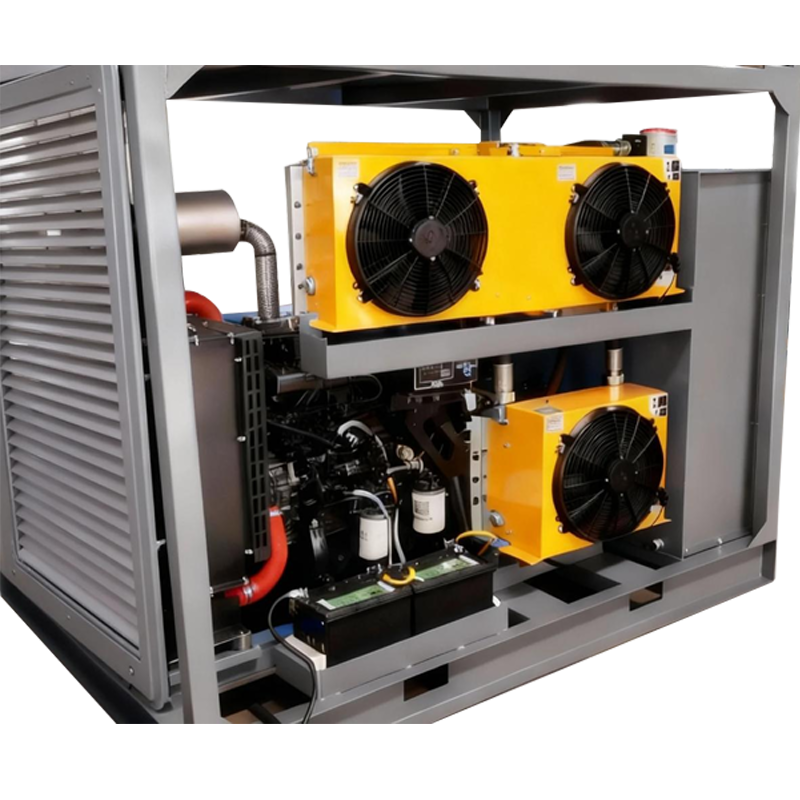 130HP Enclosed Hydraulic Power Unit with Factory Test TraceabilityThis 130 HP enclosed hydraulic power unit from Wuhu Qisheng is built for ultrahigh flow output and durable continuous operation. Its documented factory acceptance test results are logged in a traceable quality file, ensuring verified performance before delivery.View Product →
Typical factory acceptance test, 125-minute allocation
Shell pressure test
15 min
No-load functional run
20 min
Rated load soak
60 min
External leak check
10 min
Oil and electrical checks
20 min
The rated load soak occupies the largest block for a reason: thermal stability is the single best predictor of long-term reliability in a hydraulic power pack.
Pressure and leak testing: pass criteria explained
Pass criteria are not "no leaks." They are measurable thresholds for applied pressure, hold time, and pressure decay. A manufacturer should publish these numbers in the test procedure before the order is placed, not after a dispute arises.
| Test type | Applied pressure | Hold time | Acceptance criterion |
| Shell envelope test | 1.5x rated working pressure | 10 min | No visible deformation; pressure decay below 1% |
| Working pressure test | 100% rated pressure | 15 min | Pressure decay below 1% of set point |
| External leak test | 100% rated pressure | 5 min | No wetting, drip, or bubble formation |
| Relief valve verification | Set point within rated tolerance | 5 actuation cycles | Cracking pressure within 1% of factory setting |
The 1.5x shell multiplier matters because weld defects and manifold porosity become visible only when the structure is stressed beyond its normal envelope. A unit that survives a 10-minute shell test at 1.5x rated pressure is far less likely to develop a fatigue crack in service.
Contamination control and fluid quality verification
Oil cleanliness is the most commonly skipped test and the fastest way to shorten a power pack's service life after dispatch. A dirty fill can reduce pump life by half before the unit ever reaches the customer's equipment.
ISO 4406 cleanliness codes describe particle counts per millilitre at three size thresholds. A code of 18/16/13 means 18 for particles larger than 4 microns, 16 for particles larger than 6 microns, and 13 for particles larger than 14 microns. New power packs should ship at 18/16/13 or better; the preferred target for servo-controlled circuits is 17/15/12.
- Draw samples from a dedicated port upstream of the return filter, not from the filler cap.
- Run the pump at operating temperature for at least 30 minutes before sampling; cold oil misrepresents particle counts.
- Use a calibrated laboratory particle counter; a field patch test is an indicator, not a certificate.
- Record the ISO code, sampling date, and sample point on the unit's test certificate.
Thermal, electrical, and noise qualification
A hydraulic power pack is a heat machine; thermal testing verifies that the cooling system holds a stable oil temperature under rated load. During the rated load soak, oil temperature at the reservoir should stabilize below 60°C for mineral oil, and below 70°C at the hottest return-line point. If the temperature keeps climbing past these values, the cooler or reservoir heat-exchange surface is undersized.
Electric units add electrical safety tests to the mechanical sequence. Insulation resistance between motor windings and earth should be at least 100 megohms when measured with a 500 V DC megger, and the unit must withstand 1.5x rated voltage for one second without breakdown. Enclosed power packs should stay below 80 dB(A) measured one metre from the enclosure surface, following ISO 4413 guidance. The 3-8 kW electric hydraulic power unit (EHPU) in our product range carries documented insulation-resistance and thermal-rise readings on every test certificate.
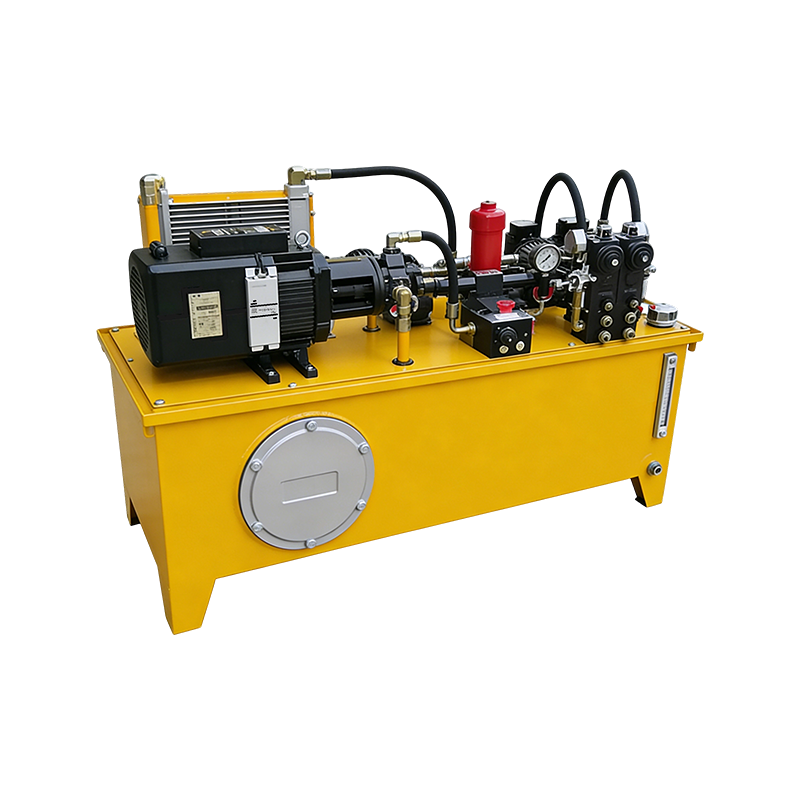 3.8kW Electric Hydraulic Power Unit with Servo Motor DriveThis servo-driven electric hydraulic power unit offers high precision and energy efficiency, ideal for automation and molding. The product carries documented insulation-resistance and thermal-rise readings on its test certificate, confirming electrical safety standards.View Product →
| Attribute | Test method | Pass criterion |
| Oil temperature rise | Steady-state run at rated load | Reservoir oil stabilized below 60°C |
| Insulation resistance | 500 V DC megger, winding to earth | 100 megohms or higher |
| Dielectric withstand | 1.5x rated voltage for 1 second | No breakdown or flashover |
| Noise level | 1 metre from enclosure surface | 80 dB(A) or lower |
Thermal instability accelerates oil oxidation and wear. If a power pack cannot hold a stable temperature in the factory test bay, it will not hold it inside the customer's enclosure either.
For a deeper look at how electric units are specified, read our complete guide to electric hydraulic power unit principles and selection.
Documentation and traceability
A test certificate without serial-number traceability is not a quality record. The certificate must tie a specific serial number back to the logged measurements recorded during that unit's factory test.
- Model code, serial number, test operator ID, and test date.
- Pump displacement readings, relief valve setting, and the pressure at which it cracked.
- Recorded flow, oil temperature, and pressure during the rated load soak.
- ISO 4406 cleanliness result with sample point and sampling date.
- The testing standard or internal procedure used to judge pass or fail.
Buyers comparing suppliers should also review how to choose large-scale hydraulic power units for industrial machinery, which translates specification figures into real application performance.
How to audit a manufacturer's test program
Request four documents before you place an order: the test procedure, calibration records, recent test certificates, and the non-conformance history. These four documents reveal whether a test program is a real process or a paperwork exercise.
- Calibration certificates for pressure gauges, flow meters, and thermocouples, dated within the last 12 months.
- A written test procedure that matches your duty cycle - continuously rated units need a thermal soak; intermittent units can use shorter runs.
- Test certificates from the last production batch with logged values instead of checkmarks.
- Non-conformance records for the last 12 months, including the failure mode and corrective action.
- Evidence that test equipment is calibrated to standards traceable to ISO 17025.
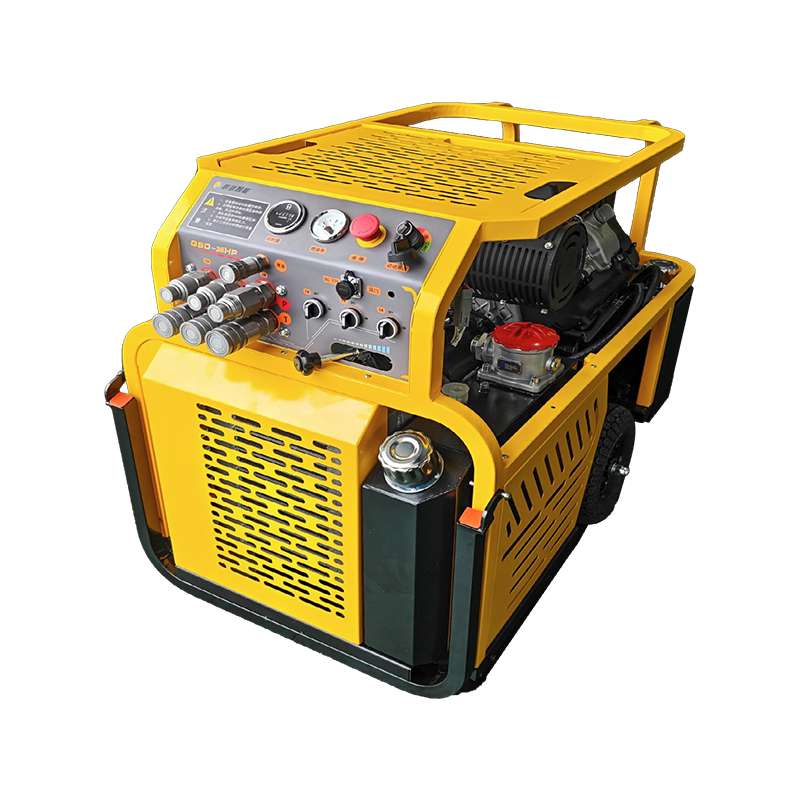
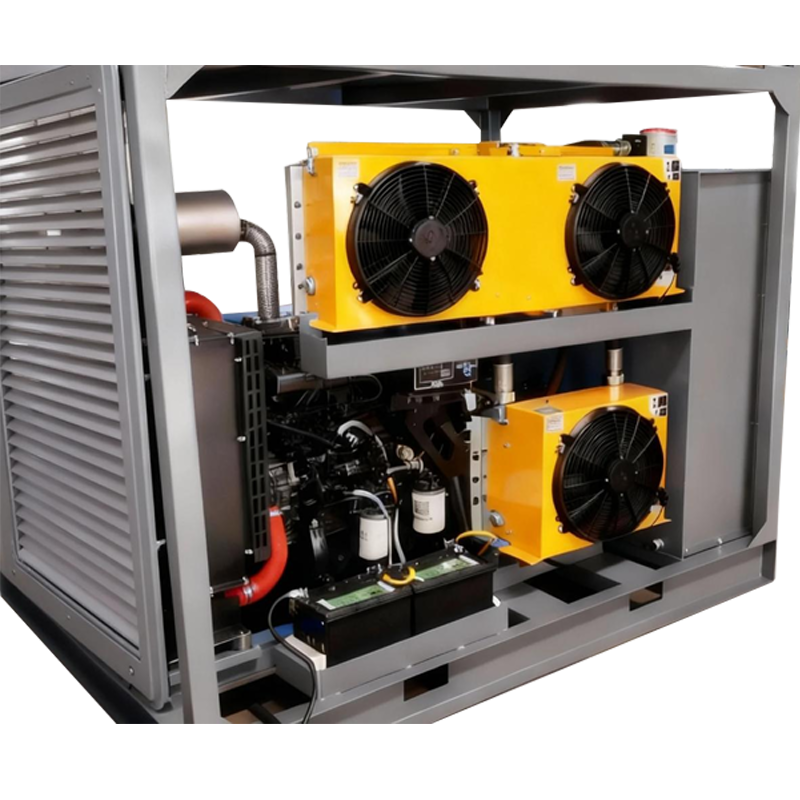
Portable power packs, which often serve emergency response and periodic field tasks, need the same contamination and relief-valve verification. The 35 HP high-flow portable hydraulic power unit in our line goes through the same eight-stage routine before every shipment.
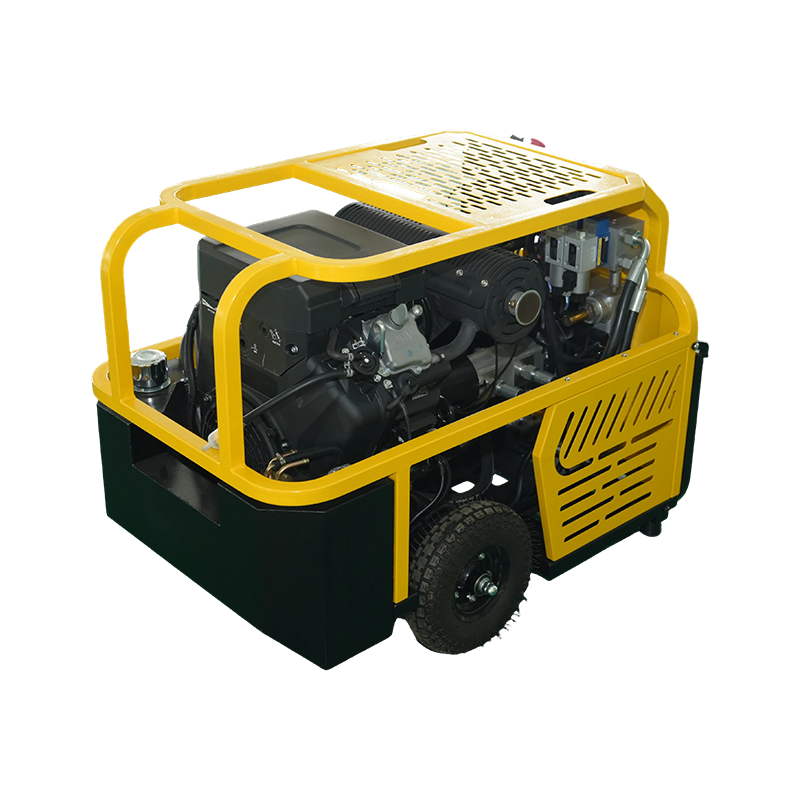 35HP High-Flow Portable Hydraulic Power Unit for Heavy Field UseThis portable power unit is designed for demanding applications like pipeline repairs and heavy construction, featuring a triple-circuit system and large tanks. It undergoes the same eight-stage test routine before shipment, ensuring pressure and contamination verification.View Product →
Frequently asked questions
What is the standard test pressure for hydraulic power packs?
The envelope, or shell, test is performed at 1.5 times the rated working pressure and held for at least 10 minutes. The working pressure test runs at 100% of the rated pressure for 15 minutes. These values follow ISO 4413 and common industrial practice for hydraulic systems.
How is oil cleanliness measured in hydraulic power pack manufacturing?
Cleanliness is measured by particle counting per millilitre and expressed as an ISO 4406 code. A new power pack should ship at 18/16/13 or better. Systems with servo valves target 17/15/12, and general industrial circuits can operate at 19/17/14.
What must a hydraulic power pack test certificate include?
The certificate must include the serial number, model code, test operator, date, recorded pressure and flow values, oil temperature during thermal soak, ISO 4406 cleanliness result, relief valve setting, and the procedure or standard applied. Without these elements, it is not a valid quality record.
How long does a full power pack factory acceptance test take?
A complete routine with shell test, no-load run, rated load soak, leak check, and documentation typically takes 90 to 150 minutes per unit. Shortened five-minute tests cannot verify thermal stability or relief valve response and should be rejected.
These figures follow ISO 4413 for hydraulic system safety and ISO 4406 for particle counting. Confirm the applicable edition of each standard before writing them into your purchasing specification.
Testing requirements are ultimately a procurement language. Specify an exact test pressure, an ISO 4406 code, and a thermal soak duration, and you force every supplier to compete on evidence rather than promises. Build these requirements into your purchase orders, and hydraulic power pack quality becomes something you can measure - not something you hope for.