 English
 русский
Qisheng
Qisheng
Qisheng
Qisheng
Qisheng
Qisheng
Qisheng
Qisheng
Qisheng
Table of Contents
1. Introduction
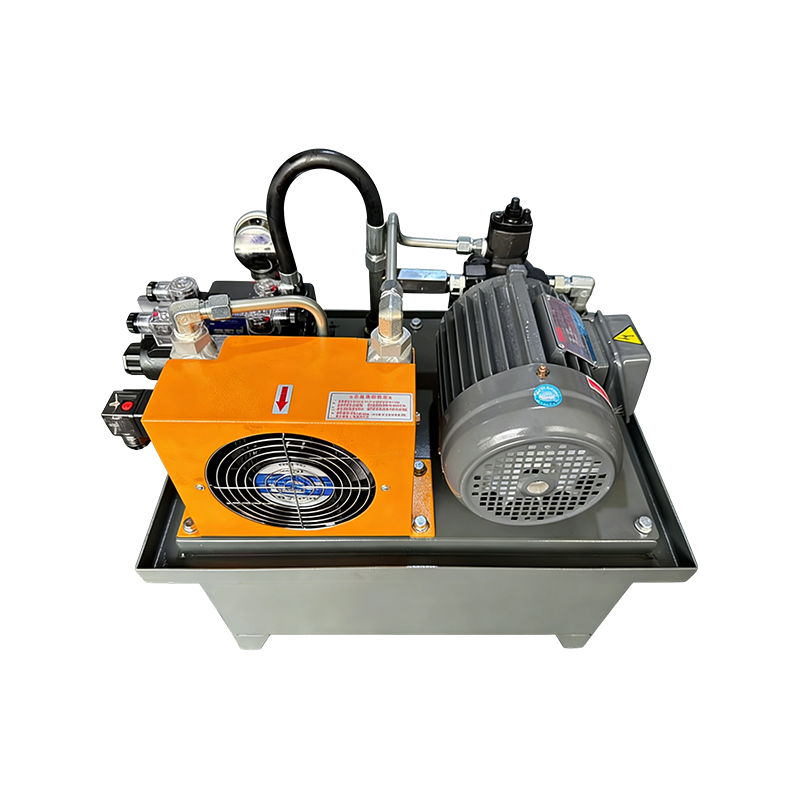
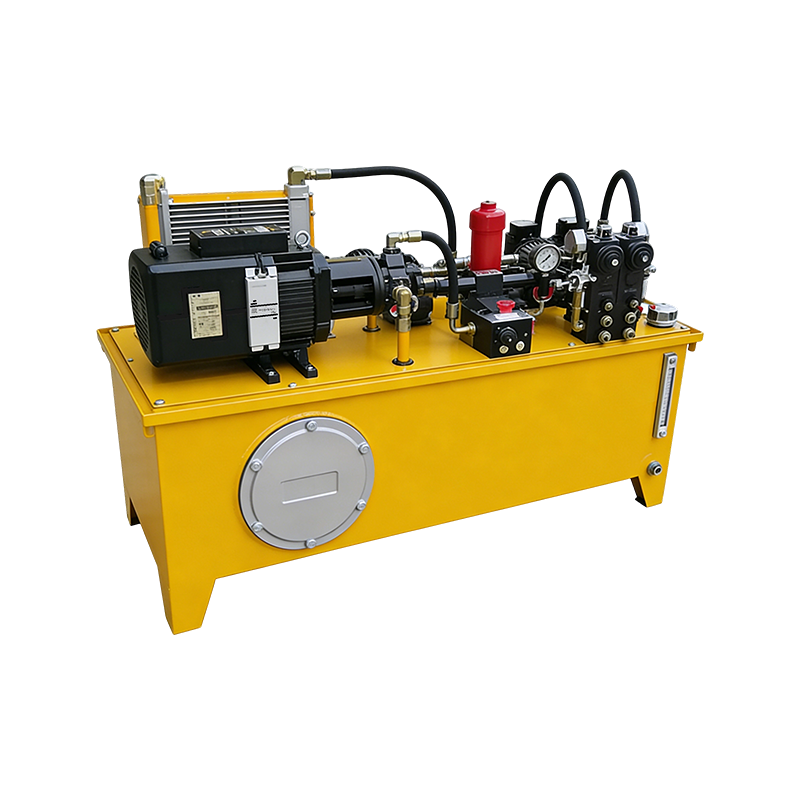
An Electric Hydraulic Power Unit (EHPU) is a compact, self-contained system that converts electrical energy from a motor into hydraulic energy (flow and pressure) to actuate cylinders, motors, or other hydraulic tools. Unlike traditional continuously running constant-speed hydraulic systems, modern EHPUs emphasize on-demand power delivery and precise controllability, making them the preferred choice for industrial automation, mobile equipment, and smart machinery.
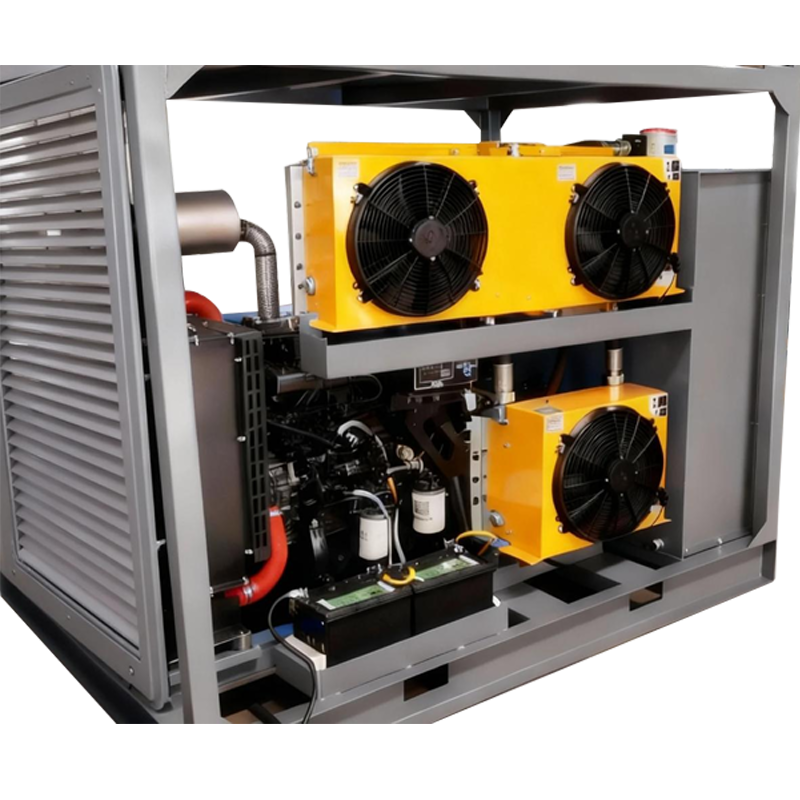
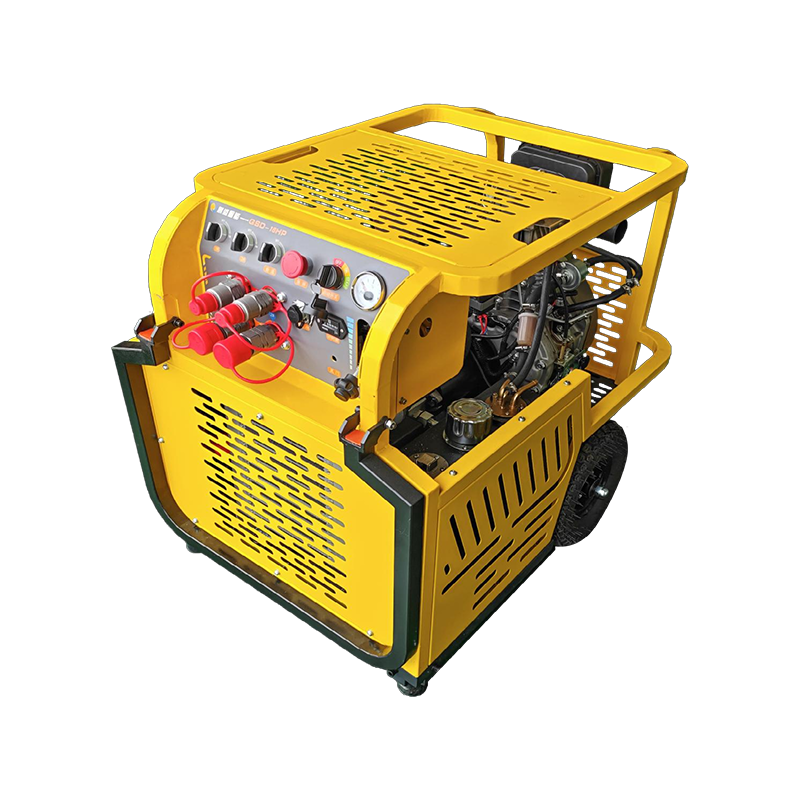
Compared to conventional internal combustion engine-driven hydraulic units, EHPUs offer significant advantages in noise control, energy efficiency, maintenance costs, and control integration. The table below provides a direct technical comparison:
1.1 Technical Comparison: EHPU vs. Traditional Hydraulic Power Units
| Parameter | Electric Hydraulic Power Unit (EHPU) | Traditional ICE-Driven or Fixed-Speed Motor Unit |
|---|---|---|
| Noise Level | Low (typically 55–75 dBA, depending on pump type) | High (often 85–100+ dBA, requires hearing protection) |
| Energy Efficiency | High — power on-demand, variable speed control saves 30–70% energy | Low to medium — continuous full-speed operation, excess flow bypassed as heat |
| Control Precision | Excellent — servo/proportional control enables precise position, force, and velocity regulation | Poor — limited to on/off or basic proportional valves, response slower |
| Maintenance Cost | Low — fewer wear components, no fuel system, longer service intervals | High — engine maintenance, fuel filters, exhaust system, more frequent oil changes |
| Startup Behavior | Instant — full torque from zero speed, quiet start | Delayed — crank time, warm-up period required (especially in cold conditions) |
| Installation Footprint | Compact — integrated motor-pump-tank design reduces space needs | Large — separate engine, pump, large fuel tank, cooling system |
| Emissions | Zero direct emissions (electric drive only) | Significant — CO2, NOx, particulate matter from fuel combustion |
| Typical Applications | Indoor factories, electric mobile equipment, robotics, clean rooms, food processing | Outdoor heavy construction, mining, agricultural machinery without grid access |
1.2 Why EHPU is Becoming the Mainstream Choice
The growing adoption of EHPUs across industries is driven by several key trends:
- Electrification of mobile equipment — Battery-powered EHPUs enable zero-emission forklifts, aerial work platforms, and compact loaders.
- Industry 4.0 integration — EHPUs easily interface with PLCs, IoT gateways, and cloud monitoring systems for predictive maintenance and real-time optimization.
- Energy regulations — Stricter efficiency standards (e.g., IE3/IE4 motor requirements, ISO 50001) favor variable-speed EHPUs over fixed-speed units.
- Operator comfort — Low noise and vibration improve working conditions in factories and urban environments.
1.2.1 Key Enabling Technologies for Modern EHPUs
- Permanent magnet synchronous motors (PMSM) — Higher power density and efficiency than induction motors, especially at partial loads.
- Integrated servo drives — Closed-loop control of motor speed and torque directly regulates pump flow and pressure without separate proportional valves.
- Compact manifold-mounted valve designs — Reduce leakage points and simplify assembly.
- Smart sensors (pressure, temperature, contamination) — Enable condition-based monitoring and automatic shutdown on fault detection.
In summary, the EHPU delivers a compelling combination of clean, quiet, efficient, and precisely controllable hydraulic power. It is suitable not only for new equipment designs but also for retrofitting existing hydraulic systems that currently rely on inefficient constant-speed motor or engine-driven pumps.
2. Core Components and Operating Principles
2.1 Main Components
A complete Electric Hydraulic Power Unit consists of several carefully matched subsystems. Each component directly influences the unit's performance, reliability, and application suitability. The table below lists the essential components along with their functional roles and typical specifications:
| Component | Function | Typical Specifications / Variations |
|---|---|---|
| Electric Motor | Converts electrical energy into mechanical rotational energy to drive the pump | AC (single/three-phase: 110V, 230V, 400V, 480V) or DC (12V, 24V, 48V, 72V, 96V); induction, permanent magnet, or servo types; power range: 0.1 kW to 50 kW+ |
| Hydraulic Pump | Converts mechanical torque into hydraulic flow (volume displacement per revolution) | Gear pump (external/internal), vane pump, piston pump (axial/radial); fixed or variable displacement; flow range: 0.5 L/min to 150 L/min+ |
| Reservoir (Tank) | Stores hydraulic fluid, dissipates heat, allows air release and contaminant settling | Material: steel, aluminum, or plastic; volume typically 1L to 50L for compact units; often shaped to fit around motor/pump for space efficiency |
| Coupling / Bracket | Transfers motor torque to pump shaft while compensating for minor misalignment | Flexible jaw coupling (spider), bell housing with integrated coupling, or direct male/female shaft engagement |
| Filter Assembly | Removes solid contaminants to protect pump and valves from wear | Suction strainer (coarse, 100–150 mesh), return line filter (fine, 10–25 μm), or pressure line filter (3–10 μm for servo systems) |
| Control Valve Group | Directs flow direction, regulates pressure, and controls flow rate to actuators | Directional valves (2/2, 3/2, 4/2, 4/3 solenoid operated), pressure relief valves, flow control valves (fixed or adjustable), proportional/servo valves |
| Optional: Accumulator | Stores pressurized fluid for peak demand, absorbs pulsations, maintains pressure when pump is off | Bladder, piston, or diaphragm type; pre-charge pressure typically 50–90% of system working pressure; volume 0.2L to 10L |
| Optional: Cooling System | Removes excess heat generated during continuous or high-duty-cycle operation | AC/DC fan blowing over tank surface, air-to-oil heat exchanger, or water-cooled plate heat exchanger |
| Sensors & Instrumentation | Provide feedback for control, protection, and diagnostics | Pressure transducer (0–10V, 4–20mA), temperature switch or RTD, fluid level switch, oil contamination sensor (optional) |
2.1.1 Pump Type Selection Guide
| Pump Type | Pressure Range (Max) | Efficiency Range | Noise Level | Best Suited For |
|---|---|---|---|---|
| External Gear Pump | 180–300 bar (2600–4350 psi) | 80–88% | Moderate (65–78 dBA) | General industrial, mobile equipment, cost-sensitive applications |
| Internal Gear Pump | 210–350 bar (3050–5075 psi) | 85–92% | Low (58–70 dBA) | Quiet operation, high-cycle applications, injection molding machines |
| Axial Piston Pump | 280–450 bar (4060–6525 psi) | 90–95% | Moderate to high (70–85 dBA) | High pressure, variable displacement needs, servo-controlled precision systems |
2.2 Working Principle and Operation Sequence
The operation of an EHPU follows a well-defined sequence of energy conversion events. Understanding this sequence is essential for proper system design and troubleshooting.
2.2.1 Step-by-Step Operation Flow
- Step 1 — Command Signal: A control system (PLC, toggle switch, relay, or microcontroller) sends a start or direction command to the motor contactor or drive.
- Step 2 — Motor Start: The electric motor accelerates to its operating speed (fixed-speed units) or to a commanded setpoint speed (variable-speed units).
- Step 3 — Pump Suction: Rotation of the pump creates low pressure at its inlet, drawing hydraulic fluid from the reservoir through the suction strainer and inlet line.
- Step 4 — Pump Discharge (Pressure Generation): The pump displaces fluid into the outlet line. As the fluid meets resistance (from the load, closed valve, or actuator), pressure rises to the level required to overcome that resistance, up to the relief valve setting.
- Step 5 — Valve Direction Control: One or more solenoid-operated directional valves are energized to route the pressurized flow to the desired actuator port (e.g., extending a cylinder).
- Step 6 — Actuator Motion: The pressurized fluid enters the cylinder bore or motor inlet, causing linear or rotary motion against the external load. The opposing chamber fluid returns to the tank via the return line.
- Step 7 — Pressure Regulation: A pressure relief valve protects the system by bypassing flow to tank if pressure exceeds a preset maximum. In variable-speed EHPUs, the motor slows or stops instead of bypassing oil, saving energy.
- Step 8 — Flow Control (if equipped): A flow control valve (fixed orifice, needle valve, or proportional valve) limits the flow rate independent of pressure, controlling actuator speed.
- Step 9 — Return and Filtration: Fluid returning from the actuator passes through the return line filter to remove wear particles before re-entering the reservoir.
- Step 10 — Pump Off / Hold (Dwell): On command (or after a timer in intermittent duty units), the motor stops. The system pressure may be maintained by a check valve, pilot-operated valve, or accumulator for a holding function.
Critical note: Allowing a fixed-displacement pump to run against a closed center valve or against the relief valve for extended periods will rapidly overheat the oil and damage the pump. Always use relief valves only as safety devices, not as pressure regulators, unless the pump is variable displacement with pressure-cutoff control.
3. Key Advantages Over Traditional Hydraulic Power Units
The shift from conventional internal combustion engine (ICE) drives or fixed-speed electric motor drives to modern Electric Hydraulic Power Units is driven by quantifiable improvements across multiple performance dimensions.
3.1 Detailed Performance Comparison
| Parameter | Electric Hydraulic Power Unit (Modern EHPU) | Internal Combustion Engine (ICE) Driven Unit | Fixed-Speed AC Motor Unit (Traditional) |
|---|---|---|---|
| Energy Efficiency (Full Cycle) | 70–92% (servo/variable speed, on-demand) | 20–35% (diesel, part-load inefficient) | 35–55% (continuous full speed, bypass losses) |
| Noise Level (dBA @ 1m) | 55–75 dBA | 85–105 dBA | 75–88 dBA |
| Control Response Time | 20–150 ms | 500–2000 ms | 100–300 ms |
| Annual Maintenance Cost (Relative) | Low (1x baseline) | High (5–8x baseline) | Medium–Low (1.5–2x baseline) |
| Emissions (Direct) | Zero — CO₂ depends on grid power source (indirect) | Significant — CO₂, NOx, PM, HC, CO | Zero direct emissions at point of use |
For the vast majority of industrial, mobile off-highway, and automation applications operating in temperate conditions with moderate power requirements (<50 kW continuous) and access to electricity or reasonable battery capacity, the EHPU offers superior performance, lower operating cost, and better compliance than any traditional alternative.