 English
 русский
Qisheng
Qisheng
Qisheng
Qisheng
Qisheng
Qisheng
Qisheng
Qisheng
Qisheng
Table of Contents
- 1 What Are Hydraulic Power Units
- 2 Hydraulic Power Units Working Principle
- 3 Hydraulic Power Unit Components
- 4 System Operation Logic
- 5 How to Size Hydraulic Power Units
- 6 Hydraulic Power Unit Maintenance Guide
- 7 Troubleshooting Common Problems
- 8 Industrial Applications of Hydraulic Power Units
- 9 Future Development Trends
- 10 Conclusion
In modern industrial systems, hydraulic technology is almost everywhere. From the powerful driving force of construction machinery to the precise control of automated production lines and the stable operation of marine and energy equipment, all of these rely on one core component—Hydraulic Power Units (HPU).
A Hydraulic Power Unit is the "heart" of a hydraulic system. It converts mechanical energy into hydraulic energy and delivers stable pressure and flow to actuators, enabling complex mechanical movements. Without Hydraulic Power Units, many high-load and high-precision machines in modern industry would not function properly.
This article provides a comprehensive explanation of Hydraulic Power Units, including working principles, components, selection methods, maintenance strategies, troubleshooting, applications, and future development trends.
What Are Hydraulic Power Units
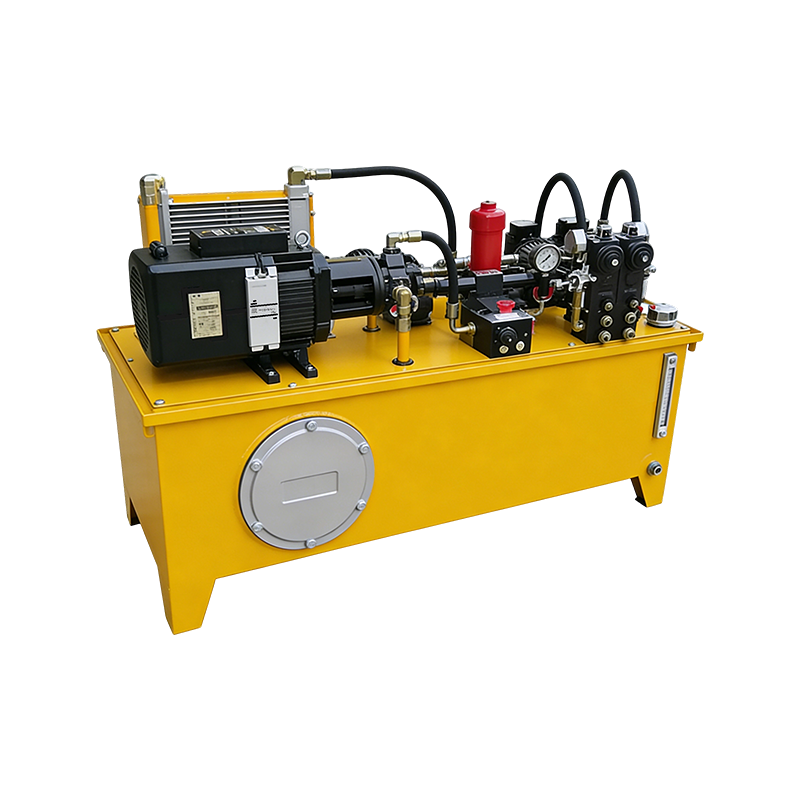
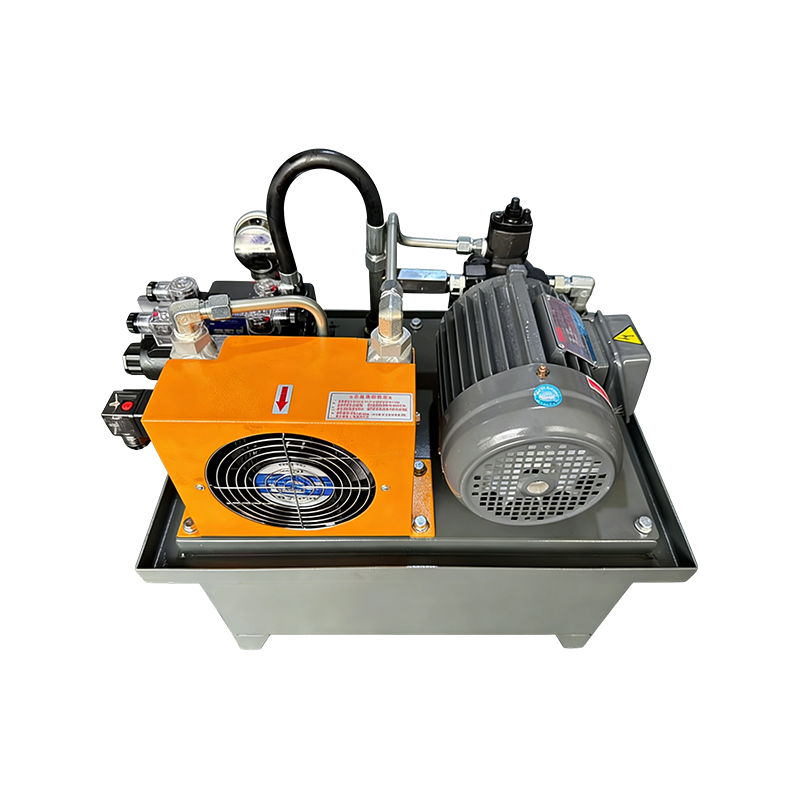
Hydraulic Power Units (HPU) are integrated hydraulic power supply systems typically composed of an electric motor, hydraulic pump, oil tank, and various control and protection components. Their core function is to provide a stable source of hydraulic energy so that hydraulic actuators such as cylinders or motors, can perform linear or rotational motion.
Unlike standalone hydraulic pumps, Hydraulic Power Units are complete systems. They not only generate pressure but also handle oil storage, filtration, cooling, and pressure stability control.
Industrial Insight
In industrial applications, Hydraulic Power Units are widely used in injection molding machines, presses, lifting platforms, construction machinery, metallurgical equipment, and marine systems. These applications share common characteristics: high load demand, stable power requirements, and complex operating environments.
In industrial applications, Hydraulic Power Units are widely used in injection molding machines, presses, lifting platforms, construction machinery, metallurgical equipment, and marine systems. These applications share common characteristics: high load demand, stable power requirements, and complex operating environments.
Hydraulic Power Units Working Principle
To understand Hydraulic Power Units, it is essential to start from the energy conversion process.
The core working principle can be described as follows: the electric motor drives the hydraulic pump to rotate, the pump draws hydraulic oil from the tank, pressurizes it, and delivers it into the system pipeline, forming hydraulic energy with specific pressure and flow.
In this process, electrical energy is first converted into mechanical energy by the motor, and then mechanical energy is converted into hydraulic pressure energy by the pump. Although the process seems simple, it involves fluid dynamics, pressure regulation, and energy loss compensation.
When the Hydraulic Power Unit starts, the pump begins to operate. Oil is drawn from the tank under negative pressure and forced into high-pressure flow by the rotating pump. Part of the oil goes directly to actuators, while another part is regulated by valve systems to ensure stable operation.
During real operation, Hydraulic Power Units must respond to load changes. When resistance increases, system pressure rises, and relief valves protect the system from overpressure. This dynamic regulation ensures adaptability in complex industrial environments.
Oil condition plays a critical role. Viscosity, cleanliness, and temperature directly affect pump efficiency and system stability. Therefore, filtration and cooling systems are commonly integrated into Hydraulic Power Units.
Hydraulic Power Unit Components
A standard Hydraulic Power Unit consists of several key components that work together to generate, control, and transmit hydraulic energy.
Electric Motor
The electric motor is the power source of the system. It provides rotational energy to drive the hydraulic pump. Its power rating directly determines the overall output capacity of the Hydraulic Power Unit.
Hydraulic Pump
The hydraulic pump is one of the most critical components. It converts mechanical energy into hydraulic energy and generates system pressure. Common types include gear pumps, vane pumps, and piston pumps, each with different pressure levels and efficiency characteristics.
Oil Tank
The oil tank serves as the storage and regulation center. It stores hydraulic oil, dissipates heat, and allows impurities and air bubbles to separate from the fluid. Proper tank design improves system stability and cooling efficiency.
Control Valve System
The valve system acts as the "brain" of Hydraulic Power Units. It includes relief valves, directional valves, and flow control valves. These components regulate pressure, direction, and flow, enabling complex motion control.
Filtration System
Filtration ensures oil cleanliness. Contaminants such as metal particles can cause wear and system failure. Filters are installed at suction, return, or pressure lines to maintain oil quality.
Cooling and Heating System
Temperature control is essential. High temperatures reduce oil viscosity and efficiency, while low temperatures affect flow. Cooling and heating systems maintain optimal operating conditions.
System Operation Logic
When a Hydraulic Power Unit operates, all components work in a closed-loop cycle.
The motor drives the pump, oil is pressurized and distributed through valves to actuators, and then returned to the tank after filtering and cooling. This continuous cycle ensures stable power output.
The key focus of design is not only power output but stability. In industrial systems, stable performance is more important than peak performance.
How to Size Hydraulic Power Units
Proper sizing is one of the most important steps in engineering design. Incorrect selection can lead to overheating, insufficient pressure, or excessive energy consumption.
Pressure determines force output, while flow rate determines speed. Both must be calculated based on load requirements and actuator characteristics.
If pressure is too low, the system cannot perform its function. If it is too high, energy is wasted and system components may be damaged.
Flow rate determines motion speed. Insufficient flow results in slow operation and reduced productivity.
Duty cycle is also critical. Continuous operation requires stronger cooling and durability, while intermittent systems allow more flexible design.
Environmental conditions also affect selection. Temperature, dust, and humidity must be considered.
Sizing Tip
A common mistake is over-sizing based only on power. Proper selection should focus on matching actual operating conditions.
A common mistake is over-sizing based only on power. Proper selection should focus on matching actual operating conditions.
Hydraulic Power Unit Maintenance Guide
Hydraulic Power Units are high-load industrial systems, and their reliability depends heavily on maintenance quality.
Hydraulic oil is the lifeblood of the system. It transfers energy, lubricates components, and provides cooling. Oil degradation directly affects performance.
Oil should be regularly inspected for color, odor, and cleanliness. Dark or odorous oil indicates oxidation and should be replaced.
Filters must be maintained regularly. Blocked filters reduce flow and can cause pump damage or pressure instability.
Temperature control is equally important. Overheating reduces efficiency and accelerates seal wear, while cooling systems ensure stable operation.
Leakage must also be monitored. Leaks cause energy loss and introduce air contamination, leading to system instability.
Preventive maintenance is more effective than corrective maintenance. Regular inspection reduces downtime and extends system life.
Troubleshooting Common Problems
In industrial environments, Hydraulic Power Units may experience pressure loss, overheating, noise, or unstable motion.
Low pressure is often caused by pump wear or incorrect valve settings. Excess internal leakage reduces system performance.
Overheating is caused by energy loss or insufficient cooling. Long-term high load operation increases oil temperature.
Noise and vibration may indicate air ingress or cavitation. Air contamination can damage the pump.
Unstable motion is often related to contamination or valve sticking.
Systematic troubleshooting involves dividing the system into subsystems: power source, control system, and actuators.
Industrial Applications of Hydraulic Power Units
Hydraulic Power Units are widely used across industries due to their high power density and control capability.
In construction machinery, they provide strong driving force for heavy-load operations.
In automated production lines, they are used for pressing, clamping, and forming processes requiring precision control.
In metallurgy, systems must withstand high temperatures and heavy loads, requiring durable designs.
In marine and energy systems, Hydraulic Power Units are used for steering systems and valve control, requiring high safety and reliability.
Despite different applications, the core requirement remains the same: stable and efficient hydraulic power delivery.
Future Development Trends
Hydraulic Power Units are evolving toward intelligent, energy-efficient, and modular systems.
Smart monitoring systems using sensors can track pressure, temperature, and flow in real time, enabling predictive maintenance.
Energy efficiency improvements include variable displacement pumps and energy recovery systems.
Modular design allows easier installation, maintenance, and system expansion.
Conclusion
Hydraulic Power Units are the core power source of hydraulic systems. Their design, selection, and maintenance directly affect system efficiency and reliability.
Final Thought
A well-designed Hydraulic Power Unit is not necessarily the most complex one, but the one that best matches the application requirements and operates most stably over time.
A well-designed Hydraulic Power Unit is not necessarily the most complex one, but the one that best matches the application requirements and operates most stably over time.