 English
 русский
Qisheng
Qisheng
Qisheng
Qisheng
Qisheng
Qisheng
Qisheng
Qisheng
Qisheng
Table of Contents
- 1 What an Intelligent Drainage Robot Actually Does
- 2 Main Function 1 — All-Terrain Mobility
- 3 Main Function 2 — High-Flow Pumping Where Power Is Unavailable
- 4 Main Function 3 — Remote Control and Live Monitoring
- 5 Main Function 4 — Automatic Hose Management
- 6 Main Function 5 — Safe Operation in Hazardous and Power-Limited Environments
- 7 Comparing Intelligent Drainage Robot Capabilities
- 8 How to Choose the Right Intelligent Drainage Robot
When a flood response crew arrives at a submerged underground garage or a collapsed sewer line, the immediate challenge is not the water itself. It is getting a pump close enough, and set up quickly enough, to control the inflow. An intelligent drainage robot solves that problem by combining mobility, pumping, remote control, and hose management in one self-contained machine.
Instead of bringing the water to a stationary pump, an intelligent drainage robot brings the pump to the water. It can drive over debris, climb ramps, enter floodwater, and start discharging within minutes, often while the operator remains at a safe distance.
What an Intelligent Drainage Robot Actually Does
An intelligent drainage robot is a mobile pumping platform designed to move itself into a flooding site and begin water evacuation with minimal set-up time. A typical unit integrates:
- a submersible or axial-flow pump with a rated flow capacity;
- a tracked or amphibious chassis for movement across difficult terrain;
- a hydraulic or electric drive system;
- a remote control unit with feedback from onboard sensors;
- an optional powered hose reel for discharge line handling.
The main functions of these machines fall into five groups: all-terrain mobility, high-flow pumping, remote control, automatic hose management, and safe operation in hazardous conditions. Understanding each group helps emergency teams and site managers match the right robot to the job.
Main Function 1 — All-Terrain Mobility
The defining difference between a drainage robot and a conventional pump is that the robot can travel. Tracked machines use rubber or steel tracks to climb stairs, cross rubble, and move over mud and soft ground where wheeled vehicles would sink. In urban flooding, the fastest pumping point is often at the bottom of a ramp, stairwell, or underground level that a pump truck cannot reach. A compact tracked chassis can also pass through narrow doorways and corridors that would stop a skid-mounted pump.
Amphibious Operation for Open Floodwater
Amphibious models take mobility one step further. Instead of stopping at the water's edge, they drive directly into the flooded area and operate while floating or partially submerged. This is essential for open flood sites, retention basins, and irrigation canals, where the pump intake must sit below the water surface and the access point is far from dry ground.
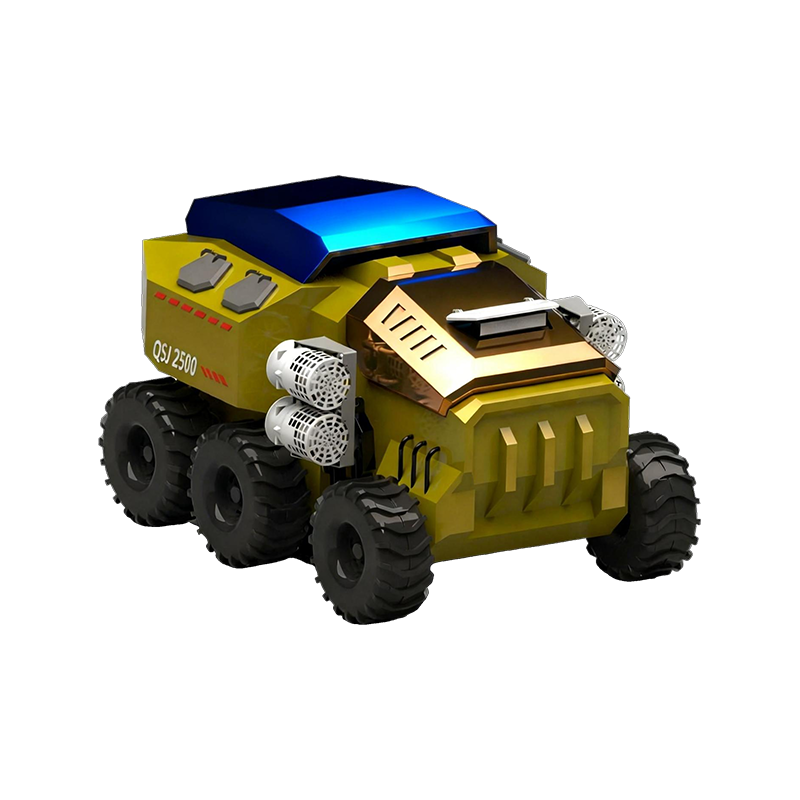
The amphibious intelligent drainage robot in the Qisheng range, with flow ratings up to 2500 m³/h, shows how this works in practice: the machine approaches the water, enters it, and begins pumping without lifting equipment or manual positioning.
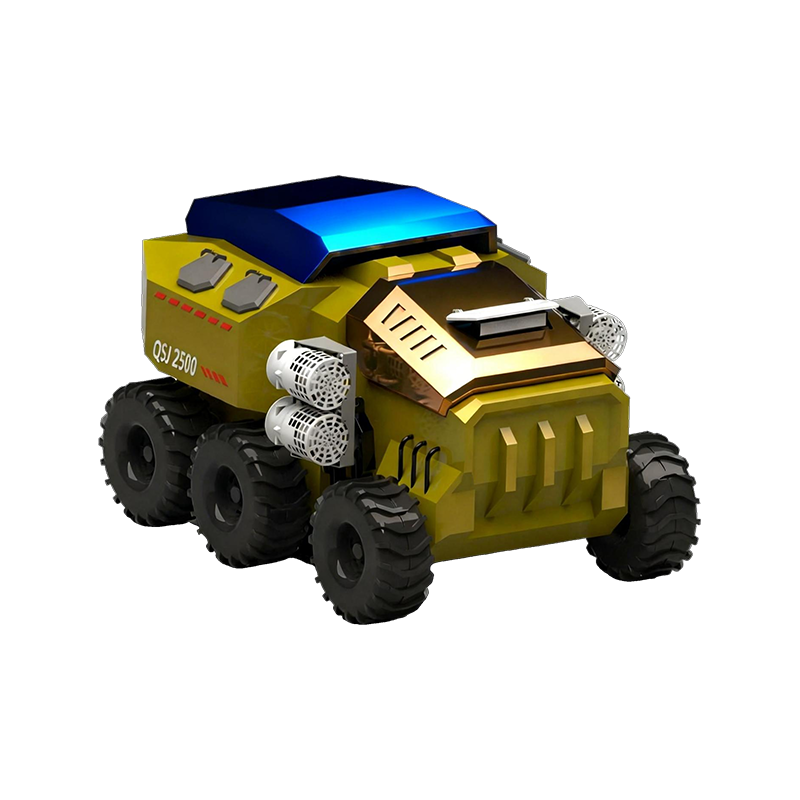 Wholesale Amphibious Intelligent Drainage Robot (20002500 m³/h) Suppliers, CompaWuhu Qisheng Intelligent Equipment Co., Ltd. Is China Wholesale Amphibious Intelligent Drainage Robot (20002500 m³/h) Suppliers, Exporter...View Product →
The second core function is moving large volumes of water quickly. Drainage robots are rated by maximum flow, typically between 600 m³/h for compact units and 2500 m³/h for amphibious models. Flow rate determines how fast a basement, underpass, or excavation can be emptied, which directly affects recovery time.
Flow Ratings and Pump Sizing
Matching the flow rating to the job prevents two common mistakes. An undersized robot runs for hours without clearing the water, while an oversized machine is difficult to handle in narrow spaces. Estimate the volume of water to be removed, add the expected inflow rate, and then choose a robot whose rated capacity exceeds the combined figure by a practical margin.
Hydraulic Drive Versus Electric Drive
The drive system is the most important technical decision in drainage robot selection. Electrically powered robots need a reliable on-site power supply, which is often unavailable during a flood. Hydraulically driven robots receive power from a separate hydraulic power unit, so they operate far from mains electricity and tolerate partial submersion and muddy water better.
Because the robot itself has few electrical components, hydraulic models can work in conditions where electric equipment is restricted. Teams that already own hydraulic pumping equipment will find useful background in this hydraulic drainage pump flow and durability guide.
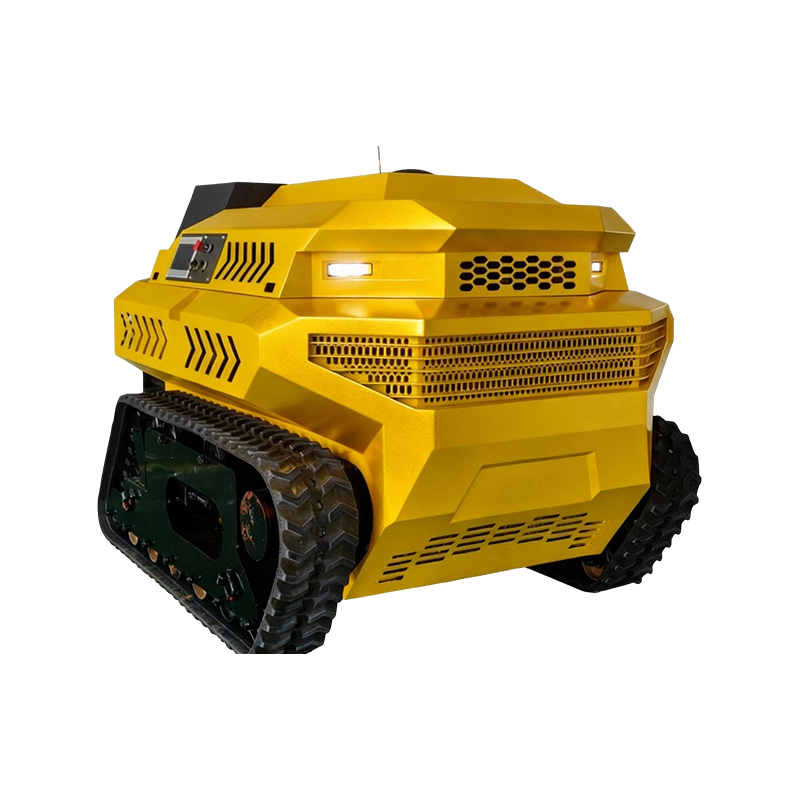
For large built-up areas, the tracked high-flow pumping robot with a capacity of 1000–1300 m³/h is a common choice because it pairs substantial flow with the ability to move across construction sites and damaged ground.
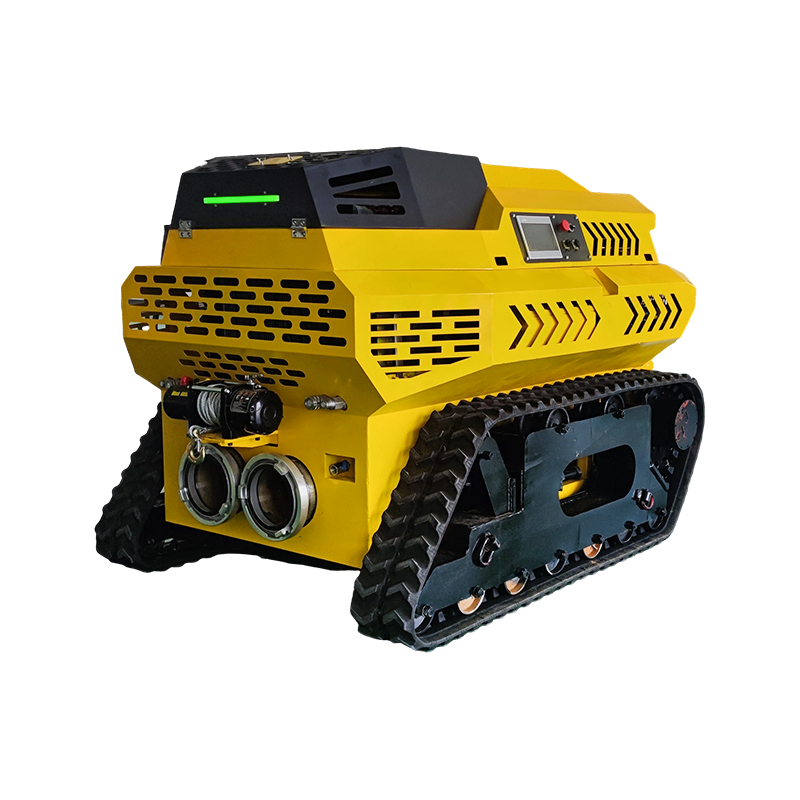 Wholesale Tracked HighFlow Pumping Robot (10001300 m³/h) Suppliers, Company, ExpWuhu Qisheng Intelligent Equipment Co., Ltd. Is China Wholesale Tracked HighFlow Pumping Robot (10001300 m³/h) Suppliers, Exporter, Compa...View Product →
Main Function 3 — Remote Control and Live Monitoring
A drainage robot becomes significantly more useful when the operator does not have to stand next to it. Remote control is not a convenience feature; it is a safety function that keeps personnel out of floodwater and confined spaces.
Control Range and Obstacle Avoidance
Operators position the robot from a safe distance using a handheld or console controller. Control range varies by model and terrain, and some robots include obstacle avoidance to prevent collisions with walls, pipes, and buried infrastructure. This matters in darkened basements, tunnels, and sewer lines where the robot is out of the operator's line of sight.
Live Data for Situational Awareness
Modern drainage robots transmit operational data back to the controller, including flow rate, motor status, and sometimes video from an onboard camera. Instead of sending a worker into a flooded chamber to check the pump, the crew reads the values on the surface and repositions the robot if the intake is blocked. A closer look at how these systems behave in the field is available in this article on remote control range, obstacle avoidance, and live data.
Main Function 4 — Automatic Hose Management
Discharge hose is often the physical bottleneck in a drainage operation. A 200 mm discharge hose filled with water weighs several kilograms per meter, and dragging it across a wet site consumes time and manpower. An automatic hose rolling robot removes the heaviest part of this work.
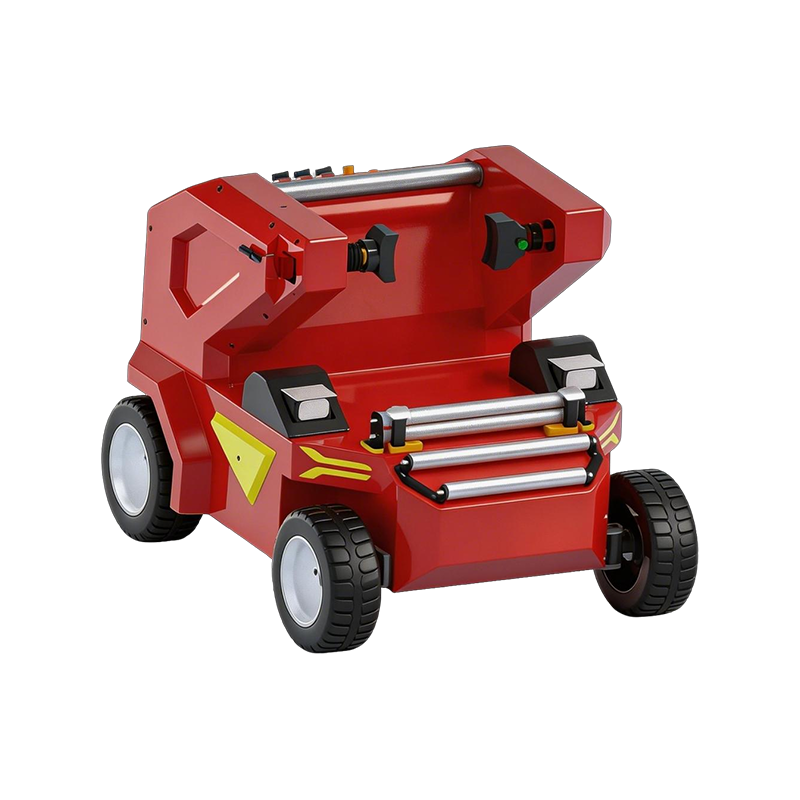
The robot carries the discharge hose on a powered reel, deploys it automatically as it moves, and rolls it back up when the job is done. This reduces the number of crew members needed at the hose line and shortens both set-up and pack-down time. For routine tasks such as storm drain maintenance, the automatic hose rolling robot makes one-person hose handling realistic.
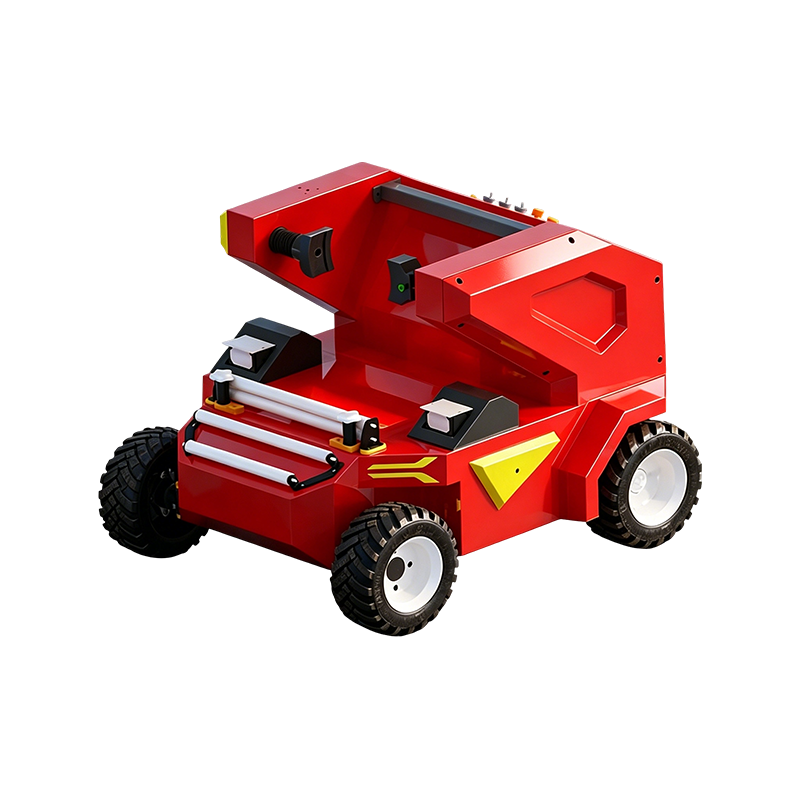 Wholesale Automatic Hose Rolling Robot Suppliers, Company, ExporterWuhu Qisheng Intelligent Equipment Co., Ltd. Is China Wholesale Automatic Hose Rolling Robot Suppliers, Exporter, Company, The Hose Recov...View Product →
Main Function 5 — Safe Operation in Hazardous and Power-Limited Environments
Safety is the function that cuts across all the others. An intelligent drainage robot is designed to work where it is dangerous or impossible for personnel to stand:
- flooded basements with submerged electrical panels;
- sewer manholes with restricted access and poor air quality;
- fuel storage areas or industrial zones where spark ignition must be avoided;
- construction excavations with unstable slopes.
Because hydraulic robots are driven by a power unit instead of electricity, they present a lower ignition risk in these areas. Their sealed pump bodies and tracked chassis are built for gritty, debris-laden water that would quickly damage light-duty pumps. Just as important, the robot protects the crew: fewer people enter the hazard zone, and the operator can recover the machine without walking into floodwater after pumping is complete.
Comparing Intelligent Drainage Robot Capabilities
The table below summarizes the main robot configurations available for flood response and sewer work.
| Robot type | Mobility | Flow range | Typical deployment |
|---|---|---|---|
| Amphibious intelligent drainage robot | Amphibious tracked chassis | 2000–2500 m³/h | Open floodwater, retention basins, canals |
| Compact tracked drainage robot | Tracked chassis, narrow body | Approx. 600 m³/h | Underground garages, tunnels, corridors |
| Tracked high-flow pumping robot | Tracked chassis | 1000–1300 m³/h | Large basements, excavation sites |
| Automatic hose rolling robot | Tracked or wheeled | Depends on paired pump | Discharge hose deployment and retrieval |
How to Choose the Right Intelligent Drainage Robot
Before selecting a model, work through these criteria in order:
- Flow requirement — calculate the water volume and desired emptying time to fix the minimum flow rate.
- Access route — measure door widths, ramp gradients, stair dimensions, and the distance from the offloading point.
- Control range — confirm the remote control works over the distances and obstacles on site.
- Power source — choose between hydraulic and electric drive based on available power and hazard class.
- Hose handling — assess whether the crew can manage discharge hose lengths manually.
- Water quality — check whether the water contains sand, silt, or debris that affects pump selection.
Municipal teams should also consider how these robots support routine maintenance, not only emergency response. The article on drainage robots in urban sewer systems describes how the same machine that clears a flooded underpass can assist with scheduled sewer inspections and cleaning.
An intelligent drainage robot does not replace the pump; it replaces the entire process of moving a pump into position, connecting it, and keeping it running. By combining mobility, high-flow pumping, remote control, hose management, and safe operation, these machines let a small team respond to large flooding events faster and with less risk. For organizations that regularly handle flood response, sewer maintenance, or emergency dewatering, that combination of functions is the difference between watching the water rise and stopping it.