 English
Qisheng
Qisheng
Qisheng
Qisheng
Qisheng
Qisheng
Qisheng
Qisheng
Qisheng
With the continuous improvement of urbanization level and the increasing demand for water environment protection and safe production, the maintenance of urban drainage facilities such as pump stations, culverts and deep tunnels has become a key and difficult point in urban governance. Recently, the wide application of intelligent drainage robots has broken the bottleneck of traditional drainage operation, realized the transformation from "manual operation" to "intelligent operation", and injected new vitality into the modernization of urban drainage management.
Traditional drainage maintenance mostly adopts the mode of "shutdown + manual operation", which is not only inefficient, but also has great potential safety hazards. Manual operation in limited spaces such as underground pump stations and deep tunnels is prone to risks such as toxic and harmful gas poisoning and water overflow caused by shutdown, which seriously affects the safety of urban water environment and operation order. The emergence of intelligent drainage robots has effectively solved these pain points, creating a new mode of "no personnel going down the well, no water interruption and no mud falling to the ground" for drainage operation.
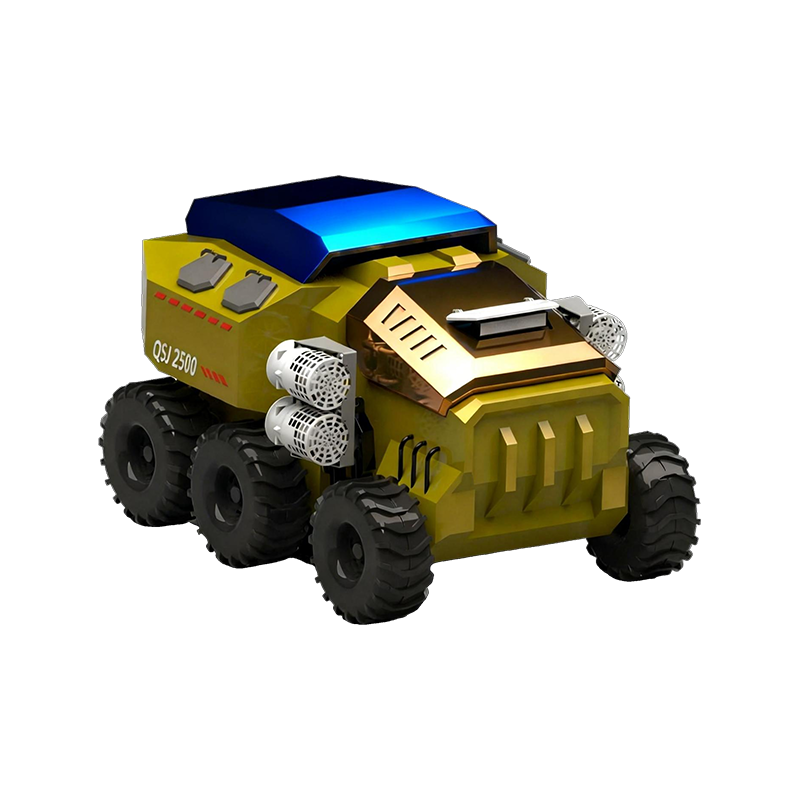
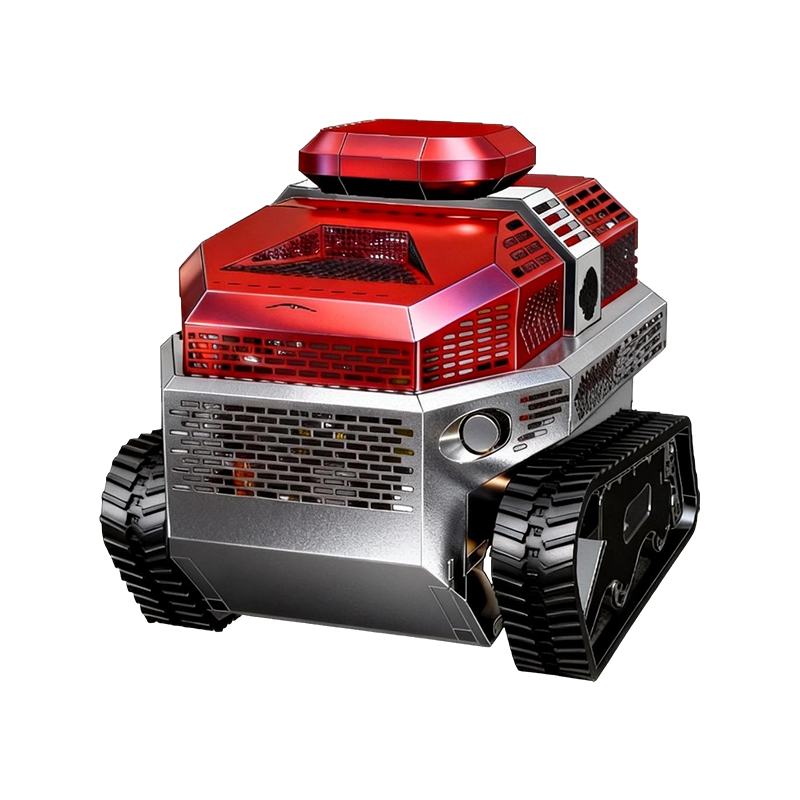
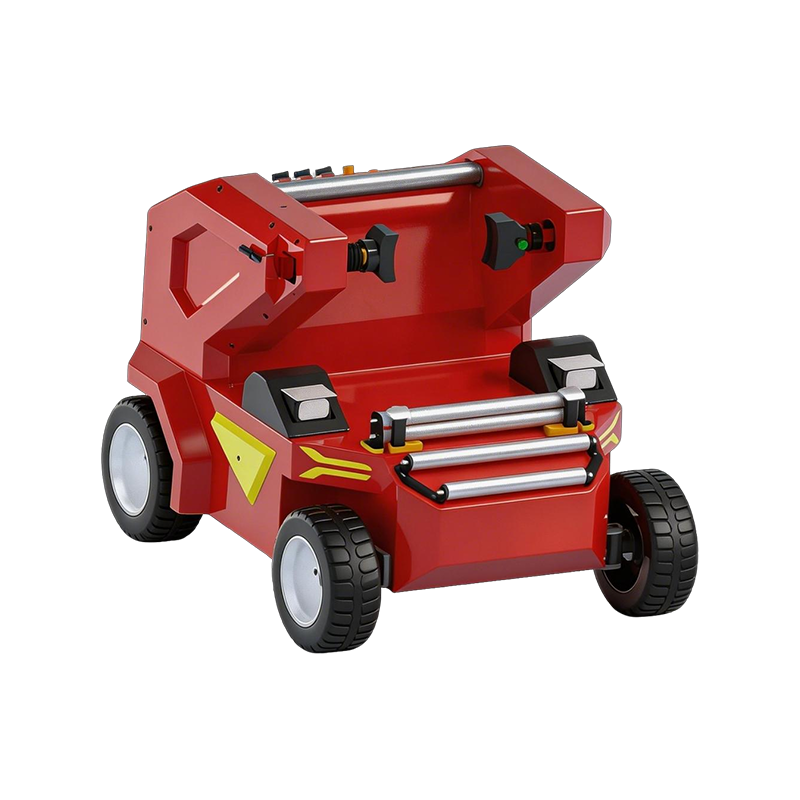
As a new type of intelligent equipment integrating multiple advanced technologies, the intelligent drainage robot has outstanding advantages in adaptability, intelligence and safety. It adopts electromechanical-hydraulic integration technology, integrating aggregate collection, pumping, walking and underwater perception control units into one, and is equipped with a visual intelligent operation system. Operators can remotely control the robot's movement, real-time monitor the working scene, equipment operation status, and realize functions such as underwater positioning, navigation and obstacle identification through the man-machine interaction interface.
In terms of structural design, the robot is equipped with a "grab bucket" with "teeth" and high-pressure cleaning nozzles at the front, which can effectively intercept large objects and fibrous substances and improve the efficiency of dredging. Its "legs and feet" adopt a double-row inverted V-shaped crawler system, which can adjust the angle by 37 degrees, and can easily pass through flat ground, pipelines and slopes, adapting to various complex working environments. At the same time, the high-sealing underwater anti-leakage system provides a reliable "protective cover" for the robot's underwater operation, ensuring the safety and stability of the equipment.
The intelligent "brain" of the robot is the core to realize efficient operation. The graphical sonar obstacle avoidance system is like the "eyes and ears" of the robot, which can detect the working conditions in the sewage pump pool and culvert from multiple angles through the visual sonar range finder, and avoid obstacles in advance. The ship attitude monitoring system, as the "cerebellum", comprehensively monitors the robot's movement track and tilt angle in real time, ensuring precise operation. The user-friendly man-machine interaction interface presents various operating data in a graphical way, making it easy for operators to make accurate judgments and issue instructions.
In practical application, the intelligent drainage robot has achieved remarkable results. Taking the operation in the Donghao Chong Deep Tunnel in Guangzhou as an example, the main tunnel is 43.2 meters underground, which exceeds the use limit of conventional equipment. The operation team used intelligent drainage robots and high-lift sewage suction trucks to carry out "relay operation", successfully completing the dredging task of 358 cubic meters of sediment in 31 days, ensuring that the deep tunnel is in the best condition to cope with the flood season. Up to now, the intelligent drainage robot has been applied in more than 20 sewage pump stations, culverts and deep tunnels in the central urban area of Guangzhou, with a total of more than 1500 cubic meters of sediment cleaned, which is 30% more efficient than traditional manual operation and reduces on-site operators by nearly 50%.
In addition to improving operation efficiency and safety, the intelligent drainage robot also has significant economic and social benefits. It effectively reduces the failure rate of drainage equipment, saves maintenance costs, and avoids water pollution caused by sewage overflow during traditional shutdown operation, which helps to consolidate the results of water environment governance. At present, the related technologies of the robot have obtained 11 patent authorizations, including 2 invention patents, and have reached the international leading level after expert identification, winning many provincial and municipal science and technology awards.
Industry experts said that the popularization and application of intelligent drainage robots not only provides a valuable reference for the dredging of pump stations, culverts and deep tunnels across the country, but also provides new ideas for the maintenance of limited space in other industries, which has broad promotion value. It is an important practice of integrating scientific and technological innovation into urban governance, which helps to promote the green transformation of the drainage industry and cultivate new kinetic energy for green development.
With the continuous advancement of intelligent technology, the intelligent drainage robot will be further optimized in terms of function upgrading and scene expansion, and will play a more important role in urban flood control and drainage, water environment protection and other fields, helping cities build a safer, more efficient and greener drainage system and escorting the high-quality development of urban construction.